

The June BTO Crowd Chose Prime Over Speed — Here's the Fine Print
In Singapore's June 2026 BTO exercise, the queues formed at the central Prime projects while the faster-to-collect flats further out drew a softer crowd. It's a bet on location over speed — and Prime flats ask for more in return.
Singapore's June 2026 BTO exercise leaned heavily on Prime flats — nearly half of the roughly 6,950 new flats on offer — and, as EdgeProp reported, demand concentrated there: the strongest interest was tipped for central Prime projects in Bishan and Bukit Merah, while the shorter-wait flats further out in Sembawang and Woodlands drew softer demand (overall take-up an estimated 3.1–3.5 times subscribed). It is a bet on location over speed, and Prime flats carry a real trade-off: a 10-year Minimum Occupation Period (double the usual five), a subsidy clawback of roughly 6–14% of the eventual resale price, and no renting out the whole flat. All of this lands as the HDB resale market cools — the Resale Price Index slipped 0.3% in 2026Q2 and is essentially flat year-on-year, with the national median 4-room resale at $630k.
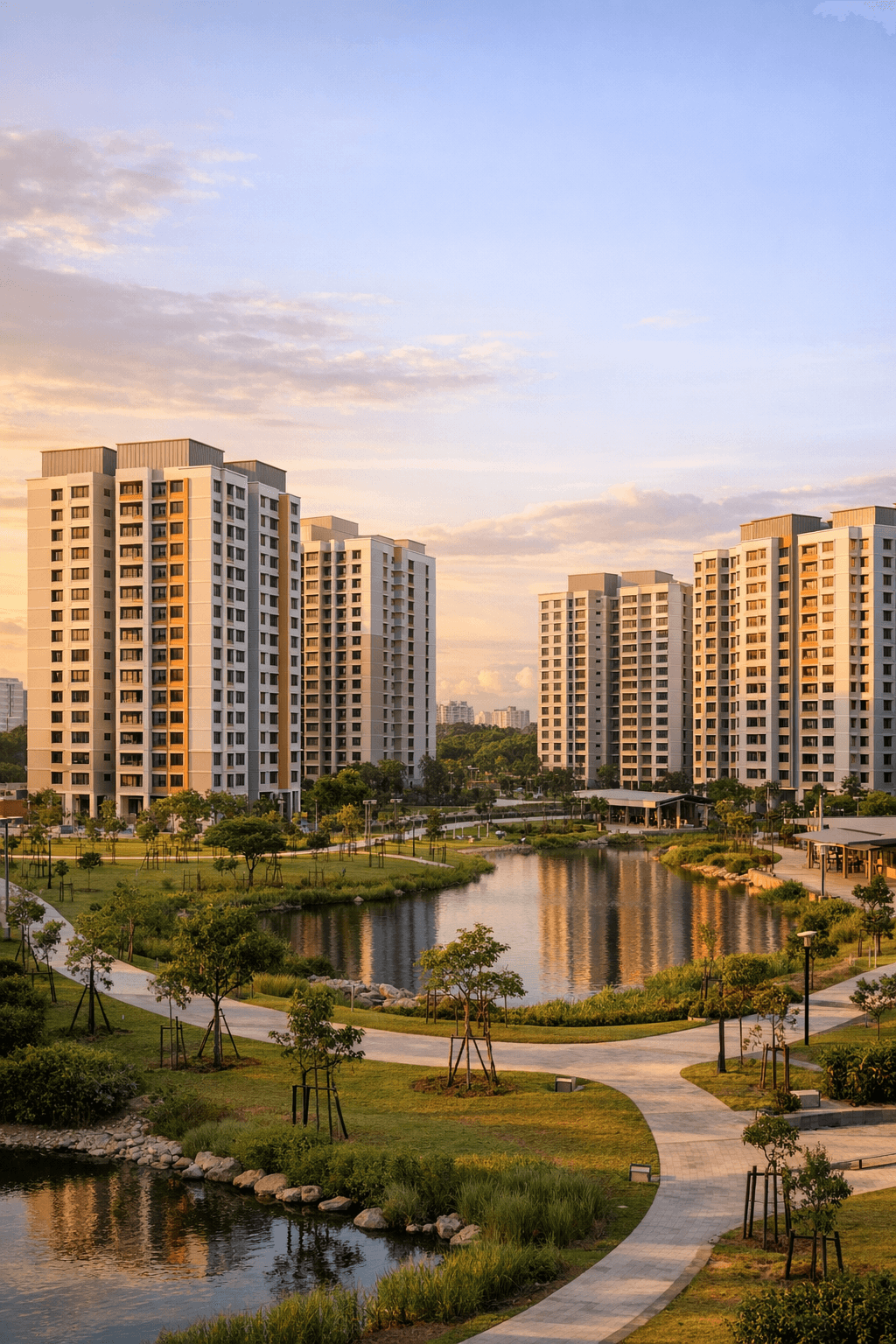
EdgeProp recently reported on where the demand landed in Singapore's June 2026 HDB BTO exercise — and the pattern was telling. Nearly half the flats on offer were Prime, the central, heavily subsidised tier, and that's exactly where the crowd pressed in. The faster-to-collect flats further north drew a noticeably softer response.
It's easy to read as a simple story about location. Stay with it, though, and it's really a story about a trade — what buyers were willing to give up, years of flexibility and a slice of their eventual sale price, for a central address they may never get another shot at.
The choice that defined this launch
When HDB opened its June 2026 BTO exercise, the real decision wasn't which town — it was whether to chase a central Prime flat or a faster-to-collect one further out.
Picture the scene that played out in thousands of homes this June: a laptop open on the kitchen table, the HDB sales page loaded, and a couple deciding not just where to live but what kind of flat to bet on.
HDB's June 2026 exercise put a very particular choice in front of them. Of the roughly 6,950 new flats on offer across seven projects — in Bishan, Bukit Merah, Ang Mo Kio, Sembawang and Woodlands — EdgeProp reported that nearly half were Prime flats: the most central, most subsidised and most tightly restricted tier in the system.
So the question wasn't only 'which estate?' It was 'do we reach for a prized central address — or take a flat we can collect sooner, further from the middle of the island?'
Where the crowd went
Demand pressed onto the central Prime projects in Bishan and Bukit Merah, while the shorter-wait flats up in Sembawang and Woodlands drew a quieter response.
As the applications came in, a pattern took shape — the one EdgeProp's analysts had flagged. The heat was on the Prime projects. Bishan's Lakeview Cascadia — reportedly the first public housing in the Upper Thomson area in more than 40 years — and Bukit Merah's Berlayar Rise, next to Telok Blangah MRT, were tipped as the launch's hottest tickets.
The quieter queues were up north. The shorter-wait flats in Sembawang and Woodlands — the ones you can move into sooner — were expected to give applicants far better odds; first-timer demand for one Sembawang project was tipped to come in below one applicant per flat. Across the whole exercise, take-up was estimated at around 3.1 to 3.5 times subscribed, roughly in line with February's 3.2.
Read together, it says something quietly striking: given the choice, more buyers reached for the central address than for the shorter wait.
The postcode comes with a leash
A Prime flat isn't just a nicer address at a subsidised price — it comes with a decade-long stay-put rule and a claim on your eventual sale.
Here's the part that doesn't fit neatly on an application form. A Prime flat isn't only a nicer postcode at a subsidised price — it comes with a longer leash.
In exchange for the central location and the extra subsidy, HDB attaches conditions: owners must live in the flat for 10 years before they can sell, not the usual five, and when they eventually do sell, a slice of the price goes back to HDB. The flat also can't be rented out in full, even after that decade is up. Choosing Prime, in other words, is choosing the address over flexibility — you're locking in for the long haul.
Which makes the obvious question worth asking plainly: against today's HDB market, is that trade worth it? We pulled our own resale numbers to put the choice in context.
What does an HDB flat actually cost right now?
On the latest national medians, a resale 4-room goes for about $630k, a 5-room $740k and an Executive $910k — the open market a BTO buyer is ultimately choosing for or against.
A BTO flat is really a bet on the resale market you'll one day sit inside — so it helps to see what HDB flats change hands for today. Here are the latest national median resale prices by flat type:
| Flat type | Median resale price | Year-on-year |
|---|---|---|
| 2-Room | $375k | +3.4% |
| 3-Room | $443k | +0.0% |
| 4-Room | $630k | +0.0% |
| 5-Room | $740k | +1.4% |
| Executive | $910k | +1.1% |
The national median 4-room resale sits at about $630k. A brand-new Prime flat is priced well below the resale flats around it — that's the subsidy at work — but the clawback on resale is designed to recover part of that discount later. The gap between a subsidised Prime price today and an open-market price tomorrow is exactly what the restrictions are there to manage.
Is the HDB resale market still climbing?
Not right now — it's cooling gently. HDB's Resale Price Index slipped 0.3% in 2026Q2 and is essentially flat over the past year.
For years the answer was an easy 'yes'. It's now more nuanced. HDB's official Resale Price Index — its own gauge of resale values, separate from the private market — slipped 0.3% in 2026Q2 and is essentially flat year-on-year. After a long climb, the resale market has gone quiet.
| Quarter | HDB Resale Price Index |
|---|---|
| 2025Q2 | 202.9 |
| 2025Q3 | 203.7 |
| 2025Q4 | 203.6 |
| 2026Q1 | 203.4 |
| 2026Q2 | 202.8 |
That matters for the Prime bet in a specific way. When resale prices are galloping, locking a flat up for 10 years feels cheap — the address only gets more valuable while you wait. In a flat-to-cooling market, the decade-long commitment asks a little more faith. The location has to carry the case largely on its own.
Why did buyers pick Prime over a shorter wait?
Central supply is rare and rarely repeats, the locations come with MRT, amenities and schools, and the very restrictions that put some buyers off also thin the competition — so genuine owner-occupiers feel they have a fairer shot.
A few forces pull in the same direction.
Scarcity. Central land almost never comes up for public housing. Bishan's project was reportedly the first in its pocket of Upper Thomson in over 40 years — miss it and the next chance may be a decade away, or never. A shorter waiting time, by contrast, comes around every few months.
The location does real work. Prime sites sit near MRT lines, mature amenities and sought-after schools — the things that make daily life easier and tend to hold their value.
The restrictions cut both ways. The 10-year stay and the clawback are designed to deter buyers chasing a quick flip. That cools speculative demand — and, as the reporting noted, leaves genuine owner-occupiers feeling they have a fairer shot at a home they actually mean to live in. For a family planning to stay put anyway, the leash isn't much of a cost.
Speed, it turns out, was the thing buyers were most willing to give up.
What's the catch with a Prime flat?
The subsidy comes with strings: a 10-year Minimum Occupation Period, a subsidy clawback of roughly 6–14% of your eventual resale price, and a ban on renting out the whole flat — so your flexibility and resale upside are clipped.
The central address is real, but so is the fine print — and it's worth reading before the ballot, not after:
- A 10-year Minimum Occupation Period. Double the standard five years (how the MOP works), counted from when you collect keys. You can't sell, or buy private property, until it's up.
- A subsidy clawback on resale. When you do sell, HDB recovers a share of the price — reported at roughly 6% to 14% depending on the project (Bukit Merah's Berlayar Rise, for instance, was reported at 14%). Only the first owner pays it; the resale buyer doesn't.
- No renting out the whole flat — ever. Even after the 10 years, a spare room is the most you can let out. The rental-income lever many upgraders lean on is off the table.
- A narrower resale pool. Prime resale buyers face their own eligibility conditions, including an income ceiling even without a grant, which can make the eventual sale slower than for an unrestricted flat.
None of this makes a Prime flat a bad buy. It makes it a specific one — a home to live in for the long term, not a stepping stone to trade up from in five years.
Prime or a shorter-wait flat — which is right for you?
It comes down to your horizon: if you'll happily stay 10-plus years and value the location, Prime rewards you; if you need keys sooner or want the flexibility to move or rent later, a shorter-wait flat fits better.
There's no universal answer — only the honest questions to ask yourself:
- How long will you really stay? Prime only pays off if you're comfortable holding for the full decade and beyond. If life might move you in five to seven years, the MOP becomes a wall, not a formality.
- How soon do you need the keys? A growing family that needs space now may value a shorter-wait flat far more than a central postcode it can't move into for years.
- Do you want the flat to earn? If renting it out later is part of the plan, Prime's no-whole-flat-rental rule takes that off the table.
- Location or flexibility? That's the trade in one line. Prime buys you the address and clips your options; a shorter-wait flat keeps your options open and asks you to compromise on location.
The June crowd, on balance, chose the address. Whether that's your call depends less on the market and more on your own next ten years.
How we sourced this
The resale prices and index are PropKaki's own read of HDB's records; the BTO demand and Prime flat rules are from HDB and the property reporting. We flag the caveats rather than bury them.
Two kinds of numbers sit in this piece, and we keep them separate.
The resale prices and the Resale Price Index are ours — PropKaki tracks the full HDB resale record, so we can read national median prices by flat type and HDB's own official index, and refresh them as new resales lodge.
The BTO details — how many flats, the Prime share, where demand was expected to land, the application rates, and the Prime resale rules — are not our data. They come from HDB's launch information and from property-market reporting (notably EdgeProp), and we attribute them as such.
Three caveats we carry, not bury: a BTO flat is not a resale flat — new-flat prices and subscription rates are a different market from the resale medians here; the demand read is an expectation around the launch, not a final tally; and resale medians are gross (before any resale levy, agent commission or legal fees) and an all-towns snapshot that a specific block, storey or lease can differ from. The Prime clawback also varies by project — check the exact figure for any flat you're eyeing.
Want the resale medians for your own town and flat type? You can ask PropKaki.
Sources
- HDB resale transaction records and the HDB Resale Price Index, analysed by PropKaki.
- EdgeProp — the hottest and coolest picks in the June BTO launch (demand read; original reporting).
- EdgeProp — June BTO to offer about 6,900 flats, nearly half Prime (exercise details).
- HDB — June 2026 BTO sales exercise announcement (shorter-waiting-time flats).
- HDB Prime Location Housing model — 10-year MOP, subsidy recovery and rental rules (rules explainer).
About this commentary
This is editorial analysis by the PropKaki Editorial Desk, written for general information only — it is opinion and context, not a valuation, financial advice or a recommendation. The BTO exercise details and Prime flat rules are drawn from HDB and published reporting; the resale figures are from HDB records analysed by PropKaki. Always verify prices, flat classifications, eligibility, and the exact Minimum Occupation Period and subsidy-recovery terms against official HDB sources before acting.
Got a question this raised? Ask PropKaki.
Take any point from this analysis and apply it to your own project, budget or decision.
 PropKaki
For most buyers this year, staying well within budget beats trying to time the market.