

Otto Place Review: Is Tengah's Cheaper EC the Smart-Value Buy at ~$1,754 PSF?
Otto Place undercuts its Tengah neighbour by about $359 psf — but it sits in a brand-new town with no resale market to price it against. We work through how you value an executive condominium when there are no comparables yet, and whether the discount makes it the smart way into Tengah.
Otto Place is a 600-unit executive condominium (EC) by Hoi Hup Sunway on Plantation Close in Tengah (District 24, OCR), with vacant possession expected 30 June 2030. At an indicative ~$1,754 psf (median unit ~$1.69M) it is the newest and priciest of Tengah's three executive condominiums — above the earlier Copen Grand (~$1,625) and Novo Place (~$1,650), yet still about $359 psf below Tengah Garden Residences (~$2,113), the town's first private (non-EC) condo. That gap is largely the EC discount — a subsidised, eligibility-capped entry versus unrestricted private ownership. Because Tengah is a brand-new town, there is no nearby resale to benchmark against, so you are pricing the masterplan, not comparables. For an eligible household that will live in it and hold through the five-year MOP toward privatisation, it is a strong-value buy; the catch is a resale market that does not exist yet.
Otto Place at a glance
| Developer | Hoi Hup Sunway Plantation Pte Ltd |
|---|---|
| Tenure | 99-year leasehold |
| Units | 600 |
| Launched | July 2025 (first developer sale) |
| Sales progress | 596 of Otto Place's 600 units (99%) had been sold as of Sep 2026, leaving 4 unsold (URA developer sales). |
| Launch price paid | S$1,754 psf median (S$1.70M), 600 developer caveats to May 2026 |
From URA caveats and URA's developer-sales figures (sales checked Sep 2026), refreshed daily. The review below was written earlier and quotes the figures of its day.
Every transaction and listing at Otto Place →Resale profit odds →Floor plans ↓
Where is the Otto Place showflat?
Otto Place's showflat is at the junction of Bukit Batok West Avenue 3 and Bukit Batok West Avenue 8, according to its EdgeProp new-launch listing (checked 18 September 2026). 4 units were still unsold as of Sep 2026 (URA), so book a viewing with the developer's sales team before you go.
Source: EdgeProp new-launch listing, checked 18 September 2026. PropKaki has not visited this showflat; this review is a desk analysis.
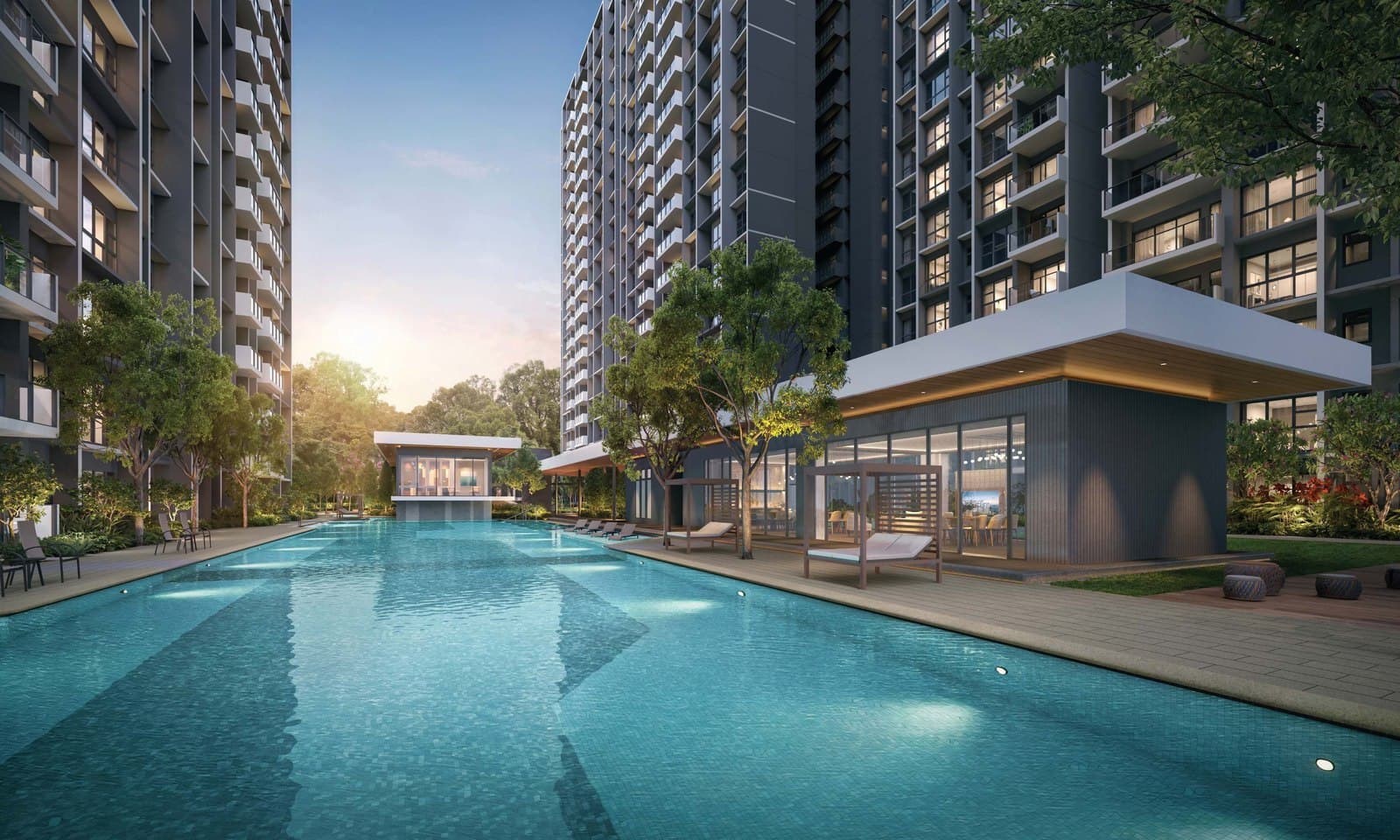
Otto Place is the cheaper of Tengah's two executive condominiums, and that is the whole intrigue. At an indicative ~$1,754 psf it undercuts its newer neighbour, Tengah Garden Residences, by roughly $359 psf — yet it sits in Singapore's youngest town, where not a single private home has ever been resold. So the usual review question — 'is the premium over nearby resale justified?' — has no answer here, because there is no resale. This review is about how you value an EC when the town it sits in has no track record to price it against, and whether Otto's discount makes it the smart-value entry into Tengah.
Is Otto Place worth buying? Our verdict
Otto Place is the value EC of Tengah — at ~$1,754 psf it undercuts its neighbour Tengah Garden Residences (~$2,113) by about $359 psf. But Tengah has no resale market yet, so you are pricing the masterplan, not comparables. A strong-value buy for an eligible household that will live in it and hold; the wrong pick for a quick exit.
Otto Place is a value buy for one specific household: the eligible family that will actually live in it, hold through the five-year Minimum Occupation Period, and believes in the Tengah growth story. For that buyer it is arguably the smartest-value executive condominium (EC) launch on the board. For everyone else, the EC eligibility rules close the door — and for anyone hoping to price their exit today, the town itself has no answer yet.
Here is what makes Otto Place different from almost every other review on this site. At an indicative ~$1,754 psf (a median unit near $1.69M), it is not the cheapest EC in its district because it is worse — it is cheaper because it undercuts its own neighbour. Its closest comparable, Tengah Garden Residences — Tengah's first private (non-EC) condo — prices about $359 psf higher at ~$2,113. Same town, same 99-year tenure, launched in the same window, but a different category: unrestricted private ownership versus Otto's subsidised, eligibility-capped EC. Otto Place is roughly 17% cheaper, and most of that gap is the EC discount — the trade you accept for giving up open-market ownership.
The catch is equally specific: Tengah is Singapore's newest town, and not a single private home in the district has ever been resold. So the question every other launch review answers — 'is the premium over nearby resale justified?' — cannot be answered here, because there is no resale. You are not buying into a priced market; you are pricing the masterplan yourself. That is a genuinely different bet from a mature-town EC like Aurelle of Tampines, where a real resale market already exists next door to anchor the value.
So the verdict turns on two questions: do you qualify, and will you hold? If you are an eligible household buying a home for the next decade, Otto Place gives you a below-Tengah-Garden-Residences entry into a town the government is building around you, with vacant possession timed for 2030 as the new MRT stations arrive. If you want a quick exit or a proven resale track record, this is the wrong project in the wrong town — for now. Buy Otto Place for the home and the hold, not the flip.
This review shows the full workings. For the market-wide picture, see our roundup of every 2026 new launch benchmarked against resale and the complete new-launch guide for 2026.
Otto Place at a glance: the key facts
Otto Place is a 600-unit executive condominium by Hoi Hup Sunway on Plantation Close in Tengah (District 24, OCR), 99-year leasehold, with vacant possession expected 30 June 2030 and indicative pricing around $1,754 psf.
| Detail | Otto Place |
|---|---|
| Developer | Hoi Hup Sunway (Hoi Hup Sunway Plantation Pte Ltd) |
| Type | Executive Condominium (EC) |
| Tenure | 99-year leasehold (from 13 May 2024) |
| Location | Plantation Close, District 24 (Tengah) |
| Market segment | Outside Central Region (OCR) |
| Total units | 600 (8 blocks, up to 20 storeys) |
| Unit types | 3-bedroom to 4-bedroom + study, ~872–1,195 sq ft |
| Concept | Mondrian-inspired grid architecture; eight landscape zones; 50m lap pool |
| Green rating | BCA Green Mark Platinum (Super Low Energy) |
| Expected TOP | ~2030 (vacant possession 30 June 2030) |
| Indicative pricing | ~$1,754 psf · median ~$1.69M |
A note on where these come from. The developer, tenure, concept, unit sizes and completion dates are read directly from the project's own launch brochure, developed by Hoi Hup Sunway — the award-winning tie-up between Hoi Hup Realty and Sunway Developments behind The Continuum, Terra Hill and the earlier Novo Place and Parc Central Residences ECs. The pricing is our own, computed from URA developer-sale caveats.
One figure is worth flagging up front. Our automated directory lists a 2029 completion for this site, but the developer's brochure states a Notice of Vacant Possession of 30 June 2030 (legal completion 30 June 2033), so we use ~2030 throughout — always take the completion date from the brochure, not a directory field. Independent coverage lines up with the launch: EdgeProp reported brisk launch sales in July 2025 — 58.5% of units taken up at an average of about $1,700 psf, from about $1,588 psf at preview.
How much does Otto Place cost? Prices and PSF by unit size
Across 600 developer-sale caveats, Otto Place's median is ~$1,754 psf and ~$1.69M, with most units between $1,719 and $1,799 psf. PSF is flat across sizes, and the entry quantum (~$1.66M median for the smaller band) is low for a new launch.
Across the 600 developer-sale caveats lodged so far, Otto Place's median is about $1,754 psf, with most units transacting in a tight band between $1,719 and $1,799 psf. The median price works out to roughly $1.69M — an accessible quantum for a brand-new three- or four-bedroom home.
| Unit size (from our caveats) | Caveats (n) | Median PSF | Median price |
|---|---|---|---|
| 750–1,100 sqft (2–3BR) | 480 | $1,758 | $1.66M |
| 1,100–1,500 sqft (3–4BR) | 120 | $1,738 | $2.08M |
Two things stand out. First, the PSF barely moves with size — the larger 1,100–1,500 sqft homes ($1,738) are priced almost identically per square foot to the smaller band ($1,757). You are not paying a size premium to go bigger; you are simply choosing a larger quantum. Second, the entry is genuinely low for a new launch: a median ~$1.66M for the smaller band keeps monthly instalments within reach of the dual-income households ECs are built for.
The caveat read matches public reporting. The ~$1,700 psf average EdgeProp reported on launch weekend has firmed to our ~$1,754 median as later balloting rounds cleared the pricier stacks — the same demand that took the project to 91% sold after the second-timer balloting round. Bear in mind indicative PSF is a live snapshot that moves with which units sell; the by-size table above controls for that. If you care about entry cost versus per-square-foot efficiency, read quantum vs PSF when buying a condo, and for how a full release is structured, the new-launch price list and unit chart.
How do you price an EC in a town with no resale market?
You cannot — not the usual way. Tengah is so new that District 24 has essentially no private resale, so there is no premium-over-resale figure to compute. With no resale to anchor to, the only real benchmark is how Otto Place prices against the other Tengah launches.
Every other review on this site leans on one number: how a launch's PSF compares with nearby resale. For Otto Place, that number does not exist. There are effectively zero private resale caveats in District 24 to benchmark against — because Tengah is Singapore's newest town, and its earliest private homes have not yet reached the point where they can be resold. There is no lived-in stock, no older leasehold pool, nothing. The premium-over-resale lens that frames a launch in Katong or Tampines simply has no data to work with here.
That absence is the honest headline, and it cuts both ways. On the downside, you lose the single most useful sanity check a buyer has: you cannot look at what similar homes down the road have actually fetched and decide whether the launch price is fair. On the upside, there is no depressed resale comparison dragging on sentiment either — the whole district is being priced forward, on what Tengah is becoming rather than what it is. Either way, the discipline changes: with no resale to anchor to, the only meaningful benchmark left is how Otto Place prices against the other launches in the same town. That is where the next section goes.
This is the opposite situation to buying an established resale unit, where years of transactions tell you the market's view. If you want the framework for weighing a brand-new launch against a proven resale alternative, read new launch vs resale; and for why an Outside Central Region address like Tengah is priced the way it is, the CCR/RCR/OCR buying guide.
Otto Place vs its Tengah neighbours: the EC tier and the private benchmark
Otto Place (~$1,754 psf) is the newest and priciest of Tengah's ECs — above Copen Grand (~$1,625) and Novo Place (~$1,650). Tengah Garden Residences (~$2,113) sits ~$359 psf higher, but it is a private condo, not an EC — most of that gap is the private-vs-EC category premium, not a site advantage.
With no resale to price against, the fair comparison is the launches a Tengah buyer would actually cross-shop:
| Project | New-Sale caveats (n) | Median launch PSF |
|---|---|---|
| Tengah Garden Residences | 870 | $2,113 |
| Novo Place | 504 | $1,650 |
| Copen Grand | 10 | $1,625 |
Two of these — Novo Place and Copen Grand — are executive condominiums like Otto Place. The third, Tengah Garden Residences, is not: it is Tengah's first private condominium, open to every buyer with no income ceiling, no Minimum Occupation Period and no CPF grants. That distinction is the key to reading the table.
Among Tengah's ECs, Otto Place at ~$1,754 psf is the newest and the most expensive — above Copen Grand (~$1,625, Tengah's first EC) and Novo Place (~$1,650), which is what a later launch on pricier land tends to look like. Copen Grand's figure rests on just 10 recent caveats — it is long sold out, so treat it as a thin, dated reference, not a live price.
The striking number is the step up to Tengah Garden Residences at ~$2,113 — about $359 psf, roughly 17%, above Otto. But that is not two ECs disagreeing on price. It is the private-vs-EC category difference: you are comparing a subsidised, eligibility-restricted EC against the open private market. Site-level factors (exact plot, distance to the future MRT, launch timing, the land each developer paid for) layer on top, but the category is the headline.
That reframes the value question. Otto Place is the priciest way into Tengah's EC tier — but the EC structure is precisely the value: a below-private entry price, CPF housing grants for eligible first-timers, and a resale pool restricted to citizens and PRs for the first decade. Tengah Garden Residences shows the ~$359 psf premium you would pay to skip those rules for unrestricted ownership. If you qualify for an EC and will hold, Otto is the more efficient entry into Tengah; if you need open-market flexibility now (or don't qualify), the private sibling is the reason to pay up. Weigh them side by side in our read on Tengah Garden Residences and with the two-project comparison scorecard.
The EC economics: the income ceiling, the discount, and the 10-year path to private
Otto Place is cheaper because it is an EC: sold new only to Singaporean-led households under the S$16,000 income ceiling, with CPF grants for eligible first-timers, a 5-year MOP (to ~2035 here) and full privatisation 10 years after completion (~2040). You enter at a subsidised price and, if you hold, exit into the open market.
Otto Place is cheaper than a private condo for a structural reason, not a quality one — it is an executive condominium, a subsidised hybrid of public and private housing. That single fact explains the price, and it comes as a package you take whole. These are the standard EC rules as of 2026 — confirm your own case with HDB and CPF before committing:
- Eligibility gates the buyer pool. To buy a new EC from the developer, your household generally has to be led by a Singapore Citizen forming an eligible family nucleus with at least one other SC or PR, and fall under the EC monthly household income ceiling (S$16,000). Foreigners cannot buy a new EC, and a pair of PRs typically cannot either. Because the buyer pool is restricted by design, the land is released at a lower cost, and part of that saving flows into the launch price.
- CPF housing grants may lower the entry further. Eligible first-timer households can receive CPF housing grants toward an EC purchase — verify the current quantum and your eligibility directly with HDB, as it varies with income and household type.
- A five-year Minimum Occupation Period (MOP). You must physically occupy the home for five years before you can sell it or rent out the whole unit. Off Otto Place's ~2030 completion, that MOP would run to roughly 2035.
- A 10-year path to full private status. After the MOP you may sell, but only to Singaporeans and PRs, until the development fully privatises 10 years after completion — roughly 2040 here — at which point it becomes an ordinary 99-year condo sellable to anyone, foreigners included.
That privatisation transition, from a restricted SC/PR resale pool to the open market, is the structural tailwind behind the EC value case: you enter at a subsidised, gated price and, if you hold, exit into the unrestricted market. For the mechanics of buying a launch off-plan, see the new-launch condo process and the progressive payment scheme.
Where is Otto Place? Inside the Tengah 'Forest Town' bet
Otto Place sits on Plantation Close in Tengah, Singapore's new car-lite 'Forest Town'. Two Jurong Region Line stations are a stated 4-minute walk away (under construction), with Jurong Lake District and Jurong Innovation District jobs nearby. Much is future-dated, but ~2030 completion lines up with the new MRT — you are buying the masterplan.
Otto Place sits on Plantation Close, in the Plantation district of Tengah — marketed as Singapore's first smart and sustainable 'Forest Town', a car-lite new town being built largely from scratch. This is the crux of the bet: you are buying into a location that is mostly coming, not here.
What is committed is substantial. Two Jurong Region Line stations — Tengah Park and Bukit Batok West — are both a stated 4-minute walk away (under construction, station names to be confirmed), with Jurong East and its interchange about two stops on. The wider growth story is jobs: Jurong Lake District, Singapore's largest business district outside the centre, is roughly a 5-minute drive, and Jurong Innovation District about 8 minutes — together a long-run anchor of employment on the doorstep. A Forest Corridor green network runs alongside the site, Princess Elizabeth Primary School is within 1 km, and the Plantation Plaza neighbourhood centre brings retail, F&B and a supermarket close to home.
The honest caveat is timing. The MRT stations are still being built, the town is still filling in, and much of the convenience you are pricing today arrives with the precinct rather than on completion day. For an own-stay household holding through the MOP, that maturation timeline actually lines up well — vacant possession around 2030 roughly coincides with the Jurong Region Line opening. But if you expect the amenities to be there the day you collect keys, they will not be. On rental: the same jobs story that underpins Tengah should support tenant demand once the town matures, though remember an EC cannot be rented out as a whole unit during the five-year MOP, so any rental case is a later-years one. To pressure-test the numbers for a specific unit and holding period, use the PropKaki profitability model and our note on OCR condo investing.
What do you get? Unit mix, layouts and finishes
Otto Place has 600 units across eight blocks, spanning 3-bedroom to 4-bedroom-plus-study layouts (~872–1,195 sq ft), with no shoebox or one/two-bedroom units — a pure family product. It is pitched above the EC baseline: a Mondrian-inspired design, a 50m lap pool, Küche/Bravat/Hansgrohe fittings and BCA Green Mark Platinum.
Otto Place is 600 units across eight blocks of up to 20 storeys, and the unit mix tells you exactly who it is for. There are only 3-bedroom to 4-bedroom-plus-study layouts — no shoebox, one- or two-bedroom units at all. From the brochure the range runs from a 3-Bedroom Deluxe at ~872 sq ft, through 3-bedroom-plus-study formats (~904–958 sq ft) and a 4-Bedroom Deluxe + Study (~1,012 sq ft), up to a 4-Bedroom Luxury + Study at ~1,195 sq ft. That is a deliberate, very EC signal: this is a family and owner-occupier product, not a shoebox-investor play — which fits both the eligibility rules and the MOP that force a genuine live-in horizon.
On product, Otto Place is pitched above the usual EC baseline. The architecture and eight landscape zones take cues from Piet Mondrian's grid compositions; the facilities are led by a 50-metre lap pool (one of five pools) and a Level 16 Sky Garden with fitness and terrace decks. Homes come with German-quality Küche kitchen fittings and Bravat and Hansgrohe bathroom fixtures, and the development targets BCA Green Mark Platinum (Super Low Energy) with rooftop solar supplying part of the common-area electricity, EV-charging lots and smart-home features. One practical note buyers sometimes miss: the brochure states a balcony screen is not provided for this development.
Pairing the brochure's sizes with our transacted-caveat pricing gives the flat-PSF picture from earlier: the larger homes carry the bigger quantums (the 1,100–1,500 sqft band medians ~$2.08M) without a meaningful per-square-foot discount. If you want the lowest cash outlay, the smaller band (~$1.66M median) is the entry point — going smaller lowers your quantum, not your PSF. (Unit sizes are from the developer's brochure; the per-size pricing is reconstructed from our own URA caveats, so the bedroom labels in the pricing table are size proxies, not the official unit mix.)
Is Otto Place a good investment? What the data can and cannot tell you
There is no track record — Tengah has no resale history at all. The honest proxy is the OCR base rate (86.3% of resales beat cost, +27.6% median gross gain), but it is drawn from established towns, not Tengah, so treat it as a rough base rate, not a forecast. You can underwrite the entry price; you cannot yet price the exit.
Otto Place has never been resold — it is a brand-new launch in a town with no resale history whatsoever — so there is no track record to quote, and anyone promising you a return is guessing. The honest proxy is how comparable homes in the wider market segment have performed. Across matched resale pairs, 86.3% of Outside Central Region (OCR) private resales sold above their purchase price, with a median gross gain of 27.6%.
Treat that as a base rate, not a forecast — and lean on the caveats harder here than anywhere else. It is gross, before commission, stamp duties, any Seller's Stamp Duty and loan interest. It is a whole-segment private figure, not an EC-specific one. And crucially, it is drawn from established OCR towns with years of transactions — not Tengah, which has none. So it is a base rate stretched over an unusually thin analogy: useful for calibrating expectations, useless as a promise. On top of it sits the EC's privatisation tailwind, which we discuss qualitatively only — we will not invent an EC-specific profit number.
What you can actually underwrite is the entry: a below-Tengah-Garden-Residences price, an eligibility-gated discount, and a completion timed to the town's own build-out. What you cannot underwrite is the exit, because there are no comparables to price it against yet. To pressure-test a specific unit against your own holding period and costs, run it through the PropKaki profitability model, and read how to tell if a property will be profitable.
The one thing to weigh before buying Otto Place
It is a double-unproven trade: an EC's 5-year MOP and resale limits, in a town with no resale market yet to price your exit against. Excellent for an eligible household that will live in and hold to privatisation; a trap for anyone needing a short or well-priced exit.
Otto Place asks you to accept a double-unproven trade. First, as an EC, it locks you in — a five-year Minimum Occupation Period, then resale restricted to Singaporeans and PRs until it privatises around 2040. Second, and unusually, it sits in a town whose private resale market does not yet exist, so unlike a mature-town EC you cannot look at a single comparable sale to price your eventual exit. You are committing to a long hold and to a location that has to prove itself over that same hold. If you are an eligible household that will genuinely live there and hold toward privatisation, that trade is a strong one: you enter below Tengah Garden Residences, the government builds the town around you, and time carries you toward the open market. If your horizon is short, or you need the reassurance of an established resale pool, the same two features that create the value will trap you. Buy Otto Place for the home and the hold — never for a quick exit you cannot yet price.
Is Otto Place an EC or a private condo?
It is an executive condominium (EC), not a private condo — sold new only to eligible Singaporean-led households, with a 5-year MOP and full privatisation 10 years after completion.
Otto Place is an executive condominium (EC), not a private condo — a 600-unit EC by Hoi Hup Sunway on Plantation Close in Tengah, District 24. That means it is sold new only to eligible Singaporean-led households under an income ceiling, comes with a five-year Minimum Occupation Period, and fully privatises into an ordinary 99-year condo 10 years after completion. Its EC status is the main reason its ~$1,754 psf pricing sits below a comparable private launch.
Who is eligible to buy Otto Place?
Broadly, a Singapore-Citizen-led household under the S$16,000 EC income ceiling that meets HDB's family-nucleus and first-/second-timer rules. Foreigners cannot buy a new EC. Verify your case with HDB.
To buy a new EC like Otto Place from the developer, your household generally must be led by a Singapore Citizen forming an eligible family nucleus with at least one other SC or PR, fall under the EC monthly household income ceiling (S$16,000 as of 2026), and meet the usual first-/second-timer and prior-flat conditions. Foreigners cannot buy a new EC, and a pair of PRs typically cannot either. Eligible first-timer households may also qualify for CPF housing grants. These are the standard EC rules as of 2026 — confirm your specific eligibility and any grant entitlement directly with HDB before committing.
Otto Place vs Tengah Garden Residences: which is cheaper?
Otto Place (~$1,754 psf) is cheaper than Tengah Garden Residences (~$2,113 psf) by ~$359 psf (17%). The main reason is category, not site: Otto is a subsidised EC, while Tengah Garden is Tengah's first private (non-EC) condo — you pay the premium for unrestricted ownership.
By indicative PSF, Otto Place (~$1,754) is markedly cheaper than Tengah Garden Residences (~$2,113) — a gap of about $359 psf, or roughly 17%. The two share a name-root, a district and a launch window, but not a category: Otto Place is a 99-year executive condominium, while Tengah Garden Residences is Tengah's first private condo (no income ceiling, no MOP, no grants, open to all). That is the main reason for the gap — you are pricing subsidised, restricted EC housing against the open private market — with site-level factors (plot, MRT distance, timing, land cost) layered on top. For an EC-eligible buyer, Otto's lower price also comes with grants and a below-private entry the private sibling cannot offer; if you pay up for Tengah Garden, you are buying unrestricted ownership and a wider resale pool later.
When is Otto Place expected to be completed (TOP)?
Around 2030 — expected vacant possession is 30 June 2030 per the developer's brochure (legal completion 30 June 2033).
Per the developer's brochure, Otto Place's expected vacant possession is 30 June 2030 (legal completion 30 June 2033), so a TOP around 2030. Its 99-year lease runs from 13 May 2024. Note that an automated directory may show a 2029 completion for this site — we use the brochure's stated date instead. As an EC, its five-year Minimum Occupation Period and its 10-year privatisation clock are counted from completion, not from the launch date.
Methodology and sources
Corrected 15 September 2026: caveat counts were overstated and are corrected as at 7 July 2026. Pricing from our URA New-Sale caveats; no premium is quoted because Tengah has no resale to benchmark against; comparables from each project's caveats; OCR odds from matched pairs. Developer, tenure, TOP, concept and unit mix are brochure-sourced; EC rules are stated generally and should be verified with HDB and CPF. A desktop analysis, not a showflat visit.
⚠️ Corrected 15 September 2026. The caveat counts in the version of this review published in July were overstated. URA amends some caveat details after first publishing them, and our records had been keeping the original and the amended caveat as two separate sales — almost all of them new-launch sales. Corrected as at 7 July 2026, when this analysis was run: Otto Place had 600 New-Sale caveats, not 615; among the rival launches, Tengah Garden Residences 870 (not 1,075). Counts are corrected throughout; the size and comparison tables show the de-duplicated medians, and price figures in the text that moved by less than 1% sit within its approximations and are unchanged.
Where the figures come from. Otto Place's indicative pricing is the median of 600 URA private-sale caveats flagged New Sale for the project (window 19 July 2025 to 12 May 2026), from PropKaki's own transaction data. Because Tengah (District 24) has effectively no private resale caveats, we deliberately quote no premium-over-resale figure — there is nothing to benchmark against, and that absence is discussed openly rather than papered over. The comparable-launch PSFs are the medians of each rival project's own New-Sale caveats over the last ~30 months, deduped per project. The 86.3% segment resale odds and +27.6% median gain come from matched private buy-to-sell pairs in the OCR segment via PropKaki's profitability model. Developer, tenure, expected completion, concept and unit sizes are from the project's official launch brochure — the developer is Hoi Hup Sunway Plantation Pte Ltd, the 99-year lease runs from 13 May 2024, and the stated Notice of Vacant Possession is 30 June 2030. External context is cited inline: EdgeProp for the launch take-up and average PSF, and EdgeProp on the near-sellout after second-timer balloting.
EC-specific caveats. The eligibility rules, income ceiling, CPF grants, Minimum Occupation Period and privatisation timeline described here are the standard EC rules as of 2026 and are stated generally. EC rules have been revised over time for newer Government Land Sales sites, and individual eligibility varies, so verify your own case directly with HDB and CPF before relying on any of this. We have deliberately not invented an EC-specific profit figure: the resale odds quoted are a whole-segment OCR base rate drawn from established towns, not Tengah, and the privatisation premium is discussed qualitatively only. We also quote no rental-yield figure — Tengah's rental market is immature and an EC cannot be rented whole during its MOP.
What we did not do, and did not claim. This is a data and desktop analysis, not a showflat visit — we have not toured the units or verified finishes in person. Indicative PSF is a dated snapshot that moves as more units sell; PSF is price ÷ area, so a median shifts with which units transact. Segment profit odds are gross (before commission, stamp duties, any SSD and interest) and are a base rate, not a forecast — Otto Place has never been resold, and its town has no resale history at all. Nothing here is financial advice; verify current rules and figures with URA, HDB, IRAS and CPF.
What are the floor plans and unit sizes at Otto Place?
Floor plans for Otto Place aren't in PropKaki's library yet. Across 600 URA caveats, units range from 872 sqft to 1,195 sqft, and the middle half are 904 sqft to 1,012 sqft.
| Unit type | Sizes listed for sale | Asking from |
|---|---|---|
| 3-bedroom | 870 sqft to 958 sqft | S$1.39M · S$1,477 psf |
| 4-bedroom | 1,012 sqft to 1,195 sqft | S$1.59M · S$1,659 psf |
Check the Floor Plan Finder for Otto Place →
Unit sizes from URA caveats. Listed sizes from current property listings.
Otto Place: quick answers
Answered from URA data, refreshed daily.
Is Otto Place fully sold?⌄
Not yet. 596 of Otto Place's 600 units (99%) had been sold as of Sep 2026, leaving 4 unsold (URA developer sales).
Is Otto Place freehold?⌄
No. Otto Place is 99-year leasehold.
Who is the developer of Otto Place?⌄
Otto Place is being developed by Hoi Hup Sunway Plantation Pte Ltd.
When was Otto Place launched?⌄
Otto Place went on sale in July 2025. Its first developer sale on record is dated 19 July 2025 (URA caveats).
Got a question this raised? Ask PropKaki.
Take any point from this analysis and apply it to your own project, budget or decision.
 PropKaki
For most buyers this year, staying well within budget beats trying to time the market.