

AI Property Valuation in Singapore: How Accurate Is It, and Can You Trust the Number?
An AI valuation is an estimate built from recent comparable sales. Here is how accurate that really is, when to trust it, and how to check the number yourself.
AI property valuation in Singapore estimates a home's value from recent comparable sales in the same project and area, expressed as a price and a price per square foot. It is accurate enough to guide a decision when there are plenty of similar, recent transactions, and less reliable for unusual units, thin markets, or condition it cannot see. It is not a formal or bank valuation. The tools worth trusting show you the comparable sales behind the number, so you can judge the estimate rather than take it on faith.
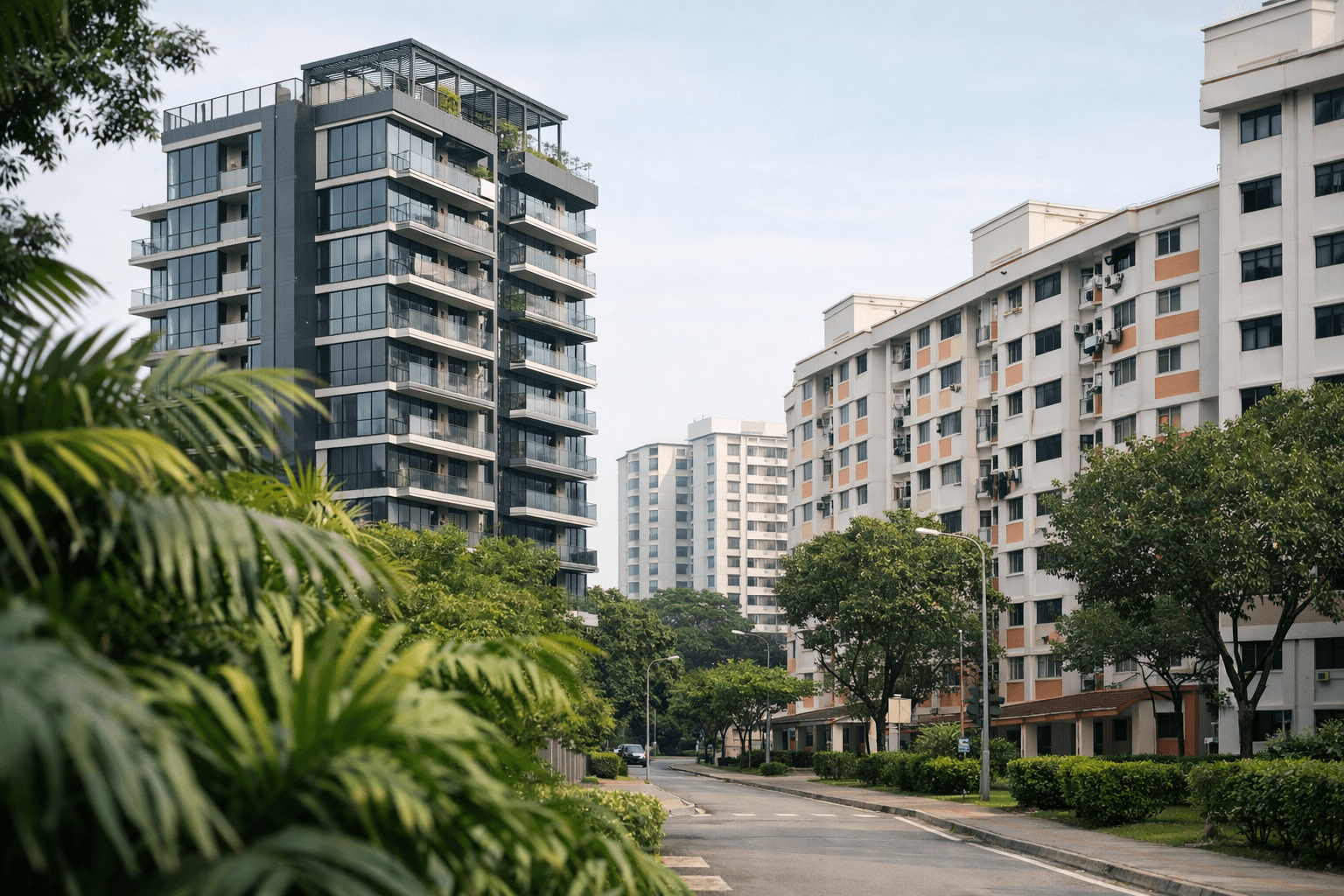
An AI can value your flat in seconds from real recent sales. But the number it gives you is only as good as the comparables behind it — and most tools hand you the figure without ever showing you those.
That is the whole question with AI property valuation in Singapore: not whether it is clever, but whether you can trust the number for a real decision. This guide explains how these tools work, how accurate they actually are, when they are least reliable, and how to check a valuation yourself — so it goes from a guess you hope is right to a number you can stand behind.
How accurate is AI property valuation in Singapore?
Accurate enough to guide a decision when there are plenty of recent comparable sales, and less reliable for unusual units or thin markets. It is an estimate, not a formal valuation — and the tools worth trusting show you the comparables behind the number.
Accurate enough to be genuinely useful — as a guide, not a guarantee. An AI valuation estimates what a home is worth from recent comparable sales, so its reliability rises and falls with how many good comparables exist. For a typical condo or HDB flat with lots of similar, recent transactions nearby, a well-built tool lands close. For an unusual unit, a quiet market, or a brand-new project with little history, the estimate is wider and softer.
What it is not is a formal valuation. It will not account for the exact condition of a specific unit, a recent renovation, or a view, because it cannot see them. Treat it as an evidence-based starting point that tells you whether an asking price is in the right postcode — then verify before you commit.
The single most useful habit: trust the valuation that shows you its comparables, not the one that just shows you a number. If you can see the recent sales it used, you can judge the estimate. If you cannot, you are taking it on faith.
How does an AI value a property in Singapore?
It finds recent transactions of similar homes in the same project and area, and works from their prices and price per square foot (PSF) to estimate a value range for your unit.
The method is the same one a good agent or valuer uses, done faster. The tool finds recent transactions of similar homes — same project or nearby, similar size, similar type — and works from their prices and price per square foot (PSF) to estimate a range for the unit in question.
The better tools then adjust for the obvious differences: floor level, unit size, and how recent each comparable sale is. PropKaki, for example, draws these comparables from a base of more than 1.6 million recorded private and HDB transactions and shows you the specific deals and PSF it used to reach the number.
That last part matters more than it sounds. A valuation is really an argument — "this unit is worth about this, because these similar ones sold for that." Seeing the comparables turns the number into an argument you can check, rather than a figure you have to believe.
How accurate is an AI valuation, really?
It depends on the comparables. With many similar recent sales, the estimate is tight; with few or unusual ones, it is wide. Some tools quantify this — HomerAI, for instance, publishes a stated median error — but the surest check is whether you can see the comps.
Accuracy is not one number — it depends on the data behind each specific valuation. Where there are many similar, recent sales, an estimate can be tight and dependable. Where comparables are few, old, or unlike the subject unit, the honest answer is a wider range and lower confidence.
Some tools put a figure on it: HomerAI, for example, publishes a stated median error of around 5% on its valuations (its own figure, as of 2026 — verify on homerai.sg). A stated error rate is a useful, honest signal. But a single headline accuracy number can hide how much it varies case by case.
So do not chase a magic accuracy percentage. The more reliable test is whether the tool shows you the comparables and says so when the data is thin. A valuation built on eight recent, near-identical sales deserves more trust than one built on two loosely similar ones from a year ago — and only a tool that shows its working lets you tell the difference.
AI valuation vs bank valuation vs a formal valuation — what's the difference?
An AI valuation is a fast, evidence-based estimate to inform you. A bank valuation sets your loan, and a formal valuation by a licensed valuer is the official figure used to transact. They serve different purposes, not the same one.
They are easy to confuse, but each exists for a different job:
- AI valuation — a fast, evidence-based estimate from comparable sales, to help you judge whether a price is fair before you engage anyone.
- Bank valuation — what a bank assesses the property at for lending; it sets your loan-to-value and can create a cash-over-valuation gap if the asking price runs ahead of it.
- Agent's estimate — adds on-the-ground nuance about the unit and the estate; useful, but remember an agent has a side in the deal.
- Formal valuation — a report by a licensed valuer, the official figure used for a transaction, financing or a dispute.
The mistake is treating the AI number as the last of these. It is the first: a quick, independent read to orient you, and to sanity-check the others. If the gap between the asking price and the evidence looks large, that is exactly what a valuation gap is — and a reason to dig deeper, not to panic.
Can an AI value my HDB flat or condo?
Yes — both HDB resale flats and condos usually have plenty of recent comparable sales, so an AI can estimate them well. Landed homes are harder, because each is more unique and sales are fewer.
Yes, and these are exactly where it works best. HDB resale flats and condos transact often and in volume, so there are usually many recent, similar sales to anchor an estimate — a standard 4-room flat or a mass-market condo unit is close to an ideal case for AI valuation.
Landed homes are harder. Each house is more individual — plot size, built-up area, orientation, condition — and comparable sales are fewer and further between, so any automated estimate should be read as a rougher guide.
For an HDB flat or condo, you can get a grounded value in seconds and, more importantly, see the comparables behind it: check what a home is worth with the Valuation Assistant. Pair it with quantum versus PSF so a low PSF on a big unit does not fool you on the total price.
When is an AI valuation least reliable?
When comparables are thin or unlike your unit — rare layouts, few recent sales, brand-new projects — in a fast-moving market, or when condition and renovation matter, since the model can't see them.
Knowing when to distrust the number is as valuable as the number itself. An AI valuation is least reliable in a few specific situations:
- Thin or mismatched comparables — a rare layout, a penthouse, a very large unit, or a project with few recent transactions gives the model little to work from.
- Brand-new launches — limited transaction history means limited grounding.
- Fast-moving markets — if prices have jumped in recent months, older comparables understate value and newer ones may overstate it.
- Condition it cannot see — a gut renovation, serious wear, a prized high floor or a bad-facing stack can move real value in ways the data does not capture.
In all of these, the estimate should come with a wider range and a lighter grip. This is exactly why a tool that says so when the data is thin is worth more than one that always projects false confidence. When the comparables are weak, the right move is to treat the number as a loose guide and lean on a formal valuation.
How do you sanity-check an AI property valuation?
Look at the comparables it used — are they recent, same project or area, similar size and floor? Check the PSF and the width of the range, compare it to the asking price, and get a formal valuation before you commit.
You do not need to be an analyst to pressure-test a valuation — you need to read the comparables behind it. Four quick checks:
- Are the comparables recent and relevant? Look for sales in the last several months, in the same project or immediate area, of a similar size and floor. Old or far-flung comps weaken the number.
- Does the PSF make sense? Compare the per-square-foot figure to those comparables. An estimate well outside their range needs a reason.
- How wide is the range? A tight range signals dense, consistent evidence; a wide one signals uncertainty you should respect.
- How does it sit against the asking price? A small gap is normal; a large one is a question to investigate, not a verdict.
Then, before you actually commit, get a formal valuation — from the bank financing the purchase or a licensed valuer. An AI valuation is there to make you a sharper judge of the official number, not to replace it.
What is the biggest mistake people make with AI property valuations?
Treating a single AI number as precise and final, without checking the comparables behind it. A valuation is a range with evidence — reading it as one exact figure is how people over- or under-pay.
The biggest mistake is treating the AI's number as an exact, final figure instead of what it really is — an estimate with a range and evidence behind it. A tool might say $1.52 million; the honest reading is "around there, based on these specific sales," not "exactly that."
Before you lean on any AI valuation, open the comparables and ask: are these recent, similar, and nearby? Is the range tight or wide? If the tool will not show you the sales behind the number, treat the figure as a rough signal only — and never let a single automated number, however confident, stand in for a formal valuation when real money is on the line.
Is an AI valuation the same as a bank or formal valuation?
No. An AI valuation is a fast, evidence-based estimate to inform you. A bank valuation sets your loan, and a formal valuation by a licensed valuer is the official figure for a transaction. Use the AI number to prepare, not to replace them.
No. An AI valuation is an independent, evidence-based estimate to help you judge a price quickly. A bank valuation is what your lender assesses the property at, which sets your loan-to-value. A formal valuation is a licensed valuer's official report, used for the actual transaction, financing or a dispute. The AI number is the one that helps you prepare for and sanity-check the other two — not a substitute for them.
Official sources
Go to the source for transaction data, and use a bank or licensed valuer for a formal valuation.
Methodology and sources
Where every figure comes from — and what we deliberately did not claim.
PropKaki's figures. PropKaki's valuation method and the transaction-coverage figure come from PropKaki's own platform and data. The base of more than 1.6 million transactions is the count of recorded private residential sales (713,103) and HDB resale transactions (980,640) in PropKaki's data as of 2026; any single valuation uses the relevant comparables in a project and area, not all of them.
Competitor detail. HomerAI's stated median error of around 5% is its own published figure as of 2026 — verify on homerai.sg. It is cited as an example of a tool disclosing an error rate, not as a PropKaki measurement or endorsement.
What we did not claim. We did not publish a PropKaki accuracy or error figure, because a fair error rate is not something we can state responsibly here; instead we describe how to judge a valuation from its comparables. This is general information, not a valuation or financial advice — for a figure you will transact on, use a bank or licensed valuer.
Got a question this raised? Ask PropKaki.
Take any point from this analysis and apply it to your own project, budget or decision.
 PropKaki
For most buyers this year, staying well within budget beats trying to time the market.