
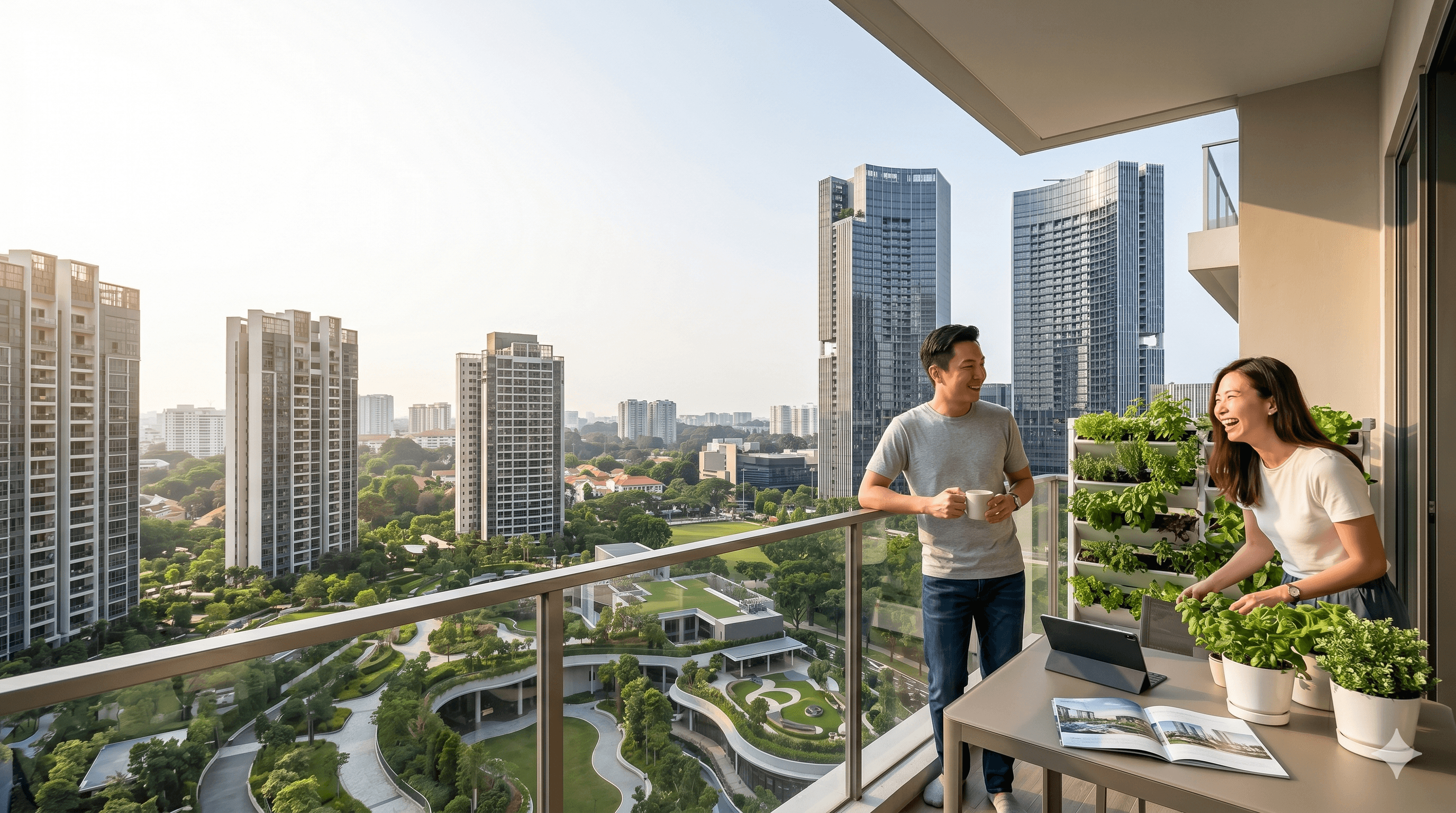
They Sold Their Yishun Flat and Bought a Slower Life Across the Causeway
A couple in their thirties cashed out a Yishun four-room and started again in Malaysia. Behind the lifestyle story is a number every HDB owner is quietly sitting on — here's the maths, and the fine print.
Selling a paid-off HDB flat can fund a very different life abroad, because mid-priced flats are now worth serious money. On the latest medians a four-room resale in Yishun runs about $550k — close to the national $630k — inside a range from $534k in the cheapest town (Jurong West) to $1.17M in the priciest (the Central Area). As Mothership reported, one couple in their thirties sold their Yishun flat for about S$520,000 and moved to Kuala Lumpur, cutting their monthly costs by at least a third. But the medians are gross of levy and fees, the Malaysia figures are the family's own, and leaving the HDB ladder is a hard door to reopen.
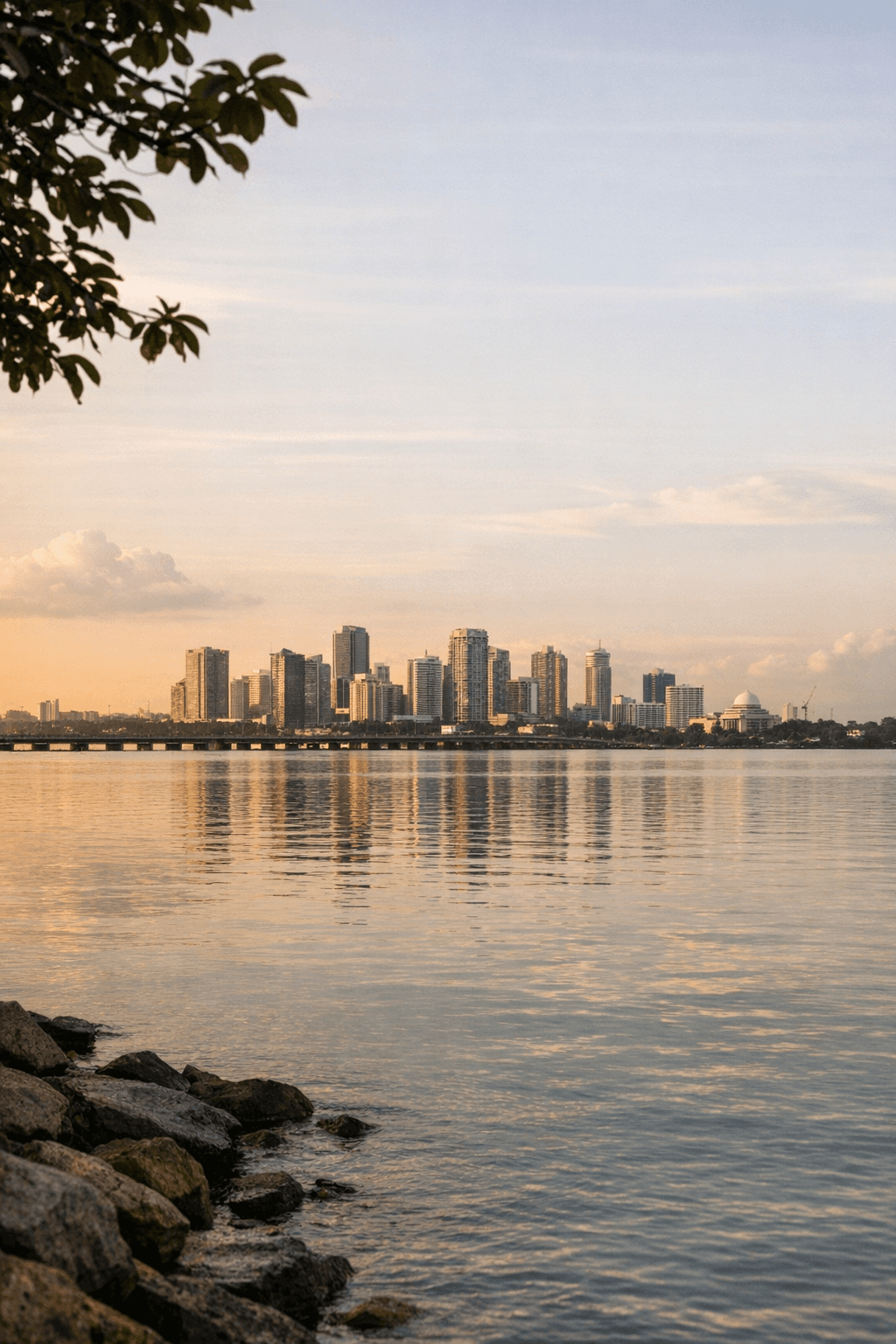
Mothership just told the story of a Singapore couple in their thirties who did something a lot of people quietly daydream about: they sold their Yishun HDB flat, packed up their life, and moved across the Causeway to start again.
It's easy to read as a lifestyle story — a slower pace, a bigger home, smaller bills. But sitting underneath it is a number most of us own without ever really looking at it: what a paid-off HDB flat is actually worth on the day you decide to cash it in.
The couple who moved their plan forward by 15 years
Rachell and Sean, both in their thirties, ran an online business from a four-room flat in Yishun — and had long imagined a slower life across the Causeway, one day.
Rachell Tan and Sean Lee are in their mid-thirties, and by most measures they had already arrived: a paid-down four-room flat in Yishun, an e-commerce business they ran between them, the settled rhythm of a comfortable Singapore life.
Like a lot of couples, they had a someday plan tucked away — retire early, and maybe, in their fifties, trade the pace of Singapore for somewhere gentler and cheaper across the Causeway. It was the kind of plan you keep in a drawer and take out to admire now and then, not something you act on at 36.
As Mothership told it, that was the shape of things: a good life here, and a slower one filed neatly away for later.
A browse 'just for fun' that changed the timeline
Idly looking at Malaysian property, they found homes they genuinely loved — and 'someday' suddenly looked a lot like 'now'.
What moved the plan out of the drawer was almost accidental. They started scrolling Malaysian property listings — by their own account, just for fun — and found places they actually loved, at prices that made the someday-plan feel strangely within reach today.
Because their income came from an online business rather than a Singapore office, the usual anchor wasn't there. Nothing tied the work to a postcode. Once they let themselves take the idea seriously, the fifteen-year wait started to look less like prudence and more like habit.
Tan's own reflection, in the reporting, was that you can plan all you like — and then life turns, and you go with it. So they went.
The flat was the key that unlocked the door
Selling the Yishun flat funded the move: they cashed out, bought a larger home across the border outright, and watched their monthly costs fall.
Here's the part that makes a move like this possible for ordinary people, not just the wealthy. It wasn't bankrolled by a windfall or a big salary — it was bankrolled by the flat.
As Mothership reported, the couple had bought their Yishun four-room for around S$268,000 years earlier and sold it for about S$520,000 — close to double. That lump sum went into a three-bedroom condominium in a gated township in Kuala Lumpur, roughly 1,450 sq ft, for something in the region of S$539,000. A bigger, newer home — bought outright with what a mid-priced Singapore flat now fetches.
Their monthly spending, by their account, fell by at least a third after the move, while the business kept earning in Singapore dollars. The flat, in other words, wasn't just where they lived. It was the asset that bought them a different life.
How much does a Yishun HDB flat actually fetch today?
About $550k for a four-room, on the latest medians — close to the national $630k, and part of a range that runs from $534k in Jurong West to $1.17M in the Central Area.
This is where our data picks up where the reporting leaves off. A couple's own sale price is one flat on one day; the useful question is what a flat like theirs is worth across the board.
On the latest half-year medians, a four-room resale in Yishun runs about $550k — which lands the couple's roughly S$520,000 sale right about where you'd expect. Yishun sits a little below the national median of $630k, and inside a wide national spread:
| Town / benchmark | Median 4-room resale |
|---|---|
| Central Area — priciest | $1.17M |
| Queenstown | $1.02M |
| National median | $630k |
| Yishun — their town | $550k |
| Jurong West — cheapest | $534k |
The real headline is the spread. Even the most affordable town, Jurong West, still clears half a million dollars for a four-room, while the dearest are past a million. A mid-priced flat is no longer a modest asset — it is, for most owners, the largest pile of money they will ever be free to pick up and move.
Why is a paid-off HDB flat such a powerful lever?
Because it's a large, liquid, debt-free sum — sell it and you're holding half a million dollars or more that can be redeployed almost anywhere.
A flat you've finished paying for is a rare thing in personal finance: a large asset, fully owned, that turns into cash the moment you sell. There's no mortgage to clear first, and — for many long-time owners — no loan quietly eating the proceeds.
That's what makes the cash-out so potent. Half a million dollars and up, released in one go, is enough to buy a bigger home outright somewhere cheaper and still keep a cushion. The couple's roughly S$539,000 Kuala Lumpur condo was, in effect, funded by their Singapore flat with room to spare.
The catch is that the lever only pulls once, and only in one direction. To turn the flat into that lump sum, you have to give up the flat — and everything it represents inside the Singapore system. Which is exactly where the honest reading of this story has to slow down.
The fine print behind the affordability story
Cashing out is real — but the median is gross, the Malaysia figures aren't ours, and leaving the HDB ladder is a door that's hard to reopen.
The maths is genuinely appealing. It is also, as ever, only half the page. Before anyone reads this as a plan:
- Our medians are gross, and a snapshot. The $550k Yishun figure is a like-for-like four-room median for the latest half-year, before agent commission, legal fees or any resale levy — and a specific flat swings with its storey, remaining lease and exact block.
- The Malaysia side isn't our data. The couple's purchase price, their new home and their lower bills come from the reporting, not from PropKaki. Property and living costs across the Causeway vary by area and move with the ringgit — a favourable exchange rate today is not a fixed one.
- The HDB door is hard to reopen. Sell your flat and leave, and buying back into Singapore later means re-entering a resale market that has kept climbing — potentially as a second-timer, with the eligibility and stamp-duty rules that come with it.
- The non-money costs are real. Healthcare, schooling, a long-stay visa and distance from ageing parents don't show up on a monthly-spending chart, but they're part of the true price.
None of this cancels the story. It just means the windfall is an option you hold — not a free lunch you've already eaten.
Does moving abroad actually leave you better off?
Financially it can — you release capital and cut running costs — but it's a lifestyle-and-income bet, not a guaranteed win, and you trade an appreciating SGD asset for a life priced in ringgit.
On the numbers alone, a move like this can leave a household clearly ahead: a large lump sum freed up, a bigger home for less, and lower monthly costs — especially when the income still arrives in Singapore dollars, as the couple's does.
But 'better off' is doing a lot of work in that sentence. You're swapping a Singapore flat — an asset that has appreciated steadily and sits inside the CPF and HDB system — for a home and a cost base priced in another currency, in a market you know less well. The gain is real; so is the exposure.
It's worth noting how the couple themselves framed it in the reporting: the driver was the life they wanted — slower, roomier, less pressured — with the money as the enabler, not the point. That's probably the honest way to read the whole trend. The flat makes the option affordable; whether it makes you better off depends on what you actually want.
Should you sell your flat and move across the Causeway too?
Only you can answer that — it suits mobile, remote-income households with eyes open on the trade-offs, and not those anchored to a Singapore job, local schools or the HDB ladder.
This isn't advice, and there's no single right answer — but the story does sort people fairly cleanly.
It leans in favour of households whose income travels: remote or online work, no strong tie to a Singapore workplace, a genuine appetite for a different pace, and a clear-eyed read on the healthcare, visa and currency trade-offs. For them, the paid-off flat is a real and usable key.
It leans against those anchored here — a Singapore-based job, children in local schools, a wish to stay on the HDB ladder, or family who need them close. For them, the same flat is worth more as a home than as a one-time cash-out.
The useful first step isn't booking a viewing in Kuala Lumpur. It's knowing the size of the option you're holding — so if you're curious, ask PropKaki what a flat like yours, in your town, is fetching right now. Then the life question and the money question can at least be asked together.
How we sourced this
The Singapore prices are PropKaki's own read of the full HDB resale record; the couple's Malaysia figures are from the reporting, kept clearly separate.
PropKaki tracks the full HDB resale record — every caveat lodged with HDB, not a sample — so we can compare median resale prices across towns and flat types and refresh them as new resales lodge. The figures here are national and by-town medians for a four-room flat, chosen so towns compare like-for-like, for the latest half-year (2026 H1).
Two lines we keep clean. The Singapore prices are ours — gross, before any levy, commission or fees, and a median is never a valuation of one specific flat. The couple's own numbers — their sale price, their Kuala Lumpur home, their lower bills — are from the reporting, not PropKaki data. Want the median for your own town and flat type? You can ask PropKaki for it.
Sources
- HDB resale transaction records (median resale price by town and flat type), analysed by PropKaki.
- Mothership — the S'porean couple who sold their Yishun flat and moved to Malaysia (original reporting).
- HDB — selling a flat: eligibility (on giving up, and later re-entering, the flat system).
About this commentary
This is editorial analysis by the PropKaki Editorial Desk, written for general information only — it is opinion and context, not a valuation, financial advice or a recommendation to move, stay, buy or sell. The couple's story and their figures are drawn from published reporting; the Singapore price data is from HDB resale records. Currency, tax, visa and property rules across the Causeway change — always verify against official sources (HDB, CPF, IRAS, and the relevant Malaysian authorities) before acting.
Got a question this raised? Ask PropKaki.
Take any point from this analysis and apply it to your own project, budget or decision.
 PropKaki
For most buyers this year, staying well within budget beats trying to time the market.