

Landlord Responsibilities for Repairs in Singapore: What Landlords Usually Fix
A practical guide to what landlords usually cover, what tenants usually pay for, and what to pin down before signing.
In a Singapore rental, the landlord is generally responsible for structural issues, essential systems (plumbing, electrical, water heater), and any defects that existed before move-in; the tenant handles routine upkeep, consumables, and damage from misuse or neglect. Air-con servicing is usually the tenant's, but major air-con repairs often fall to the landlord. The tenancy agreement, the inventory list, and move-in photos decide most disputes.
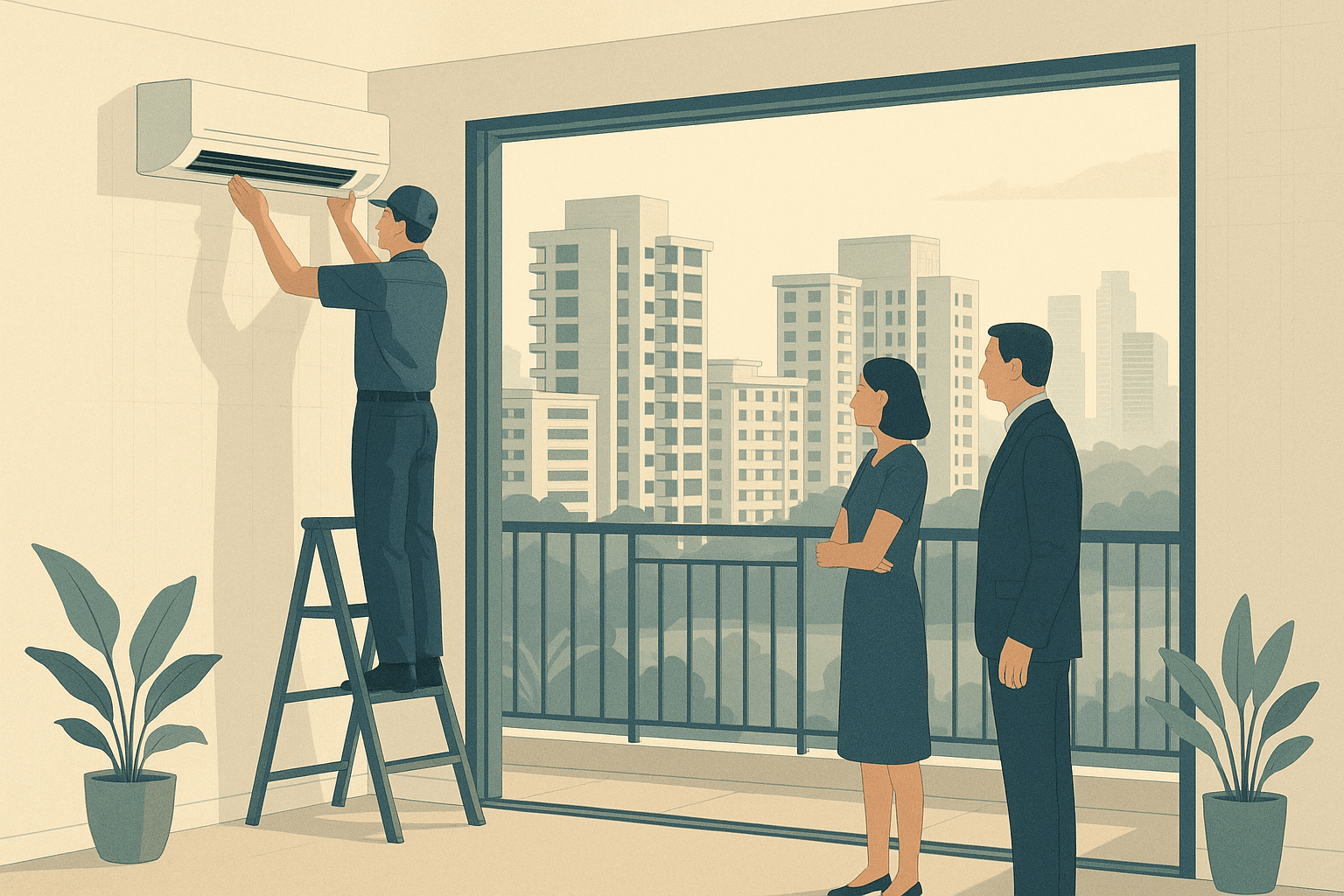
There is no single Singapore rulebook listing every rental repair item one by one. In practice, repair responsibility is usually decided first by the tenancy agreement, then by the unit’s move-in condition and what caused the problem. As a working rule, landlords usually handle structural, essential-system, and pre-existing defects, while tenants usually handle day-to-day upkeep and damage they cause.
What is the practical rule of thumb for landlord repair responsibilities in a Singapore rental?
Use this sequence: tenancy agreement first, move-in condition second, cause of the defect third. In practice, landlords usually handle structural, essential-system, and pre-existing issues, while tenants usually handle day-to-day upkeep and damage they cause.
The most useful way to think about this is not a legal lecture. It is a simple decision framework: contract first, condition second, cause third.
| Check | Usually points to landlord | Usually points to tenant |
|---|---|---|
| Was the issue already there at move-in? | Pre-existing defect or known fault | New issue after tenant use |
| What kind of item is affected? | Structure, hidden plumbing, electrical system, landlord-supplied fixture or appliance failing through normal use | Consumable, routine upkeep item, small use-related issue |
| What likely caused it? | Age, ordinary failure, hidden defect | Misuse, neglect, poor care, guest damage |
Example: a concealed pipe leak behind a wall is usually treated very differently from a blown light bulb or a fitting broken by force. The first points to a property defect. The second usually points to ordinary upkeep or tenant-caused damage.
The key caution is that there is no single universal repair list that overrides the lease. If the signed agreement assigns a specific item differently, the contract usually controls the practical outcome. For the bigger contract picture, see Tenancy Agreement Singapore: Singapore Tenancy Rules, Clauses and Practical Checks.
The point: do not argue from assumptions. Ask what the lease says, what the handover record shows, and what likely caused the problem.
What repairs are landlords usually expected to handle?
Landlords usually fix defects tied to the property itself: structural issues, hidden building faults, and landlord-provided items that fail through ordinary use rather than tenant misuse.
In day-to-day Singapore leasing practice, landlord-side repairs usually involve the unit as a property, not just the tenant’s daily use of it. Common examples include ceiling leaks, concealed plumbing faults, electrical issues affecting the unit, faulty water heaters, and built-in or supplied appliances that stop working through ordinary use.
A few practical examples help:
- If water is leaking from the ceiling or a pipe inside a wall, that usually points to landlord-side repair.
- If the landlord supplied a fridge or washing machine and it fails despite normal use, that also usually leans landlord-side.
- If a window latch, lockset, or door closer fails from age rather than force, it is more likely to be treated as ordinary property maintenance.
It helps to separate repair from replacement. A landlord may be expected to rectify the problem, but not automatically buy a brand-new item just because an older one has failed. Whether replacement is required depends on the tenancy agreement, the condition of the item, and whether repair is still reasonable.
Two useful checks before you decide:
- Was the item supplied by the landlord and listed in the inventory?
- Is there any sign of misuse, poor maintenance, or unauthorised alteration by the tenant?
For broad lease context, PropertyGuru’s guide to lease agreements in Singapore is a useful reference. If the property is in a condo, landed estate, or HDB block, also check whether MCST processes, access arrangements, or building-related channels affect how the repair is handled. For a broader overview, see Minor Repair Clause in a Singapore Tenancy Agreement: What to Clarify.
What repairs are usually the tenant’s responsibility?
Tenants usually pay for routine upkeep, consumables, and damage linked to their use, negligence, or guests. They are not usually paying for ordinary aging of the unit itself.
Tenant-side responsibility usually covers how the home is used day to day. That often includes small upkeep items, consumables, and repairs needed because of careless use, neglect, or guest damage.
Common examples include replacing light bulbs or batteries, basic cleaning-related upkeep, handling minor use items agreed in the lease, and paying for damage such as cracked glass, broken fittings, stains caused by avoidable neglect, or a clogged drain caused by improper use.
A simple way to see it: normal use is not the same as misuse. If something fails because it is old, worn, or defective, that is different from something being damaged by poor care. That distinction matters when a landlord tries to deduct repair cost from the security deposit.
Watch the lease wording here too. Many tenancy agreements include a minor repair clause, but the existence of such a clause does not mean the tenant pays for every small defect. You still need to ask whether the issue was pre-existing, caused by ordinary aging, or triggered by tenant use.
Takeaway: tenants are usually responsible for the condition they create, not for every fault that appears during the tenancy. For a broader overview, see Tenancy Inventory List Singapore: What to Record at Move-In Handover.
How do you tell wear and tear apart from tenant damage?
Think of it as aging versus harm. Wear and tear is natural deterioration from normal use over time, while tenant damage is avoidable harm caused by misuse, accidents, or neglect.
This is one of the most important distinctions to get right, because many repair disputes are really deposit disputes in disguise.
| Usually wear and tear | Usually tenant damage |
|---|---|
| Faded paint | Large stains, drawings, or holes beyond agreed fittings |
| Light scuffs on flooring | Deep scratches, burns, chips, or broken tiles |
| Worn hinges or sealant from age | Broken fitting from force or poor care |
| Appliance performance declining with age | Appliance damage from misuse or lack of basic cleaning |
The move-in record often decides the argument. If the wall was already marked, the cabinet hinge was already loose, or the aircon was already noisy, it is much harder to call it new tenant damage later. If the item was recorded as clean and working at handover but comes back cracked, stained, or clearly mishandled, the tenant has a weaker case.
CNA has highlighted how often Singapore rental disputes turn on the meaning of fair wear and tear in practice: see CNA’s report on rental wear and tear disputes. For deposit-specific handling, see Rental Deposit Return in Singapore: Timing, Deductions and What to Do If It Is Withheld.
The takeaway: compare photos, inventory notes, and current condition together. One without the others is rarely enough. For a broader overview, see Move-Out Handover Checklist Singapore: How to Compare Condition and Reduce Disputes.
What repair items commonly cause disputes in Singapore rentals?
The usual flashpoints are aircon, plumbing, mould, appliances, locks, and electrical issues. These items become contentious because age, maintenance, and tenant use can all be part of the same problem.
These are the items that get argued about most often:
- Aircon: routine servicing may be assigned to the tenant, but a breakdown after proper servicing often triggers a landlord-versus-tenant dispute over cause.
- Plumbing: a concealed pipe leak is very different from a choke caused by grease, food waste, hair, or foreign objects.
- Mould and damp: the source may be poor ventilation, water ingress, or an unresolved leak, so assumptions are risky.
- Appliances: fridge, washer, oven, hob, and water heater failures become contentious when the item is older and nobody documented its starting condition.
- Locks and door hardware: wear from age is different from damage after forced handling, lost keys, or unauthorised replacement.
- Electrical issues: tripping caused by a unit fault is different from overloading or misuse.
Before signing, clarify three points in writing: who arranges routine servicing, who chooses the vendor, and what happens if the item still fails after servicing. If the agreement includes a minor repair clause, check how it interacts with landlord-supplied appliances and breakdowns.
For a practical market explainer, Rently’s guide to rental repairs and maintenance is a helpful reference.
The most expensive disputes do not always start with a big repair. They often start with a small unclear clause. For a broader overview, see Rental Deposit Return in Singapore: Timing, Deductions and What to Do If It Is Withheld.
What should be written into the tenancy agreement before signing?
The clauses that decide repair disputes most often are the minor repair clause, aircon servicing terms, fair wear and tear wording, and the list of landlord-provided fixtures and appliances. The signed agreement is what the parties usually rely on in practice.
Before signing, slow down and review five items carefully:
- The minor repair clause and whether it is a negotiated term or just copied market wording.
- Aircon servicing obligations, vendor records, and what happens if the unit still breaks down after servicing.
- Fair wear and tear wording, so ordinary aging is not treated as tenant damage.
- A clear schedule of landlord-provided appliances, fittings, furniture, and access devices such as keys or remotes.
- What happens if an item is beyond repair: is replacement addressed, and who decides the contractor or vendor?
It helps to size the money at stake. PropKaki's rental transaction data puts the median private rent at about $4,400 a month in the 90 days to 1 July 2026, and the typical minor-repair cost cap that a tenant bears first sits well below one month's rent — often only a small fraction of it. That is worth keeping in mind on both sides: the cap decides who pays the first slice of a small fix, not who carries a major repair, so it rarely justifies a drawn-out fight. For how the cap itself should be drafted, see the minor repair clause guide.
Also clarify the process, not just the cost split. Who must be notified? How quickly should defects be reported? Does the tenant need approval before calling a contractor, except in emergencies? Many later disputes happen because the repair workflow was never written down.
CEA tenancy templates are commonly used as a market reference, but the signed agreement is what both parties will usually fall back on. For deeper clause review, see Minor Repair Clause in a Singapore Tenancy Agreement: What to Clarify and the broader PropKaki tenancy rules guide. For general legal context, Singapore Legal Advice’s overview of landlord and tenant rights is a useful starting point.
The takeaway: if a clause is vague enough to spark an argument, it is not ready to sign.
What should you check during inventory and handover?
A strong handover record makes pre-existing defects easier to prove and later disputes easier to resolve. Document the unit clearly before the tenant starts using it.
- ✓Walk through the unit room by room and note visible defects, stains, cracks, leaks, loose fittings, and non-working items.
- ✓Take dated photos or short videos of walls, flooring, windows, doors, taps, sanitary fittings, appliances, locks, remotes, and aircon units.
- ✓Record pre-existing issues in writing instead of relying on verbal assurances.
- ✓List all landlord-provided furniture, appliances, and accessories so both sides know what was handed over.
- ✓Test key supplied items where practical, such as aircon, water heater, lights, hob, hood, fridge, washer, and locks.
- ✓Capture meter readings if relevant to the handover.
- ✓Ask both sides to acknowledge the inventory and condition record, and sign where appropriate.
- ✓Store the inventory, photos, videos, and handover messages together so they can be compared easily at move-out.
- ✓Treat missing documentation as a risk: if it was not recorded at move-in, it is harder to prove later.
How do you work out who pays for a repair without it turning into a fight?
Use a neutral script: signed clause first, handover condition second, cause of the defect third. That keeps the conversation factual instead of emotional.
A practical line that works well is: “Let’s check the tenancy agreement, the move-in record, and what caused the issue before deciding who pays.” That keeps things neutral without sounding evasive.
Then ask three questions in order:
- Was this issue already present or recorded at handover?
- Does it look like normal wear and tear, or actual damage from use or neglect?
- Does the tenancy agreement assign this item or service obligation to one party?
This approach helps in common scenarios. If a tenant says the aircon was already weak at move-in, go to the inventory and early servicing records. If a landlord says the sink blockage is tenant-caused, ask what the technician found and whether misuse was actually documented. If an older appliance fails, check whether the lease only says repair, or also addresses replacement.
For documentation flow, pair this with Tenancy Inventory List Singapore: What to Record at Move-In Handover and Move-Out Handover Checklist Singapore: How to Compare Condition and Reduce Disputes.
The point: neutral does not mean vague. It means holding both sides to the same decision framework.
When should a repair issue be escalated rather than treated as a normal tenant-landlord matter?
Escalate quickly if the issue affects safety, sanitation, security, or the basic usability of the home, or if liability is turning into a serious deposit dispute.
Do not let urgent defects drift through casual chat. Active ceiling leaks, electrical burning smells, sewage issues, severe mould linked to water intrusion, failed locks, or loss of essential water-heating or electrical function should be documented and handled formally.
At that stage, the goal is not to make a legal ruling on the spot. It is to move the discussion into writing, preserve photos, videos, invoices, and technician findings, and point both parties back to the tenancy agreement. If liability remains disputed, keep the evidence clean and consider formal dispute-resolution channels rather than relying on verbal claims. For a practical overview, 99.co’s guide to resolving tenancy disputes in Singapore is a useful starting point.
Official sources
Go straight to the authorities for the current rules and figures.
Methodology and sources
Where every figure comes from — and what we deliberately did not claim.
Proprietary figures. Rent figures come from PropKaki's transaction data — URA private residential rental contracts — with medians over the trailing 90 days to 1 July 2026 (26,579 contracts). These are private rentals, not HDB, and rent varies widely by project, floor, furnishing and lease term, so the median is a reference level, not a quote.
What we have not claimed: the rent, deposit, or terms for any specific unit (always check the actual tenancy agreement); HDB rental figures; or any legal ruling — this is a practical explainer, not legal advice.
Got a question this raised? Ask PropKaki.
Take any point from this analysis and apply it to your own project, budget or decision.
 PropKaki
For most buyers this year, staying well within budget beats trying to time the market.