
HDB’s last 4 private wet markets revert by 2027 — why it matters
Four neighbourhood markets will return to HDB after 30 years, with likely knock-on effects for estate amenities and day-to-day liveability.
The Straits Times reports that the last four privately-owned HDB wet markets will revert to HDB by end-2027 and are expected to be refreshed after the lease expiry. Our read: this is not just about cleaner market halls, but about HDB regaining control over key heartland spaces that affect convenience, tenant mix and neighbourhood appeal. The upside is better coordination and estate planning; the uncertainty is whether refreshed spaces remain affordable and commercially vibrant for stallholders.
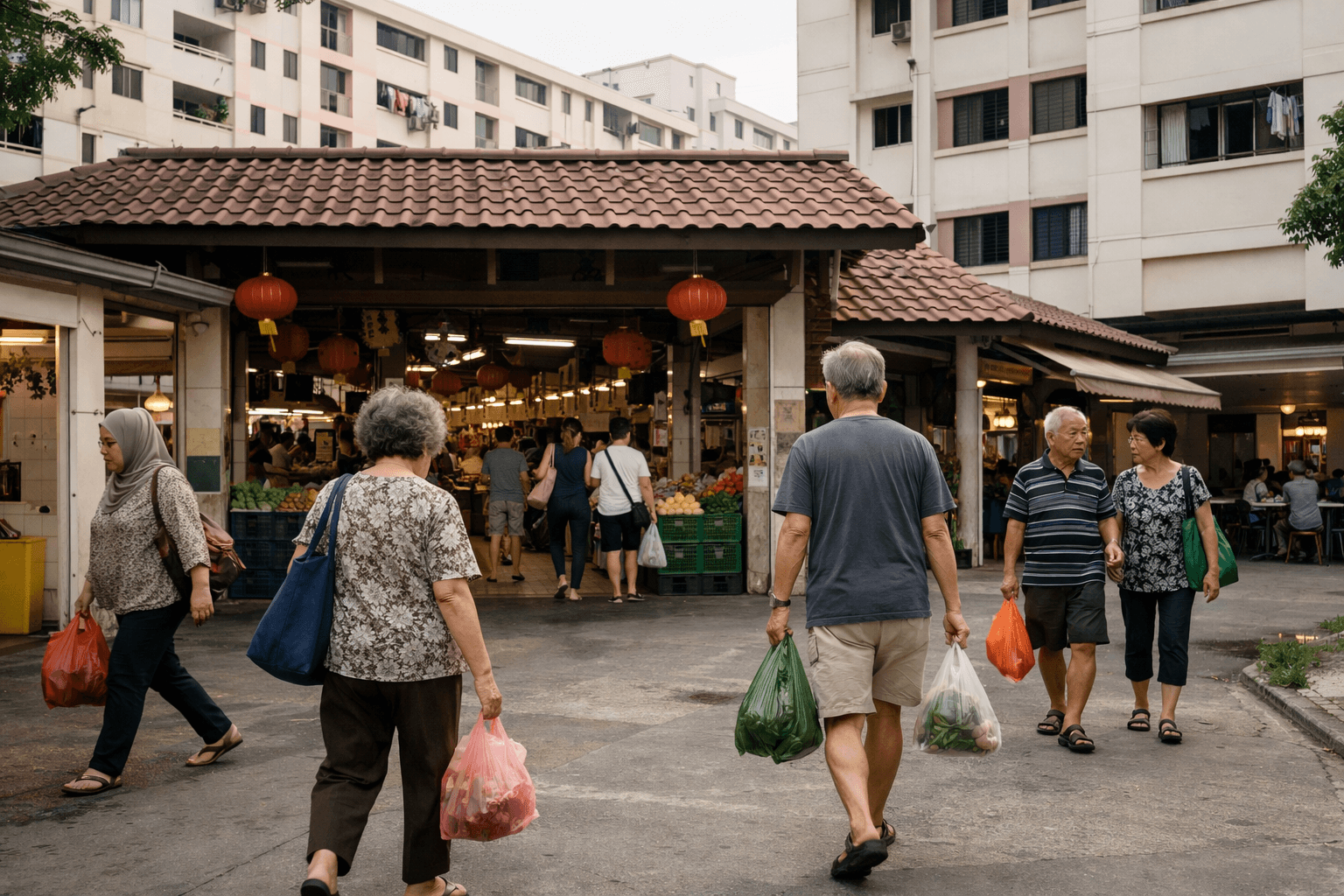
Residents near Fajar Shopping Centre, Yew Tee Square, Bukit Batok West Shopping Centre and Woodlands North Plaza are set to see their wet markets return to HDB after the current 30-year private leases expire by end-2027, according to The Straits Times, citing Senior Minister of State for National Development Sun Xueling.
That may sound like a narrow retail story, but it matters to homeowners too. Who controls a heartland market can influence refurbishment, stall mix, affordability for merchants and the overall quality of daily amenities that help shape how an estate feels to live in.
Which four privately-owned HDB wet markets will revert by end-2027?
Fajar, Yew Tee, Bukit Batok West and Woodlands North are due to return to HDB when their leases end.
The Straits Times reports that the wet markets in Fajar Shopping Centre, Yew Tee Square, Bukit Batok West Shopping Centre and Woodlands North Plaza have leases expiring by end-2027 at the latest, after which ownership will return to HDB. Sun Xueling said residents can expect refreshes similar to the HDB-led refurbishments at Keat Hong and Serangoon, which have already reopened. The report adds that this will close the chapter on private ownership of HDB-managed wet markets; HDB owns another 13 markets, while the bulk of Singapore’s other markets, about 80, are managed by the National Environment Agency.
How HDB taking back Fajar, Yew Tee, Bukit Batok West and Woodlands North could change heartland retail
The real shift is not only refurbishment, but who gets to shape rents, trades and the role of these spaces in the estate.
As reported by The Straits Times and reflected on HDB’s website, private owners have more extensive property rights than master tenants and can change trades, switch tenants or negotiate rents on a free-market basis. Once HDB takes back ownership, it has more scope to refresh the space and appoint master tenants with a broader estate-management and community objective. Our read: that can improve convenience and cohesion in a neighbourhood centre, but the Serangoon example in the report also shows the trade-off: a cleaner, brighter market does not automatically mean stronger business for every stallholder or cheaper groceries for residents.
What the 2027 HDB wet market reversions mean for nearby flat buyers, sellers and landlords
This is a liveability story first, with property impact likely gradual rather than dramatic.
For buyers, a refreshed market is a meaningful everyday amenity when comparing mature HDB areas in Bukit Panjang, Yew Tee, Bukit Batok West and Woodlands. For sellers, a better-run market, nearby eating options and more coordinated common spaces can support an estate’s appeal, although resale pricing still depends much more on lease balance, transport links and supply; the broader context is in our Singapore HDB Resale Prices Transactions Overview — 6 June 2026. For landlords and investors, steadier amenity quality may help tenant retention, but it would be a stretch to assume every market refresh translates into higher rents or stronger yields.
Which are the last four privately-owned HDB wet markets in Singapore?
They are in Fajar Shopping Centre, Yew Tee Square, Bukit Batok West Shopping Centre and Woodlands North Plaza.
Those four were named by Sun Xueling in the report, and their leases are due to expire by end-2027 at the latest. After that, ownership returns to HDB.
Will stall rents definitely fall when these HDB wet markets return to HDB?
No such guarantee has been announced.
The report says a Woodlands North Plaza stallholder hopes rents may come down, but that is not an official commitment. What is reported as fact is that at Serangoon, returning stallholders have been allowed to continue paying the same rent as before the ownership transition for at least three years.
Will a refurbished wet market lift nearby HDB resale prices?
Possibly at the margin, but there is no direct official evidence that a refresh alone moves prices.
Our read: improved amenities can make an estate easier to live in and easier to market, especially for buyers who value daily convenience. But property values are still driven more heavily by lease, location, connectivity, school catchment and broader market conditions.
What end-2027 HDB wet market lease expiries could mean for heartland appeal
These lease expiries matter because they give HDB another lever to reshape neighbourhood centres, not just market stalls.
By end-2027, the last four privately-owned HDB wet markets should revert to HDB, ending a 30-year private-ownership chapter inside HDB estates. Our read: the bigger significance for residents is the long-term evolution of heartland centres themselves — cleaner markets, different tenant mix and potentially more integrated community uses — while affordability and merchant viability remain the issues to watch.
Sources
This commentary draws on the following reporting and official sources:
- The Straits Times — original report
- Written Answer by Ministry of National Development on rent control ...
- [PDF] WET MARKETS - National Heritage Board
- Written Reply to Parliamentary Question on Median Rent for Hawker ...
- Top 5 HDB Flats Near Wet Markets - Singapore - 99.co
- Last four privately owned HDB wet markets to be refreshed after ...
- List of Wet markets in Singapore - SGWetMarket
- Singapore Wet Market: Exploring the 5 C's | Walk to Market
About this commentary
This is editorial analysis by the PropKaki Editorial Desk, written for general information only — it is opinion and context, not a valuation, recommendation or financial advice. Factual claims are drawn from the linked sources, including the original report by The Straits Times, and PropKaki's interpretation is clearly framed as such. Always verify policy and figures against official sources (URA, HDB, MAS, IRAS) before acting.
Got a question this raised? Ask PropKaki.
Take any point from this analysis and apply it to your own project, budget or decision.
 PropKaki
For most buyers this year, staying well within budget beats trying to time the market.