The Orie Review: Is Toa Payoh's First Launch in 8 Years Worth ~$2,723 PSF?
The first private condo to hit Toa Payoh since 2016 arrived priced 56% above the district's resale flats. We test whether the scarcity — and the deep upgrader demand feeding it — actually justifies the number.
The Orie is a 777-unit, 99-year leasehold condo in two 40-storey towers at Lorong 1 Toa Payoh (District 12, RCR), by a CDL–Frasers Property–Sekisui House JV, with vacant possession expected by 31 May 2030. Across 742 developer-sale caveats its indicative pricing is about $2,723 psf (median ~$2.20M) — roughly 56% above District 12's median resale. That premium is driven by genuine scarcity: this was Toa Payoh's first private launch since Gem Residences in 2016, and it sold ~86% of units on launch weekend. It suits a Toa Payoh upgrader or central-heartland own-stayer; pure flippers should note that 777 units and a mature-town price ceiling cap the upside.
The Orie at a glance
| Developer | Transcend Residential (Toa Payoh) Pte Ltd |
|---|---|
| Tenure | 99-year leasehold |
| Units | 777 |
| Launched | January 2025 (first developer sale) |
| Sales progress | 741 of The Orie's 777 units (95%) had been sold as of Oct 2026, leaving 36 unsold (URA developer sales). |
| Launch price paid | S$2,722 psf median (S$2.21M), 744 developer caveats to Oct 2026 |
| District 12 resale | S$1,754 psf median across 349 resales in the last 12 months, so the launch price is 55% higher |
From URA caveats and URA's developer-sales figures (sales checked Oct 2026), refreshed daily. The review below was written earlier and quotes the figures of its day.
Every transaction and listing at The Orie →Resale profit odds →Floor plans ↓
Where is The Orie's showflat?
The Orie's showflat is along Toa Payoh West, near Caldecott MRT station, according to a CDL press release (2 January 2025). When it opened, the developer gave its hours as 10am to 7pm. 36 units were still unsold as of Oct 2026 (URA), so book a viewing with the developer's sales team before you go.
Source: CDL press release, 2 January 2025. PropKaki has not visited this showflat; this review is a desk analysis.
Toa Payoh had not seen a new private condo launch in roughly eight years when The Orie opened its doors — and the town's upgraders answered by clearing 86% of the project in a single weekend. That is the whole story in one sentence: almost no new supply, meeting an enormous base of flat-owners who want to stay in the neighbourhood they already love. This review prices what that scarcity is actually worth, and where its limits are.
Is The Orie worth buying? Our verdict
The Orie is a strong own-stay buy for Toa Payoh upgraders and central-heartland buyers: it's the town's first private launch in ~8 years and sold ~86% on launch weekend. At ~$2,723 psf (56% over District 12 resale) it's a rational home, but 777 units and a mature-town ceiling temper the flip case.
The Orie is a buy for the Toa Payoh upgrader and the central-heartland owner-occupier — and a much weaker case for the pure flipper. Its entire pricing story rests on one fact: this was the first private condo launch in Toa Payoh in roughly eight years, and there is a very large population of established flat-owners in the town who want to trade up without leaving it. When scarce new supply meets deep, rooted demand, price follows — and it did. The Orie sold about 86% of its 777 units on launch weekend at an average of around $2,704 psf (EdgeProp), a level our caveat data tracks at a median of ~$2,723 psf.
Here is the number people fixate on and why it is only half the picture: The Orie's launch PSF is about 56% above District 12's median resale (~$1,742 psf). That gap looks aggressive until you remember what sits on each side of it — a brand-new, rail-linked private project on one side, and a district-wide pool of older, mostly leasehold, lived-in stock (including a lot of ex-HDB-adjacent condo resale) on the other. Some of that 56% is simply the price of new, and some is the price of the only new game in town.
So the verdict turns on who you are. If you are upgrading out of a Toa Payoh (or nearby) flat and you value staying minutes from the HDB Hub, your kids' schools and a North–South Line ride to Orchard and the CBD, The Orie is a rational, well-located own-stay buy — and the launch-weekend demand tells you the resale pool of like-minded buyers is real. If you are buying purely to flip, temper your expectations: at 777 units this is not a boutique scarcity play, and a mature heartland town has a natural price ceiling that a fresh-off-launch premium is already testing. In Toa Payoh, the scarcity is real — but so is the ceiling.
For the market-wide picture, see our roundup of every 2026 new launch benchmarked against resale. You can also browse every 2026 launch in the Singapore new launches directory.
Why is Toa Payoh's first launch in years priced at $2,723 psf?
The Orie is the first private launch in Toa Payoh since Gem Residences in 2016 — roughly eight years of near-zero new supply in a huge, established HDB town full of would-be upgraders. Our data shows a ~$2,723 psf median across 742 caveats; the premium is the price of being the only new game in town.
To understand the price you have to understand the drought. Before The Orie, the last private condominium to launch in Toa Payoh was Gem Residences, back in 2016 (EdgeProp) — roughly eight years of effectively zero new private supply in one of Singapore's most established, centrally located heartland towns. Toa Payoh is overwhelmingly public housing: it is one of the oldest and largest HDB estates in the country, which means two things at once. First, almost no land comes up for private development. Second, there is a very large surrounding base of flat-owners who have built equity and now want to upgrade to private housing — ideally without uprooting from the town, the schools and the community they know.
That is a textbook scarcity-meets-demand setup, and the market priced it accordingly. Our data puts The Orie's indicative pricing at a median of about $2,723 psf across 742 developer-sale caveats, with the middle half of transactions falling between roughly $2,606 and $2,847 psf. The median quantum is about $2.20M — a number that matters here, because a Toa Payoh flat upgrader is typically quantum-sensitive, and a two-bedder in the low-$1.8M range is within reach of a household that has done well on its resale flat.
The premium, then, is not a developer being greedy in a vacuum. It is the visible price of being the only brand-new, full-facility, rail-linked private option in a town where thousands of people would like to buy exactly that. Whether you should pay it depends on whether you are one of those people — which the rest of this review works through.
The Orie at a glance: the key facts
The Orie is a 777-unit, 99-year leasehold condo in two 40-storey towers at Lorong 1 Toa Payoh (District 12), by a CDL–Frasers–Sekisui House JV, with vacant possession expected by 31 May 2030 and indicative pricing around $2,723 psf.
| Detail | The Orie |
|---|---|
| Developer | CDL, Frasers Property & Sekisui House (JV: Transcend Residential (Toa Payoh) Pte Ltd) |
| Tenure | 99-year leasehold |
| Location | Lorong 1 Toa Payoh, District 12 (RCR) |
| Site area | ~15,743 sqm |
| Total units | 777, across two 40-storey towers |
| Nearest MRT | Braddell (North–South Line) |
| Expected vacant possession | 31 May 2030 (marketing materials estimate TOP around Q2 2028) |
| Launched | 18 January 2025 |
| Launch-weekend result | ~668 units sold (~86%) at ~$2,704 psf average |
| Indicative pricing (our data) | ~$2,723 psf · median ~$2.20M |
Two notes on these figures. The developer, tenure, site area, tower count and vacant-possession date are from the project's launch materials, not our internal directory — our automated records carry a completion year that can be unreliable for a project at this stage, so we defer to the developer's own dates. There is a genuine wrinkle worth flagging: the S&P's legal vacant possession is dated 31 May 2030, while marketing collateral has estimated TOP closer to Q2 2028 — the earlier date is the developer's target, the later is the contractual backstop. The pricing and caveat counts are our own, computed from URA developer-sale caveats. Independent coverage from EdgeProp corroborates the launch: prices opened from $1.28M for a one-bedroom-plus-study, and the project moved ~86% of stock on its opening weekend.
What does 'central heartland' actually buy you at The Orie?
The Orie offers a rare mix: North–South Line access to Orchard and the CBD from Braddell MRT, wrapped in a mature town's everyday amenities — the HDB Hub, wet markets, hawker food and a strong school cluster. It's a central-yet-heartland convenience case, not a trophy-address one.
The Orie's pitch is a specific and slightly unusual one: a heartland lifestyle at a near-city address. Toa Payoh sits in the geographic centre of Singapore, and that shows up on the map. Braddell MRT on the North–South Line is the nearest station, putting Orchard and the Central Business District a direct, few-stop train ride away — you get city access without paying a Core-Central-Region price. That is the crux of the 'central heartland' value: you are buying RCR (city-fringe) proximity with the deep, everyday convenience of a mature town wrapped around it.
And Toa Payoh's amenities are the real, lived-in kind, not a masterplan promise. The HDB Hub — town centre, malls, wet market, hawker fare, bus interchange and the HDB headquarters — is right there. The town is ringed by a well-regarded school cluster, including Pei Chun Public School, CHIJ Primary and Secondary (Toa Payoh), First Toa Payoh Primary and Kheng Cheng School, with Raffles Girls' School (Secondary) in the wider catchment. For a family upgrading within the town, that continuity — same schools, same food, same community, just a private home now — is a large part of what the premium buys, and it is exactly why launch-weekend demand was so concentrated among locals.
The honest counterpoint: heartland-central is a lifestyle-and-convenience case, not a prestige-address case. You are not buying a trophy District 9/10 postcode, and you should not price it as one. What you are buying is arguably more durable for an own-stayer — genuine daily usefulness in a location that is not going to fall out of fashion.
How much does The Orie cost? Prices and PSF by unit size
Across 742 developer-sale caveats, The Orie's median is ~$2,723 psf and ~$2.20M, with most units between $2,606 and $2,847 psf. Unusually, PSF falls as units get bigger — the 3–4 bedders (~$2,611 psf) are the per-square-foot value, the small units carry the richest PSF.
Across the 742 developer-sale caveats lodged so far, The Orie's median is about $2,723 psf, with the middle half of deals between $2,606 and $2,847 psf and a median quantum near $2.20M. That sits right on top of the ~$2,704 psf launch-weekend average EdgeProp reported — a clean cross-check that our caveat read matches the market.
| Unit size (from our caveats) | Caveats (n) | Median PSF | Median price |
|---|---|---|---|
| ≤550 sqft (studio/1BR) | 50 | $2,737 | $1.41M |
| 550–750 sqft (1–2BR) | 310 | $2,832 | $1.85M |
| 750–1,100 sqft (2–3BR) | 156 | $2,728 | $2.53M |
| 1,100–1,500 sqft (3–4BR) | 226 | $2,611 | $3.41M |
The pattern here is the opposite of a boutique project's flat pricing — and it tells you who bought. PSF falls as units get larger: the small 1–2 bedders (~$2,832 psf) carry the richest per-square-foot pricing, while the big 3–4 bedders (~$2,611 psf) get a clear discount. That is the classic quantum-management move on a large launch: the developer pushes PSF on the low-quantum units (which sell easily to investors and singles) and eases PSF on the big-quantum family units (where a $3.4M cheque needs help clearing). The practical takeaway for an upgrader: the family-sized units are where the per-square-foot value is — you pay more in total, but less per square foot, which is unusual and worth knowing. If you are weighing entry price against efficiency, read quantum vs PSF when buying a condo.
Is The Orie overpriced? Its PSF vs District 12 resale and rival launches
At ~$2,723 psf, The Orie is ~56% over District 12 resale, but that's mostly the new-vs-resale gap. Against launches, it runs ~$130 psf above The Arcady at Boon Keng — and its 742 caveats dwarf the district's other launches, because scarce supply meant there was little else to buy.
The headline ~56% premium over District 12's median resale (~$1,742 psf, from 550 resale caveats) is real but misleading if read literally. You are comparing a brand-new, twin-tower, full-facility launch against a district-wide pool of older, shorter-lease, lived-in apartments — the new-versus-resale gap does most of that work, not overpricing. The fairer question is how The Orie prices against the launches a buyer would actually cross-shop, and here District 12 is genuinely thin — which is the scarcity story showing up again in the data:
| Project | New-Sale caveats (n) | Median launch PSF |
|---|---|---|
| The Orie | 742 | $2,723 |
| The Arcady At Boon Keng | 101 | $2,592 |
| Lavender Residence | 5 | $2,075 |
The Orie sits about $130 psf above The Arcady at Boon Keng (~$2,592), the nearest recent District 12 launch of any scale — and note the volumes: The Orie's 742 caveats dwarf everything else in the district, because there simply has not been anything else at this scale to buy. That thinness cuts both ways. It supports the premium (little competing new supply), but it also means the market has few fresh reference points, so The Orie is partly setting the district's new benchmark rather than being checked by it. Whether the step over resale is worth it is the new-launch-premium question, worked through in how much a new-launch premium should be and new launch vs resale. The Business Times has flagged that price ceilings are emerging as more supply comes to market — a useful caution before assuming a launch premium keeps compounding in a mature town.
Is The Orie a good investment? What the resale data says
The Orie has never been resold, so there's no track record. The RCR proxy shows 86.4% of resales beat cost with a +24.8% median gain (gross) — but that's a base rate, not a forecast. Scarcity and upgrader demand support resale; a 99-year lease and 777 near-identical units temper the flip case.
The Orie has never been resold — it is a brand-new launch — so there is no project track record, and anyone quoting you a guaranteed return is guessing. The honest proxy is how comparable homes in its market segment have historically performed. Across matched resale pairs, 86.4% of city-fringe (RCR) private resales sold above their purchase price, with a median gross gain of 24.8%.
Read that as a base rate, not a forecast, and remember it is gross — before commission, stamp duties, any Seller's Stamp Duty and loan interest. Two things specific to The Orie shape how that base rate might land. In its favour: the same scarcity and upgrader demand that cleared 86% of the project on launch weekend suggest a genuine, resident-anchored resale pool — this is not a location that needs an investor bid to exist. Against it: this is a 99-year leasehold on a large, 777-unit project, so you have both a lease clock ticking and a deep supply of near-identical units competing whenever you eventually sell. That combination tends to reward the owner-occupier who holds and uses the home over the trader hoping to flip into a thin pool of differentiated stock.
On rental, The Orie sits in a proven tenant catchment — central, MRT-linked, and close to the CBD and Orchard employment nodes — but we don't publish a yield figure for an unlaunched project, and you shouldn't rely on one you see quoted elsewhere. To pressure-test a specific unit against your own holding period, financing and costs, run it through the PropKaki profitability model, and read how to tell if a property will be profitable.
The developer and the product: CDL, Frasers, Sekisui and two 40-storey towers
The Orie is a CDL–Frasers–Sekisui House joint venture — a blue-chip line-up that reassures on build quality and handover. The product is two 40-storey towers of 777 units, a tall format that buys high-floor views over the low-rise heartland and supports full facilities, at the cost of a large resale pool.
The Orie is built by a heavyweight joint venture — City Developments Limited (CDL), Frasers Property and Sekisui House, delivering through the entity Transcend Residential (Toa Payoh) Pte Ltd. That is about as blue-chip as a Singapore residential consortium gets: CDL and Frasers are two of the country's largest, most experienced developers, and Sekisui House brings Japanese build quality and detailing. For a buyer, the pedigree matters most in two places you cannot see at launch — construction quality and the smoothness of the handover — and this line-up is a reassuring one on both.
The product is a twin-tower, 40-storey scheme of 777 units on a ~15,743 sqm site. The tall-tower format is a deliberate response to the location: going vertical on a compact central plot buys the higher floors sweeping, largely unobstructed views over the low-rise Toa Payoh heartland — a genuine differentiator in a town where almost everything around it is mid-rise HDB. It also means a full-facility development (the pools-and-pavilions offering a 777-unit project can support), which is part of what upgraders are trading up for when they leave a flat.
The trade-off of scale is the same one every large launch carries: 777 units is a lot of neighbours and, eventually, a lot of competing resale listings. It is the right format for this site and this demand, but it is the reason The Orie is a location-and-lifestyle play rather than a rarity play — the scarcity is in the town, not in the project.
The Orie pros and cons: who should buy it?
Pros: town-level scarcity, central-heartland MRT access, a strong school catchment, a blue-chip developer, and proven ~86% launch-weekend demand. Cons: a clear premium, a 99-year lease clock, a large 777-unit resale pool, a mature-town ceiling, and a wait to 2030. Best for upgraders and own-stayers, not flippers.
The strengths are specific and location-led:
- Genuine town-level scarcity — the first private launch in Toa Payoh in roughly eight years, into a huge base of would-be upgraders.
- Central-heartland location — Braddell MRT on the North–South Line, a short ride to Orchard and the CBD, wrapped in a mature town's amenities and the HDB Hub.
- A strong school catchment — Pei Chun, CHIJ Toa Payoh, First Toa Payoh Primary and more, valuable to upgrading families.
- Blue-chip developer and product — CDL–Frasers–Sekisui, twin 40-storey towers with high-floor views and full facilities.
- Proven demand — ~86% sold on launch weekend, which tells you the resident buyer pool is real.
The honest catches:
- A visible premium — ~56% over district resale and ~$130 psf above the nearest District 12 launch.
- 99-year leasehold — the lease clock runs from day one, unlike a freehold hold.
- A large 777-unit project — plenty of competing resale listings when you eventually sell; scarcity is in the town, not the project.
- A mature-town price ceiling — a heartland location has a natural cap that a fresh launch premium is already testing.
- A wait to completion — vacant possession is dated to 2030, so you fund interim housing meanwhile.
It suits: Toa Payoh (and nearby) flat upgraders, central-heartland owner-occupiers, and families who value the schools, the MRT and staying in the town. Think again if: you are a pure flipper, you specifically want freehold or a boutique low-unit-count project, or you are stretching on quantum. For a structured head-to-head, use our two-project comparison scorecard.
The one thing to weigh before buying The Orie
The scarcity is in the town, not the unit: Toa Payoh has little new supply, but The Orie itself has 777 near-identical homes on a 99-year clock. That makes it a strong own-stay upgrader buy and a weaker flip — your future resale competes with hundreds of identical units.
The scarcity that makes The Orie compelling is scarcity of the town, not scarcity of the unit. Toa Payoh has barely any new private supply — but within The Orie there are 777 near-identical homes, on a 99-year lease that starts counting immediately. That distinction decides who this is for. As an owner-occupier upgrading within the town, the town-level scarcity works entirely in your favour: you get a rare new private home in a place people genuinely want to live, and the launch-weekend demand proves the resale pool of like-minded buyers exists. As a flipper, the same 777 units become your competition, and a mature heartland's price ceiling caps how far a fresh launch premium can run before it meets resistance. Buy The Orie for the town and the home — not for a quick re-sale into a crowd of identical listings.
Was The Orie really the first new condo launch in Toa Payoh in years?
Yes — The Orie was the first private condo launch in Toa Payoh since Gem Residences in 2016, roughly an eight-year gap.
Effectively, yes. The Orie was the first private condominium to launch in Toa Payoh since Gem Residences in 2016 (EdgeProp) — roughly an eight-year gap. Toa Payoh is a mature, overwhelmingly public-housing town, so private development land rarely comes up, which is a large part of why The Orie's scarcity story is genuine rather than marketing.
How much does The Orie cost?
About $2,723 psf median (~$2.20M), with most units $2,606–$2,847 psf, from our URA caveat data; entry quantum opened around $1.28M.
Based on 742 URA developer-sale caveats, The Orie's indicative pricing is about $2,723 psf (median unit ~$2.20M), with the middle half of transactions between $2,606 and $2,847 psf. That aligns with the ~$2,704 psf launch-weekend average reported at launch. Prices opened from about $1.28M for a one-bedroom-plus-study. Pricing is a live snapshot and moves as more units are released.
When is The Orie expected to be completed (TOP)?
Vacant possession is legally dated 31 May 2030; marketing materials estimate a target TOP around Q2 2028.
Per the developer's launch materials, The Orie's legal vacant possession is dated 31 May 2030, which is the contractual backstop in the sale-and-purchase agreement. Marketing collateral has estimated a target TOP closer to Q2 2028 — the earlier date is the developer's aim, the later is the legal guarantee. Note that automated property directories may show a different or unreliable completion year at this stage, so we defer to the developer's own dates.
Is The Orie freehold or leasehold?
The Orie is 99-year leasehold (from 2024), not freehold — the lease clock starts immediately, which matters most on a long hold.
The Orie is 99-year leasehold, with the lease running from 2024. That is worth weighing against its ~$2,723 psf pricing: unlike a freehold project, the lease clock starts counting immediately, which matters most on a long hold and is a reason the project suits an owner-occupier who will use the home rather than a buyer relying on perpetual tenure to protect value. To think through the trade-off, see freehold vs leasehold condo.
Who is the developer of The Orie?
A CDL–Frasers Property–Sekisui House joint venture (Transcend Residential (Toa Payoh) Pte Ltd) — a blue-chip line-up.
The Orie is developed by a joint venture of City Developments Limited (CDL), Frasers Property and Sekisui House, through the entity Transcend Residential (Toa Payoh) Pte Ltd. It is a blue-chip consortium — two of Singapore's largest developers plus a major Japanese homebuilder — which is reassuring on construction quality and the handover process.
Methodology and sources
Pricing from our URA New-Sale caveats; the premium from District 12 resale caveats; comparables from each project's caveats; segment odds from matched RCR pairs. Developer, tenure, site area and TOP are from launch materials and reputable coverage. A desktop analysis, not a showflat visit.
Where the figures come from. The Orie's indicative pricing is the median of 742 URA private-sale caveats flagged New Sale for the project (window 17 January 2025 to 3 June 2026), from PropKaki's own transaction data. The ~56% premium compares that to the median PSF of Resale caveats in District 12 over the last ~18 months (550 caveats). The comparable-launch PSFs are the medians of each rival project's own New-Sale caveats in the district over the last ~30 months. The 86.4% segment resale odds and +24.8% median gain come from matched private buy→sell pairs in the RCR segment via PropKaki's profitability model. Developer, tenure, site area, tower count and expected completion are from the project's official launch materials and reputable coverage — not our directory, whose completion field is unreliable for a project at this stage. External context is cited inline: EdgeProp for the launch, pricing and the eight-year gap since Gem Residences, and The Business Times on emerging price ceilings.
What we did not do, and did not claim. This is a data and desktop analysis, not a showflat visit — we have not toured the units or verified finishes in person. Indicative PSF is a dated snapshot that moves as more units sell; PSF is price ÷ area, so a median shifts with which units transact — the by-size table controls for this. The resale benchmark is a district median, not a unit-matched valuation. Segment profit odds are gross (before commission, stamp duties, any SSD and interest) and are a base rate, not a forecast — The Orie has never been resold. We deliberately do not quote a rental yield for an unlaunched project. Nothing here is financial advice; verify current rules and figures with URA, IRAS and HDB.
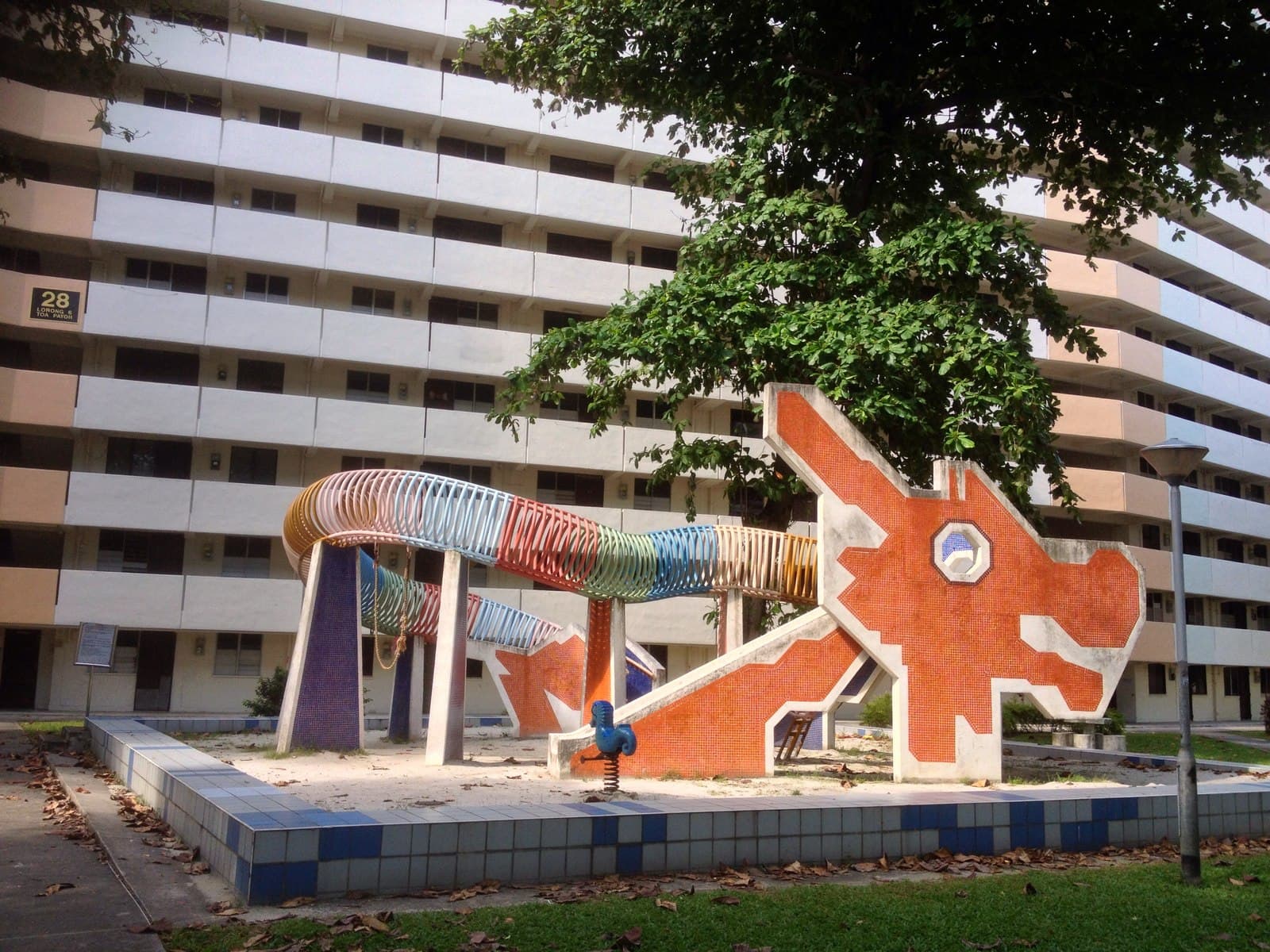
Hero image: Dragon Playground, Lorong 6 Toa Payoh — photo by Jimmy Tan, CC BY 2.0, via Wikimedia Commons.
What are the floor plans and unit sizes at The Orie?
PropKaki has 13 layouts on record for The Orie, from 1 to 5 bedrooms (517 sqft to 1,453 sqft).
| Bedrooms | Layouts | Sizes |
|---|---|---|
| 1 Bedroom | 1 | 517 sq ft |
| 2 Bedroom | 4 | 592 to 700 sq ft |
| 3 Bedroom | 4 | 850 to 1,130 sq ft |
| 4 Bedroom | 3 | 1,216 to 1,367 sq ft |
| 5 Bedroom | 1 | 1,453 sq ft |
PropKaki holds 13 floor plans for The Orie.
See The Orie's floor plans — ask PropKaki. Ask PropKakisqm ↔ sq ft converter
Layouts digitised from developer brochures.
The Orie: quick answers
Answered from URA data, refreshed daily.
Is The Orie fully sold?⌄
Not yet. 741 of The Orie's 777 units (95%) had been sold as of Oct 2026, leaving 36 unsold (URA developer sales).
When was The Orie launched?⌄
The Orie went on sale in January 2025. Its first developer sale on record is dated 17 January 2025 (URA caveats).
Got a question this raised? Ask PropKaki.
Take any point from this analysis and apply it to your own project, budget or decision.
PropKakiFor most buyers this year, staying well within budget beats trying to time the market.