
Watten House Review: Does This Freehold Bukit Timah Launch Justify ~$3,231 PSF?
A boutique freehold on Shelford Road, ringed by Good Class Bungalows and the Bukit Timah school belt. We price it against the resale market and every District 11 rival to see whether the address earns its premium.
Watten House is a 180-unit freehold condo on Shelford Road in the Watten Estate enclave of District 11 (Bukit Timah), developed by UOL Group and Singapore Land under United Venture Development (Watten) Pte Ltd, with vacant possession expected 30 June 2027. Across 181 developer-sale caveats its indicative pricing is about $3,231 psf (median ~$5.06M), roughly 56% above District 11's median resale. The sharper read is against rivals: it undercuts fellow-boutique 32 Gilstead (~$3,445) but runs $400–540 psf above launches like Enchante, 10 Evelyn and Sanctuary@Newton — the price of the Watten Estate address and its elite school catchment. It suits a long-hold family or legacy buyer who values freehold, schools and permanence over yield or a quick exit.
Watten House at a glance
| Developer | United Venture Development (Watten) Pte Ltd |
|---|---|
| Tenure | Freehold |
| Units | 180 |
| Launched | November 2023 (first developer sale) |
| Sales progress | All 180 units at Watten House had been sold as of Oct 2026 (URA developer sales). |
| Launch price paid | S$3,231 psf median (S$5.06M), 180 developer caveats to Jun 2026 |
| District 11 resale | S$2,046 psf median across 315 resales in the last 12 months, so the launch price is 58% higher |
From URA caveats and URA's developer-sales figures (sales checked Oct 2026), refreshed daily. The review below was written earlier and quotes the figures of its day.
Every transaction and listing at Watten House →Resale profit odds →Floor plans ↓
Where is the Watten House showflat?
We couldn't confirm where Watten House's showflat is from the developer, the news or its EdgeProp listing. All its units had been sold by Oct 2026 (URA), so check with the developer before you go.
PropKaki has not visited this showflat; this review is a desk analysis.
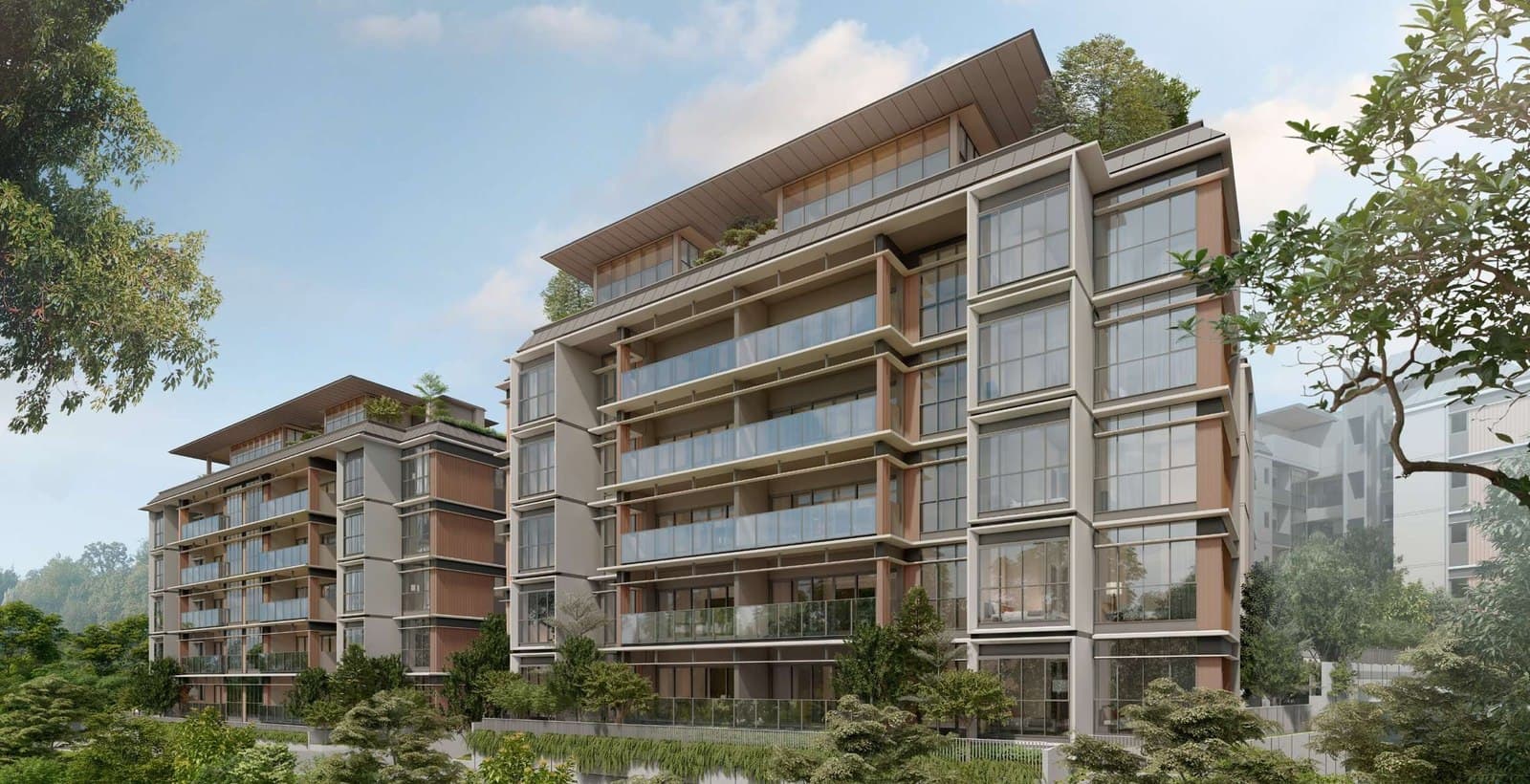
Watten House sells you a postcode as much as a home. Sitting on Shelford Road in the old-money Watten Estate — ringed by Good Class Bungalows and inside the catchment of Nanyang, Hwa Chong, RGS and National Junior College — this is Bukit Timah freehold at its most legacy-minded. But a prestigious address and a fair price are not the same thing. This review prices Watten House against the resale market and its direct District 11 rivals so you can see exactly what the premium buys, and who should actually pay it.
Is Watten House worth buying? Our verdict
Watten House is a freehold in the Bukit Timah school belt and Watten Estate landed enclave — that address is its whole case. At ~$3,231 psf it undercuts boutique 32 Gilstead but runs well above the other District 11 launches. It suits a long-hold family or legacy buyer, not a yield-first investor.
Watten House is a buy for one buyer above all others: the long-hold family or legacy owner who wants a freehold roof inside the Bukit Timah school belt — and it is a poor fit for anyone chasing yield or a quick exit. This is not a seafront-lifestyle play or a growth-corridor bet. It is a bet on an address: the Watten Estate enclave in District 11, wrapped in Good Class Bungalows and inside the catchment of some of Singapore's most fought-over schools.
The numbers set the terms. Across 181 developer-sale caveats, Watten House is pricing at about $3,231 psf (a median unit near $5.06M) — roughly 56% above District 11's median resale. That gap looks large, but a district-wide resale pool of older, mostly leasehold stock is the wrong yardstick for a brand-new freehold project. The yardstick that matters is how it prices against the launches a Bukit Timah buyer would actually shortlist: Watten House sits just under the boutique freehold 32 Gilstead (~$3,445 psf) and roughly $400–540 psf above the other District 11 launches — Enchante, 10 Evelyn and Sanctuary@Newton. That step is what the Watten Estate address and its school catchment cost.
So the verdict hinges on a single question: are you buying a home to keep for a generation, or an asset to trade? If you are a family that will actually use the schools and hold the freehold for 15–20 years, Watten House is a rare, tightly-held kind of property — landed-district prestige you can buy without a landed budget. If your plan is to flip inside five years or maximise rental efficiency, the maths does not favour you here: this is a large-format, high-quantum product in a district where resale turnover is thin. In Bukit Timah, you are buying permanence and a catchment — price it as a hold, not a trade.
This review shows the full workings. For the market-wide picture, see our roundup of every 2026 new launch benchmarked against resale. You can also browse every 2026 launch in the Singapore new launches directory.
Why Watten Estate? The landed-enclave address you're really buying
Watten House sits in the Watten Estate landed enclave on Shelford Road, within 3 km of 33 of Singapore's 39 Good Class Bungalow Areas. It's low-rise, leafy, old-money Bukit Timah — prestige of permanence and address, not seafront lifestyle.
Start with the land around the land. Watten House sits on Shelford Road in the Watten Estate — one of District 11's tightly-held landed pockets, on the site of the former Watten Estate Condominium that went en bloc. The developer's own pitch is telling: the site is within 3 km of 33 of Singapore's 39 Good Class Bungalow Areas — Bin Tong Park, Leedon Park, Cornwall Gardens, Chatsworth Park, the Nassim and Cluny belt, and more. You are buying a condo unit inside a ring of the most expensive residential land in the country.
That matters for two practical reasons. First, character and permanence: this is a low-rise, low-density part of town where the streetscape is landed houses and mature trees, not competing high-rise slabs. The brochure leans into it — 'perched atop a verdant hill,' pitched roofs, a palatial low-rise form. You are unlikely to wake up to a 40-storey tower next door, because the surrounding zoning is landed. Second, scarcity of the exact product: new condos almost never get built in a landed enclave, precisely because the land is landed. When one does, the supply of comparable new stock is structurally tiny — which is a double-edged sword we return to below.
This is a fundamentally different kind of prestige from a freehold on the seafront. There is no beach and no waterfront view here; the draw is leafy, established, old-money Bukit Timah — the address people move to for schools and stay in for decades. If your idea of prime is buzz and a coastline, this is not it. If it is a quiet, green, blue-chip enclave, this is close to the platonic version of it.
The school belt: what a Bukit Timah catchment is actually worth
Watten House sits inside a rare cluster of elite schools — Nanyang and Henry Park Primary, Hwa Chong, RGS, NJC, Nanyang Girls' and more. The 1 km P1 priority ring makes the address genuinely valuable to families, underpinning durable resale and rental demand — but a 1 km spot is priority, not a guarantee.
For most buyers here, this is the real reason the price makes sense. Watten House sits inside the densest concentration of elite schools in Singapore. Within roughly a kilometre or a short drive you have Nanyang Primary, Raffles Girls' Primary, Henry Park Primary, Nanyang Girls' High, Hwa Chong Institution, National Junior College, Singapore Chinese Girls' School and Methodist Girls' — plus international options like Hwa Chong International and Chatsworth. Few addresses in the country stack this many oversubscribed brand-name schools within one catchment.
Why this drives price: Singapore's Primary 1 registration gives priority to children living within 1 km of a school, and the most sought-after primaries — Nanyang and Henry Park among them — are chronically balloted, so the 1 km ring becomes genuinely valuable to a family targeting a specific school. That demand is sticky: parents will rent or buy near the school for years, and legacy families hold the address across generations. It puts a durable floor under both resale demand and rental demand from the family segment — even if this pack carries no rental-yield figure, so we won't quote a number; think of it as demand quality, not a percentage.
Be honest about the limits, though. A 1 km priority is not a guaranteed place — popular schools still ballot even within 1 km. And a school catchment is a reason to own here, not a licence to overpay for any unit: the premium only converts to value if you actually use the catchment or sell to someone who will. If schools are irrelevant to you, you are paying for an amenity you won't consume — and a leasehold launch elsewhere would put more of your dollar into the home.
How much does Watten House cost? Prices and PSF by unit size
Across 181 developer-sale caveats, Watten House's median is ~$3,231 psf and ~$5.06M, most units between $3,188 and $3,272 psf. It's a large-format product — 141 of 181 caveats are 1,500 sqft+ (median ~$5.96M) — so quantum, not PSF, is the gatekeeper.
Across the 181 developer-sale caveats lodged so far, Watten House's median is about $3,231 psf, with the middle of the range running between roughly $3,188 and $3,272 psf. Because the units are large-format, that translates into a high median quantum of about $5.06M — this is not an entry-level product. That read matches the market: at its private launch in November 2023 the project reportedly sold about 57% of units at an average near $3,230 psf, so our caveat median lands right on top of the launch pricing.
| Unit size (from our caveats) | Caveats (n) | Median PSF | Median price |
|---|---|---|---|
| 750–1,100 sqft (2–3BR) | 20 | $3,178 | $3.15M |
| 1,100–1,500 sqft (3–4BR) | 20 | $3,130 | $3.64M |
| 1,500+ sqft (4BR+/penthouse) | 141 | $3,242 | $5.96M |
Two things jump out. First, the project is dominated by big units: 141 of 181 caveats sit in the 1,500 sqft-and-up band, so the median buyer here is purchasing a 4-bedroom or larger home near $5.96M, topping out at eight double-storey 'Sky Villa' penthouses of 3,412–4,080 sqft. Watten House is deliberately a large-format, family-and-legacy product — publicly reported as three-bedroom and up, with private lifts for more than 75% of units. Second, note the size labels are proxies: we reconstructed the bands from transacted caveat areas, so the '2–3BR' tag on the smallest band is a size descriptor, not the developer's official mix. If your budget can't stretch to a ~$5M quantum, this simply isn't your project — and if PSF discipline is your lens, read quantum vs PSF when buying a condo.
Is $3,231 psf too much? Its PSF vs District 11 resale and rival launches
At ~$3,231 psf, Watten House is ~56% above District 11's median resale — but the fair read is against launches: it undercuts boutique 32 Gilstead (~$3,445) and runs ~$400–540 psf above the Newton-fringe launches. That gap is the Watten Estate address-and-schools premium.
On paper, Watten House's ~56% premium over District 11's median resale (~$2,074 psf) looks steep. But that comparison is stacked against any new launch: you are pitting a brand-new freehold on prime land against a district-wide pool of older, lived-in, often leasehold resale flats. Some premium is just the price of new and freehold on a scarce site. The fair benchmark is how Watten House prices against the launches a District 11 buyer would actually cross-shop:
| Project | New-Sale caveats (n) | Median launch PSF |
|---|---|---|
| 32 Gilstead | 16 | $3,445 |
| Enchante | 12 | $2,816 |
| 10 Evelyn | 8 | $2,790 |
| Sanctuary@Newton | 37 | $2,688 |
Read against its true peers, Watten House is not the district's outlier. It sits below the other ultra-boutique freehold, 32 Gilstead (~$3,445 psf), and a clear step above the Newton-fringe launches — Enchante (~$2,816), 10 Evelyn (~$2,790) and Sanctuary@Newton (~$2,688). That step of roughly $400–540 psf is essentially the Watten-Estate-and-schools premium, isolated: those other projects are in District 11 too, but they sit nearer Newton and Novena, not in a Good Class Bungalow-ringed, top-catchment pocket. Whether the premium is worth it comes down to how much you value the specific enclave and school access — worked through in how much a new-launch premium should be and, for the tenure side, freehold vs leasehold condo. It is worth weighing against the wider backdrop, too: the Business Times has flagged emerging price ceilings as more supply reaches the market — a reason not to assume prime-district premiums keep climbing indefinitely.
Boutique scarcity, but a thin resale pool: the 180-unit double edge
New freehold condos are structurally rare in a landed enclave, so Watten House's scarcity is real and supports the premium. But with only 180 large units, resale turnover is thin — fewer comparables to price your exit and a narrower buyer pool. Great for a long hold, punishing for a forced sale.
Watten House's scarcity cuts both ways, and you should hold both sides at once.
On the upside, this is a genuinely rare kind of asset. New freehold condos almost never appear inside a landed enclave, because the surrounding land is zoned landed — so the supply of directly comparable new stock in this exact pocket is close to nil. That structural scarcity, plus the 180-unit boutique scale, is what makes the address feel exclusive rather than mass-market, and it's a large part of why the developer can price a clear step above the Newton-fringe launches.
The same scarcity is the catch on your exit. With only 180 units and a large-format mix, future resale volume from the project itself will be thin — in any given year only a handful of comparable units are likely to trade. That has two consequences. It can support price (little supply hitting the market at once), but it also means fewer recent transactions to anchor your valuation, and a longer, more relationship-driven sale when you do want out — high-quantum ~$5M-plus units sell to a narrow pool of buyers, not a queue. This is the opposite profile to a 700–1,000-unit mega-launch, where liquidity is deep but exclusivity is diluted. Neither is 'better' in the abstract; they suit different buyers. For a boutique legacy hold, thin liquidity is a feature you accept — provided your timeline is long enough that you're rarely a forced seller.
A large-format, private-lift product: who the unit mix is built for
Watten House is a large-format, three-bedroom-and-up product — no shoeboxes, eight double-storey 6–7BR penthouses of 3,412–4,080 sqft, and private lifts for 75%+ of units. It's built for space-hungry families and legacy owners, not low-quantum or yield-first investors.
The unit mix tells you exactly who this is for. Watten House is publicly reported as a three-bedroom-and-up development — there are no shoeboxes and no one-bedders — and our caveat data backs that shape, with 141 of 181 transactions in the 1,500 sqft-plus band. At the top sit eight double-storey 'Sky Villa' penthouses of 3,412–4,080 sqft, configured as 6- and 7-bedroom homes. More than 75% of units are reported to come with a private lift. This is a family and multi-generational product, engineered for space and privacy rather than rental efficiency.
What that means for you: the entry point is a large 3-bedroom, not a compact starter unit, so the cash outlay is high even at the 'small' end (median ~$3.15M in our smallest band). The upside is that these are the kinds of layouts that suit a family holding for the long term — the exact buyer the school catchment and freehold tenure are built to serve. But if you are an investor optimising for the deepest tenant pool and the lowest quantum, understand that big freehold units in a school district are not the most rental-efficient stock in Singapore; they are bought to live in and to keep. (Unit sizes and the penthouse count are from the developer's materials; the per-size pricing is reconstructed from our own URA caveats, so the bedroom labels are size proxies, not the official unit mix.)
Getting around: Tan Kah Kee, the Downtown Line, and the car-first reality
Tan Kah Kee MRT (Downtown Line) is about a 7-minute walk, giving direct access to Newton, Botanic Gardens, Bugis and Bayfront. But this is a car-first enclave near the PIE and Bukit Timah/Dunearn corridors — quiet and green, with amenities a short drive away rather than downstairs.
Connectivity here is good, but be clear-eyed about its shape. The nearest station is Tan Kah Kee MRT on the Downtown Line, about a 7-minute walk — the DTL runs you to Newton (interchange to the North-South Line), Botanic Gardens (interchange to the Circle Line), Bugis and the Bayfront/Downtown financial area without a change. That's a solid, direct line into town, and having any MRT within walking distance is a real plus for a landed-belt address, which historically many were not.
That said, this remains a car-friendly rather than car-optional location, and most buyers at this quantum will drive. You have quick access to the Pan-Island Expressway (PIE) and Bukit Timah / Dunearn Road corridors, putting Orchard, the CBD and the airport within a comfortable drive. The trade-offs are the usual Bukit Timah ones: the Bukit Timah/Dunearn corridor is a known traffic artery and can be busy at peak hours, and a leafy low-rise enclave means day-to-day amenities are more 'drive to Coronation Plaza, Cluny Court or Bukit Timah Plaza' than 'step downstairs to a mall.' For the family buyer this is usually a fair exchange — quiet and green over high-street convenience — but if you want a mall and MRT at your doorstep, an integrated-development launch will serve you better than Watten House.
Will Watten House hold its value? What the CCR data says
Watten House has never been resold, so there's no track record. The honest proxy — CCR resales — shows 80.7% sold above cost with a +21.2% median gain (gross). Freehold and the school catchment support a long hold; the ~$5M-plus quantum and thin liquidity are the risks a short horizon would expose.
Watten House has never been resold — it's a brand-new launch — so there is no project track record to cite, and anyone promising you a specific return is guessing. The honest proxy is how comparable homes in its market segment have actually performed. Watten House sits in the Core Central Region (CCR), and across matched resale pairs, 80.7% of CCR private resales sold above their purchase price, with a median gross gain of 21.2%.
Read that as a base rate, not a forecast, and remember it is gross — before commission, stamp duties, any Seller's Stamp Duty and loan interest. Two project-specific factors tilt Watten House's own odds. In its favour, freehold tenure removes lease decay entirely, which is exactly why it's built for a long hold — a freehold owner never watches the lease clock erode value the way a leasehold owner eventually does, and the school-and-enclave demand puts a durable floor under the address. Against it, the high ~$5M-plus entry quantum and thin resale liquidity mean your gain has to clear a large absolute cost base and find a narrow pool of buyers, and CCR has historically been a slower-moving, more cyclical segment than the mass market. Freehold and a blue-chip catchment reward patience; a five-year horizon at this quantum is where the risk concentrates. To pressure-test a specific unit against your own holding period and costs, run it through the PropKaki profitability model, and read how to tell if a property will be profitable.
The one thing to weigh before buying Watten House
You're paying a ~$400–540 psf premium and a ~$5M-plus quantum for freehold in a school-belt enclave. It rewards a 15–20 year hold, but the same scarcity makes exit slow — few comparable resales, a narrow buyer pool. Buy it to keep, not to trade.
This is a legacy price that demands a legacy horizon. You are paying roughly $400–540 psf above the other District 11 launches, and buying in at a ~$5M-plus median quantum, for a large freehold unit in a school-belt enclave. That premium is real value if you use the catchment and hold for 15–20 years — freehold tenure and a top-tier address reward patience, and the boutique scale keeps it exclusive. But the very scarcity that makes it special also makes your exit slow: with only 180 large units, there are few comparable resales to anchor a valuation and a narrow pool of buyers for a $5M home, so a short-horizon or forced sale is where this profile hurts most. Buy Watten House to keep and to pass on — not to trade. If your real plan is a five-year hold or maximum rental efficiency, a leasehold launch will put more of your money into the home and far less into the address.
Is Watten House freehold, and who is the developer?
Yes — Watten House is freehold, developed by UOL Group and Singapore Land under United Venture Development (Watten) Pte Ltd.
Yes — Watten House is freehold (the brochure records the tenure as 'Estate in Fee Simple'). It is developed by United Venture Development (Watten) Pte Ltd, a joint vehicle of UOL Group and Singapore Land (SingLand), and forms part of UOL's freehold 'luxury masterpieces' line alongside Nassim Park Residences and Meyer House. Freehold means perpetual ownership with no lease decay — a core reason it commands a premium over leasehold stock in the district.
How much does Watten House cost?
About $3,231 psf median, with most units $3,188–$3,272 psf and a high median quantum near $5.06M, from our URA caveat data.
Based on 181 URA developer-sale caveats, Watten House's indicative pricing is about $3,231 psf, with most units between $3,188 and $3,272 psf. Because it is a large-format project, the median quantum is high at roughly $5.06M, and the median 1,500 sqft-plus unit is near $5.96M. That aligns with the ~$3,230 psf average reported at its November 2023 private launch. Pricing is a live snapshot and moves as more units are released.
When is Watten House expected to be completed (TOP)?
Around 2027 — expected notice of vacant possession is 30 June 2027, per the developer's materials.
Per the developer's materials, Watten House's expected notice of vacant possession is 30 June 2027 (expected legal completion 30 June 2030), so a TOP around 2027. Note that automated property directories can show an unreliable completion year for redeveloped sites like this one — the former Watten Estate Condominium previously stood here — so the brochure date is the one to trust.
Is Watten House good for families and school access?
Yes — it's a large-format, three-bedroom-and-up product inside a dense elite-school catchment (Nanyang, Henry Park, Hwa Chong, RGS, NJC and more), which makes the 1 km P1 priority genuinely valuable to families. A 1 km spot is priority, not a guarantee.
It is arguably built for exactly that buyer. Watten House sits inside one of Singapore's densest clusters of top schools — including Nanyang Primary, Raffles Girls' Primary, Henry Park Primary, Nanyang Girls' High, Hwa Chong Institution and National Junior College — with several within about a kilometre. Under Primary 1 registration, living within 1 km of a school gives priority, which is genuinely valuable near heavily-balloted primaries. The units are large-format three-bedroom-and-up homes with private lifts for most, suiting families and multi-generational living. Just remember a 1 km location is priority, not a guaranteed place, and the entry quantum is high (~$3M and up).
Methodology and sources
Pricing from our URA New-Sale caveats; the premium from District 11 resale caveats; comparables from each project's caveats; segment odds from matched CCR pairs. Developer, tenure, TOP and school context are brochure-sourced. A desktop analysis, not a showflat visit, with no yield claimed.
Where the figures come from. Watten House's indicative pricing is the median of 181 URA private-sale caveats flagged New Sale for the project (window 17 November 2023 to 8 June 2026), from PropKaki's own transaction data. The ~56% premium compares that to the median PSF of Resale caveats in District 11 over the last ~18 months (648 caveats). The comparable-launch PSFs are the medians of each rival District 11 project's own New-Sale caveats over ~30 months, deduped per project. The 80.7% segment resale odds and +21.2% median gain come from matched private buy→sell pairs in the CCR via PropKaki's profitability model. Developer, tenure, expected vacant possession, unit sizes, the penthouse count and the school/enclave context are from the project's official brochure — not our directory, whose completion field is unreliable for redeveloped sites (the developer's expected vacant possession is 30 June 2027). External context is cited inline: the November 2023 launch pricing (~57% sold at ~$3,230 psf) and the Downtown Line walk are corroborated by public project listings, and The Business Times on supply and emerging price ceilings.
What we did not do, and did not claim. This is a data and desktop analysis, not a showflat visit — we have not toured the units or verified finishes in person. Indicative PSF is a dated snapshot that moves as more units sell; PSF is price ÷ area, so a median shifts with which units transact, and the by-size table's bedroom labels are size proxies reconstructed from caveats, not the developer's official mix. The resale benchmark is a district median, not a unit-matched valuation. Segment profit odds are gross (before commission, stamp duties, any SSD and interest) and are a base rate, not a forecast — Watten House has never been resold. This pack contains no rental-yield figure, so we have deliberately not stated a yield; rental demand is discussed only qualitatively. Nothing here is financial advice; verify current rules and figures with URA, IRAS and HDB.
What are the floor plans and unit sizes at Watten House?
PropKaki has 21 layouts on record for Watten House, from 3 to 6 bedrooms (990 sqft to 4,080 sqft).
| Bedrooms | Layouts | Sizes |
|---|---|---|
| 3 Bedroom | 13 | 990 to 1,539 sq ft |
| 4 Bedroom | 2 | 1,851 sq ft |
| 5 Bedroom | 4 | 2,368 to 3,412 sq ft |
| 6 Bedroom | 2 | 3,412 to 4,080 sq ft |
PropKaki holds 4 floor plans for Watten House.
See Watten House's floor plans — ask PropKaki. Ask PropKakisqm ↔ sq ft converter
Layouts digitised from developer brochures.
Watten House: quick answers
Answered from URA data, refreshed daily.
Is Watten House fully sold?⌄
Yes. All 180 units at Watten House had been sold as of Oct 2026 (URA developer sales).
When was Watten House launched?⌄
Watten House went on sale in November 2023. Its first developer sale on record is dated 17 November 2023 (URA caveats).
Why is Watten House so expensive?⌄
Watten House's developer sales have a median of S$3,231 psf, about 58% above the S$2,046 psf median for resale condos in District 11 over the last 12 months (URA caveats). A new launch usually costs more than resale: buyers pay for a full-length new lease and a home no one has lived in. The review explains what else is in Watten House's price.
Got a question this raised? Ask PropKaki.
Take any point from this analysis and apply it to your own project, budget or decision.
PropKakiFor most buyers this year, staying well within budget beats trying to time the market.