

Starpoint conservation plan reshapes freehold upside in Pasir Panjang
URA backs conserving Lim Chong Keat’s bungalow while leaving the rest of the freehold Starpoint site open to residential redevelopment.
URA has proposed conserving the Lim Chong Keat-designed bungalow at Starpoint after rejecting a plan to replace the site with a five-storey hotel. The bigger market signal is that hotel use is not supported on this residential-zoned freehold site, and future schemes must now price in conservation constraints. Our read: that can narrow redevelopment upside even if part of the land can still be rebuilt.
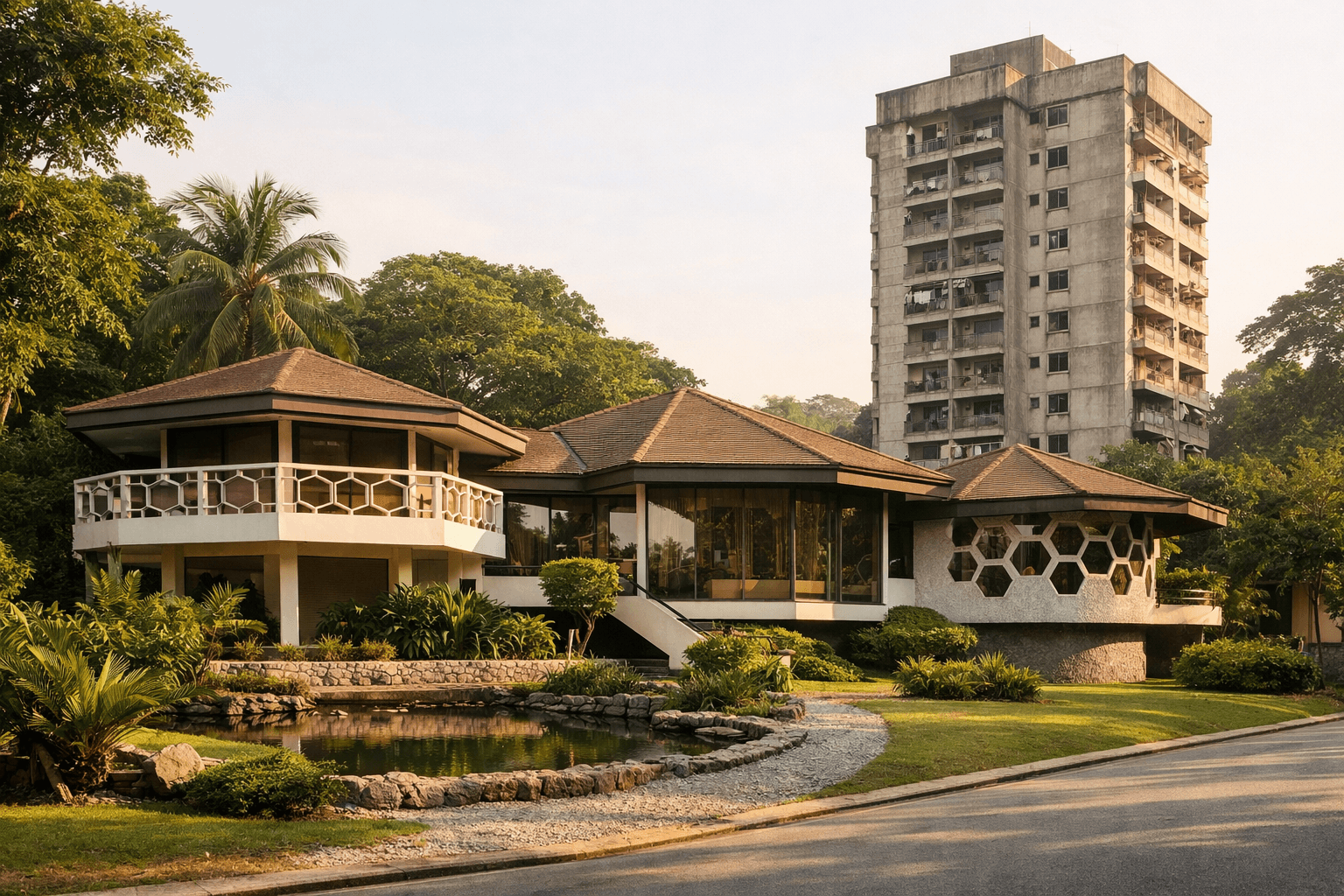
The Straits Times reports that URA has proposed conserving the three-storey Starpoint bungalow in Pasir Panjang, designed by pioneer architect Lim Chong Keat, while not supporting a separate plan to redevelop the site into a hotel. URA published the proposed conservation plan on June 19 and said the bungalow has longstanding historical, architectural and social significance.
For Singapore property watchers, this is not just a heritage story. URA also said hotel use is incompatible with the site’s residential zoning, which changes the redevelopment maths for a scarce freehold plot that sold for $55.3 million in November 2025.
Why did URA propose conserving the Starpoint bungalow in Pasir Panjang?
The Straits Times reports that URA published a proposed conservation plan on June 19 for Starpoint’s three-storey bungalow.
According to the report, Starpoint is a 1974 freehold development with a bungalow, an 11-storey residential tower and a swimming pool. URA told The Straits Times that it did not support the developer’s hotel proposal because the site is in a predominantly residential area and hotel use is incompatible with the land’s residential zoning. URA also said the developer proposed voluntary conservation of the main bungalow while redeveloping the rest of the site for future residences up to five storeys, with possible tower retention still subject to approval.
How does Starpoint’s URA conservation plan affect freehold redevelopment value?
This is as much a planning story as a heritage one.
Our read: once URA signals that the site’s most significant building should stay and that hotel use is off the table, Starpoint is no longer a blank-slate redevelopment play. That usually lowers raw redevelopment optionality because design, demolition and end-use choices become narrower, even if URA remains open to partial redevelopment. At the same time, the site is not frozen; URA explicitly said the rest of the plot can still be redeveloped and that incentives for voluntary conservation may be considered case by case, where applicable.
What does the Starpoint case mean for Pasir Panjang buyers, sellers and investors?
Expect the market to price planning constraints more carefully, not just tenure and land size.
For buyers, Starpoint is a reminder not to assume every older freehold site carries the same redevelopment upside. For sellers and en bloc hopefuls, a conservation signal can change negotiations because purchasers will factor in adaptive reuse costs, approval risk and tighter use options. For investors, the key distinction is between heritage value and redevelopment value; nearby comparisons in our Property Transactions Finder still matter, but not all freehold plots deserve the same premium once URA constraints enter the picture.
Can Starpoint still be redeveloped if the bungalow is conserved?
Yes, but not as a clean-slate project.
URA told The Straits Times it supports conserving and adaptively reusing the bungalow while allowing the rest of the site to be redeveloped for future residences up to five storeys. URA also said the tower may potentially be retained, subject to the necessary approvals.
Why was the Starpoint hotel plan rejected by URA?
URA said hotel use does not fit the site’s zoning.
According to URA’s response cited by The Straits Times, the site sits within a predominantly residential area and redevelopment for hotel use was not supported because it is incompatible with the site’s residential zoning.
Do voluntary conservation projects in Singapore get planning incentives?
Sometimes, but they are not automatic.
URA said incentives for voluntary conservation may be considered to support adaptive reuse, where applicable. It added that any incentive package varies by site and is confidential to the parties involved.
What the Starpoint conservation proposal says about freehold land in Singapore
Freehold still matters, but planning permission decides what that freehold can become.
What this likely means: conservation can protect a rare building and still leave room for redevelopment, but it shifts the valuation lens from simple land banking to a more conditional planning exercise. Starpoint is a useful case study in how URA’s heritage and zoning decisions can reshape price expectations well before anything new gets built.
Sources
This commentary draws on the following reporting and official sources:
- The Straits Times — original report
- URA announces its Conservation Master Plan - Singapore - NLB
- URA proposes to conserve Golden Mile Complex, offers incentives ...
- RESOURCES: VOLUNTARY CONSERVATION PROGRAMS
- NRCS recently announced that $52 million in competitive grant ...
- [PDF] Toolbox of Incentives for Resource Conservation - NPS History
- Voluntary Public Access and Habitat Incentive Program competition ...
- Voluntary Public Access and Habitat Incentives Program (VPA-HIP)
About this commentary
This is editorial analysis by the PropKaki Editorial Desk, written for general information only — it is opinion and context, not a valuation, recommendation or financial advice. Factual claims are drawn from the linked sources, including the original report by The Straits Times, and PropKaki's interpretation is clearly framed as such. Always verify policy and figures against official sources (URA, HDB, MAS, IRAS) before acting.
Got a question this raised? Ask PropKaki.
Take any point from this analysis and apply it to your own project, budget or decision.
 PropKaki
For most buyers this year, staying well within budget beats trying to time the market.