

New Launch Condo Defects Liability Period in Singapore: What Buyers Should Check After TOP
A practical guide to the 12-month defects window, what to inspect first, and how to report issues clearly before the timeline closes.
The defects liability period for a new launch condo is the 12-month window, starting at handover or earlier, in which you can report qualifying defects linked to workmanship, installation, or building systems. Under the prescribed Sale and Purchase Agreement it runs for 12 months from handover (vacant possession) or the 15th day after you receive the TOP and the developer's completion notice, whichever is earlier, and the developer must fix a reported defect within one month of your notice (as of 2026; verify the dates on your own SPA and vacant possession notice). In practice, test bathrooms, kitchen plumbing, drainage, windows, doors, locks, electrical points, and any sign of seepage first, then submit a dated photo log through the developer’s official channel.
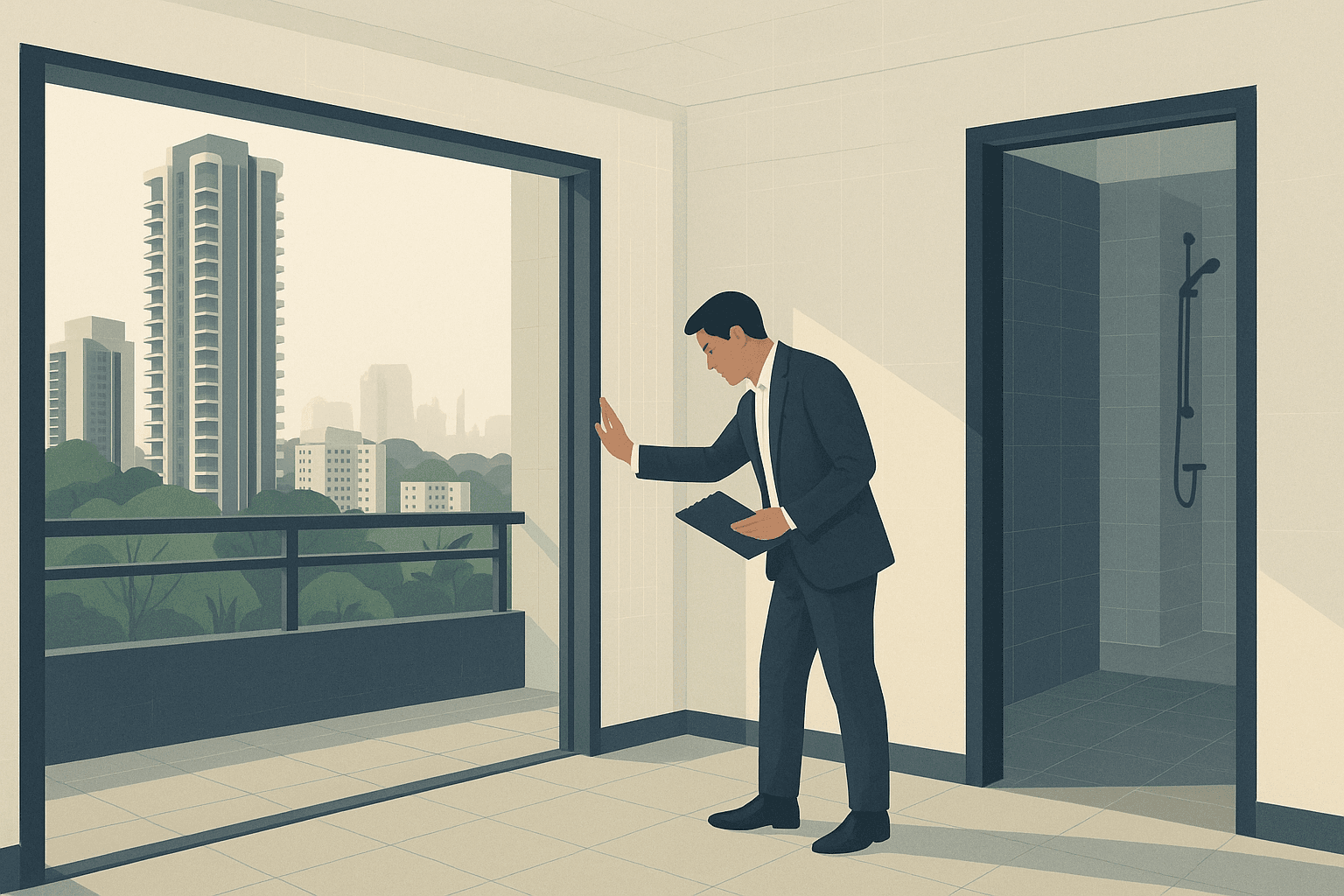
For a new launch condo, the defects liability period is the 12-month window, opening at handover or soon after the TOP notice, for reporting qualifying defects to the developer. The practical priority is simple: inspect early, focus on functional and water-related issues before cosmetic flaws, and submit a clear defect log through the developer’s official process while there is still time for rectification and follow-up checks.
What is the defects liability period for a new launch condo?
The defects liability period (DLP) for a new launch condo is the 12-month window in which you can report qualifying defects to the developer. It starts at handover (vacant possession) or on the 15th day after you receive the TOP and the developer's completion notice, whichever is earlier, under the prescribed Sale and Purchase Agreement (as of 2026; verify on your SPA), and covers workmanship or system issues rather than every post-move-in complaint.
The defects liability period is the 12-month defects window, opening at handover or soon after the TOP notice, when you can report qualifying defects to the developer for rectification. In practice, this usually refers to issues linked to workmanship, installation, or building systems that should have been properly delivered at handover.
For a new launch, the legal basis is the prescribed Sale and Purchase Agreement under the Housing Developers Rules, and the period is 12 months from the date the developer delivers vacant possession of the unit, or from the 15th day after you receive the TOP (or CSC) together with the developer's notice that the building, roads, drainage and sewerage are complete, whichever is earlier (Housing Developers Rules). URA’s Home Buyers’ Guide describes reporting defects within that 1-year defects liability period, during which the developer must rectify defects in your unit and the common property at its own cost. The developer must fix a defect within one month of your notice. If it does not, you can notify it in writing, with a copy of a building or renovation contractor's quotation, that you will have the work done yourself unless it does it within 14 days; after that, you can have the work done and recover the cost from the developer, including by deducting it from the 5% of the price the Singapore Academy of Law holds as stakeholder. To deduct, serve a written notice of deductions on the stakeholder and the developer on the same day, at least 7 working days before the Final Payment Date, which falls on the day the defects period ends, so report defects early enough for the one-month and 14-day steps to run first (Form 5 clauses 5.4-5.5 and 17.2-17.4; as of 2026; verify the exact wording on your own SPA and handover documents). Secondary guides such as PropertyGuru’s explainer, Singapore Legal Advice, and 99.co’s glossary entry also describe it as a time-bound reporting period rather than an open-ended warranty, though some date the start loosely from the TOP itself; the agreement's trigger above is the one that counts.
The key point: treat the DLP as a claim window, not a catch-all maintenance period. If you delay inspection, the real risk is not just missing defects. It is losing time for rectification and reinspection before the window closes.
If you need the wider timeline around TOP, key collection, and handover, see New Launch Condo Buying Process in Singapore: A Step-by-Step Guide.
When does the defects liability period usually start after TOP and handover?
The defects liability period starts at handover (vacant possession) or on the 15th day after you receive the TOP and the developer's completion notice, whichever is earlier, so the clock can start before you collect your keys; check the dates on the developer’s notices and your SPA.
Under the standard Sale and Purchase Agreement, the defects liability period runs from the date the developer delivers vacant possession, or the 15th day after you receive the TOP and the developer's completion notice, whichever is earlier. So the clock is tied to handover and that notice rather than the public announcement of TOP, and if you put off collecting your keys, it can start without you. Confirm the exact dates from the developer’s handover notice, SPA, and key-collection paperwork instead of relying on memory or hearsay.
The working rule is straightforward: once keys are ready, treat inspection as urgent. Do not assume you can wait until renovation planning is done or until you are fully moved in.
A common real-world mistake is this: you collect keys, get busy comparing contractor quotes, and only do a serious inspection weeks later. By then, the reporting window is shorter, scheduling rectification becomes tighter, and there is less buffer for a second walkthrough after repairs.
A useful way to see it: "TOP tells you the project can be occupied, but your defect timeline is usually tied more closely to handover documents than the TOP headline date."
If you are still preparing for key collection, see When Can You Collect Keys After TOP for a New Launch Condo? and What Is TOP for a New Condo in Singapore? Difference Between TOP and CSC.
What should buyers inspect first after moving into a new launch condo?
Start with bathrooms, kitchen plumbing, windows, doors, locks, drainage, electrical points, and any sign of water ingress before spending time on cosmetic touch-ups.
- ✓Bathrooms first: run showers, flush toilets, test floor traps, check drainage speed, and look for ponding, seepage, or loose fittings.
- ✓Kitchen next: run taps, fill and release water at the sink, inspect under-sink pipes, and check cabinet alignment near plumbing points.
- ✓Windows and external openings: test sliding and locking, inspect seals, and look for dampness or staining around frames and corners.
- ✓Doors and locks: open and close every door fully, check latch alignment, hinges, and whether locks turn smoothly without sticking.
- ✓Electrical points: test sockets, switches, lights, breakers, and any smoke detector or built-in system point present in the unit.
- ✓Air-conditioning and condensate areas: look for unusual dripping, damp patches, or poor drainage around trunking and outlet points.
- ✓Balcony or service yard areas: check water discharge, floor gradients, and whether water flows properly to drainage points.
- ✓General safety and usability: prioritise anything that affects daily use, security, or water control before small paint marks and minor finishing touch-ups.
Which defects are most commonly overlooked by buyers?
Hidden drainage, sealing, alignment, lock, plumbing, and air-con issues are often missed because buyers focus on visible finishing defects.
The most commonly missed defects are the ones that only show up when the unit is tested, not just viewed. Buyers often notice paint scratches, chipped edges, or uneven finishing first because those are visible. But the more disruptive issues are usually hidden in water flow, sealing, alignment, and repeated use.
Commonly overlooked examples include:
- Slow drainage in shower areas that only becomes obvious after running water for a minute or two
- Weak window sealing that looks normal on a dry day but allows water ingress during heavy rain
- Doors that close but do not latch cleanly, which affects privacy, security, and long-term wear
- Locks that turn stiffly or jam intermittently
- Damp patches around air-con trunking or condensate discharge points
- Moisture below sinks or behind vanity cabinets where leaks are easy to miss
A useful inspection mindset for buyers is this: if a problem needs water, movement, pressure, or repeated use to appear, a quick first glance will not catch it.
That is why a hands-on inspection beats a photo-taking walkthrough. Turn on taps. Flush toilets. Check floor gradients. Open every window. Test every lock. For a broader overview, see What Is TOP for a New Condo in Singapore? Difference Between TOP and CSC.
How should defects be recorded and submitted properly?
Use one dated defect log with exact locations, clear descriptions, and photos, then submit it through the developer’s official channel and keep a copy.
Use one consolidated defect log. Scattered WhatsApp messages, verbal comments during site visits, or random photos in the phone gallery make follow-up harder and create avoidable disputes about what was reported and when.
A simple reporting workflow is:
- Identify the room and exact location.
- Describe the issue in plain language.
- State when it was observed.
- Add one close-up photo and one wider photo.
- Note whether the issue is constant or intermittent.
- Submit it through the developer’s official defect form, portal, or designated email channel.
- Keep a dated copy of the submission.
A better defect note sounds like this: "Master bathroom, left side of shower area near floor trap: water pools after shower runs for about 2 minutes." That is much easier to assess than "bathroom defect".
Where the developer gives a formal submission method, use that first. If you also update a customer service officer or site representative, treat that as supplementary, not the main record.
The operational benefit is simple: clear logs shorten back-and-forth and make the second walkthrough easier because the original issue is easy to trace. For a broader overview, see What to Check at a New Launch Showflat Before Booking.
What is usually covered under defects, and what is not?
Workmanship, installation, and system faults are more likely to be covered; wear, misuse, owner damage, and preference-based changes are usually not.
As a practical rule of thumb, defects are more likely to involve workmanship, installation, or system faults present at handover. Issues caused by occupancy, misuse, renovation works, or owner preferences are less likely to be treated the same way.
Here is a simple way to frame it:
| More likely treated as a defect | Less likely treated as a defect |
|---|---|
| Window seal not closing properly | Paint scuffed during move-in |
| Misaligned door or faulty lockset | Stains or dirt from occupancy |
| Leaking pipe under sink | Damage caused by owner renovation |
| Power point or switch not working | Request to change a fitting or finish |
| Poor drainage or seepage linked to original installation | Wear from day-to-day use after handover |
This is not a legal test, and treatment can differ by project and cause. But it is a useful expectation-setting tool for buyers.
A common misunderstanding is assuming that "I noticed it during the DLP" automatically means "the developer must fix it." That is not always how it works. The practical question is whether the issue appears to be an original defect, or something caused later by use, maintenance, or alterations.
If the cause is unclear, avoid assuming the outcome. Document the condition, submit it promptly, and ask the developer to assess it based on the project’s handover process.
Why cosmetic defects are not the main thing buyers should worry about
Cosmetic flaws are obvious, but hidden leaks, drainage faults, sealing failures, and system issues usually matter more.
Visible flaws are easy to complain about, but hidden functional defects are usually the bigger risk. A paint scratch is annoying. A leak, failed seal, bad floor gradient, or non-working power point can disrupt move-in, cause follow-up damage, and take longer to resolve.
Simple rule: start with water, safety, and usability. Cosmetic touch-ups come after that.
How can buyers do a more effective second walkthrough after repairs?
Reinspect the original defect list item by item and re-test the same systems, especially water, windows, doors, locks, and electrical points.
Treat rectification as a two-step process: first inspection, then reinspection. The second walkthrough should be done against the original defect log item by item, not by relying on memory or doing another casual scan.
Re-test the same high-risk items, especially:
- shower drainage and waterproofing signs
- sink and pipe leakage points
- window closing, locking, and sealing
- door alignment and lock function
- switches, sockets, and other electrical points
This matters because a repair can be partial, temporary, or create a new issue nearby. For example, fixing a leak may stop the water source but leave staining, uneven finishing, or another loose fitting around the repaired area.
A simple tip: bring the original photos and descriptions to the reinspection. That makes it much easier to confirm whether the exact reported issue was rectified or whether a follow-up submission is needed.
How can you keep your expectations realistic?
Inspect early, prioritise functional issues, submit a clear defect log, and expect review and follow-up rather than instant fixes.
The most useful mindset is calm and operational: inspect early, separate real defects from minor wear or preferences, submit through the proper channel, and expect at least one follow-up round.
A simple way to frame it for yourself: "Focus first on defects that affect water, safety, and day-to-day use. Document them clearly, submit them properly, then do a second check after rectification."
This helps you avoid three common mistakes:
- spending too much time on tiny cosmetic marks while missing drainage or sealing issues
- assuming every complaint will automatically be accepted as a defect
- waiting too long because you think the clock starts only after you settle in
It also helps to place this stage in the wider new-launch timeline. Buyers often confuse TOP, key collection, handover, and the start of the defects window. For the broader context, see New Launch Condo Buying Process in Singapore: A Step-by-Step Guide, When Can You Collect Keys After TOP for a New Launch Condo?, and What Is TOP for a New Condo in Singapore? Difference Between TOP and CSC.
Bottom line: the DLP is a time-limited rectification process, not a promise of instant fixes or an open-ended warranty.
Methodology and sources
Where every figure comes from — and what we deliberately did not claim.
Verified figures. New-launch process figures here come from URA and the Housing Developers Rules — as of 2026; individual project terms vary, so confirm the specifics with the developer and your lawyer before you commit. The defects-period rules are from the standard Sale and Purchase Agreement (Form 5, clause 17) in the Housing Developers Rules and URA's Home Buyer's Guide, read on 19 September 2026.
What we have not claimed: the terms of any specific project or unit (check the developer's documents); price or availability; or a legal ruling — a practical explainer, not advice.
Got a question this raised? Ask PropKaki.
Take any point from this analysis and apply it to your own project, budget or decision.
 PropKaki
For most buyers this year, staying well within budget beats trying to time the market.