
Villa Haji Kahar conservation trims Bedok redevelopment options
URA wants the century-old bungalow kept, while the rest of the 1 Bedok Avenue freehold site can still be redeveloped.
URA has proposed conserving the century-old Villa Haji Kahar in Bedok while allowing the rest of the site to be redeveloped for landed housing. That keeps a piece of Kampong Bedok history, but it also means the eventual project will likely be shaped by conservation rules rather than pure site maximisation. Our read: in landed housing, that can create stronger identity and scarcity, even as it narrows design flexibility.
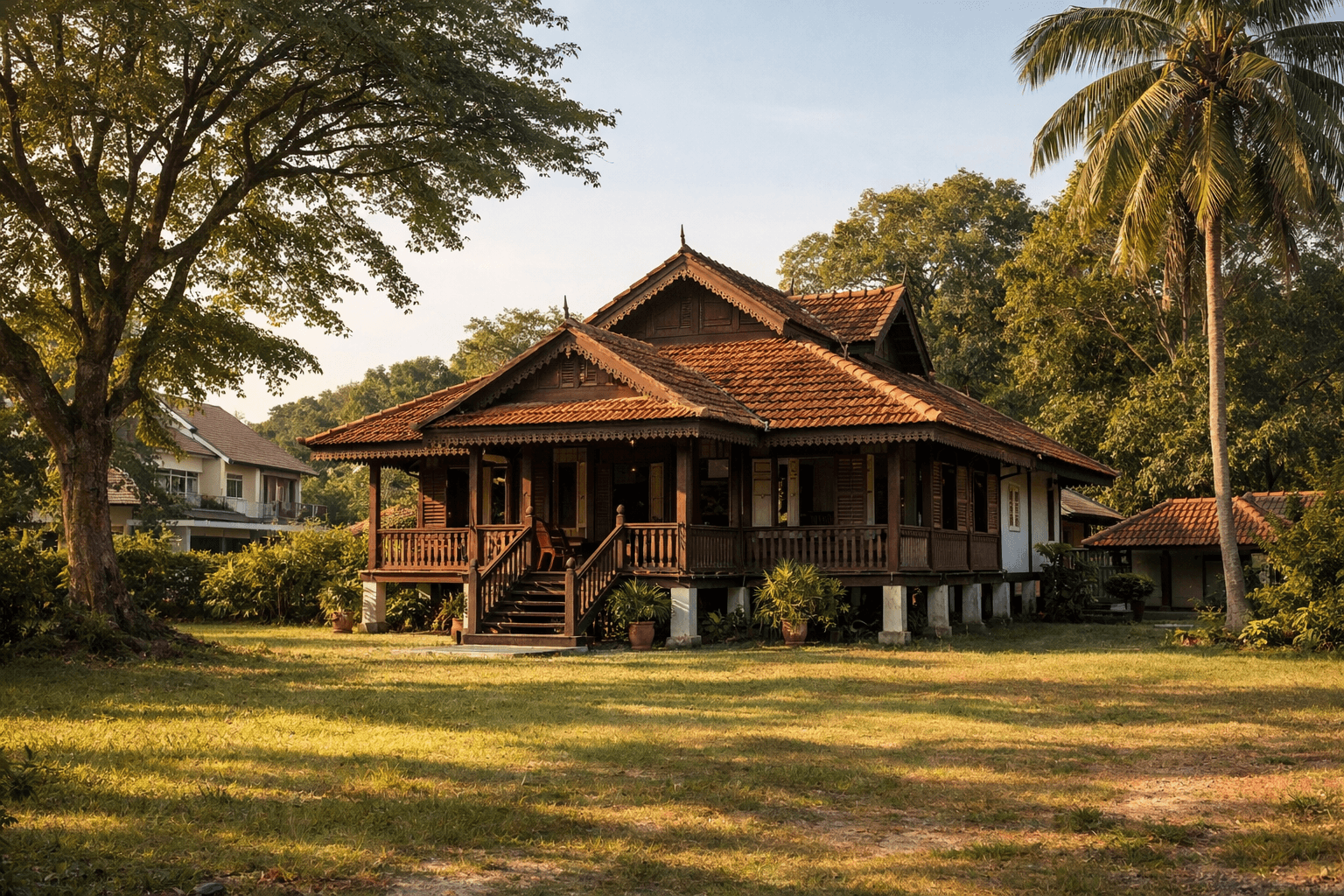
URA has put Villa Haji Kahar at 1 Bedok Avenue up for conservation after a redevelopment proposal surfaced for the 5,963.2 sq m freehold site, according to The Straits Times. The report said the site is now owned by HR Property Development, a Hong Leong-linked company, which plans a premium private landed housing project.
That matters because this is not a simple keep-or-tear-down case. URA is signalling that the main heritage bungalow should stay, but most of the rest of the Bedok site can still be developed for landed homes up to three storeys. For buyers, sellers and developers, that changes what drives value: less pure redevelopment freedom, more emphasis on rarity, design and heritage fit.
Why URA wants Villa Haji Kahar at 1 Bedok Avenue conserved
The main bungalow is proposed for conservation, but the rest of the freehold Bedok site can still be redeveloped.
According to The Straits Times, URA published a proposal on 5 June to conserve Villa Haji Kahar, a two-storey bungalow built in the 1920s and linked to Haji Kahar Abdul Ghani, the "King of Bedok", as well as Dr Lee Choo Neo and Teo Koon Lim. URA said the move is due to the building's historical and social significance and its architectural fusion of traditional and imported styles. The report added that the 5,963.2 sq m freehold site is designated for landed homes up to three storeys, and URA has indicated that most of the remaining land can still be developed, with communal use of the conserved villa encouraged.
How Villa Haji Kahar conservation changes Bedok landed redevelopment
This is not a stop-development story; it is a redesign-the-scheme story.
URA's reported position is quite clear: conserve the main heritage house, then plan the rest of the landed project around it. Our read: that shifts a scheme's value driver away from pure yield and layout efficiency towards character, placemaking and buyer fit. In Singapore's strata-landed segment, conservation can make a project more distinctive, but it usually leaves less room to optimise unit mix, circulation and shared amenities.
What Villa Haji Kahar means for Bedok buyers, sellers and investors
Heritage can add scarcity, but it also narrows redevelopment flexibility.
For buyers, a project anchored by a conserved bungalow may feel more special than a standard cluster development, but layouts, shared spaces and future upkeep may also be less conventional. For sellers of older landed plots, this is a reminder that historical significance can materially affect redevelopment outcomes, sometimes preserving value and sometimes limiting options. For investors and developers, the underwriting becomes less about a straight land-to-unit maximisation exercise and more about whether conservation-led positioning can support pricing without making execution too complex.
Is Villa Haji Kahar already gazetted for conservation?
Not yet; it is under URA's current conservation proposal.
The Straits Times reported that URA published a proposal on 5 June to conserve the bungalow. Based on the current proposal stage, it has been put up for conservation but is not yet finally gazetted.
What can still be built on the 1 Bedok Avenue site after conservation?
URA said most of the site can still be developed for landed housing.
According to the report, URA said the rest of the site could be developed for a strata-landed residential project, with the overall site designated for landed homes up to three storeys. The conserved villa could be used as a clubhouse, remain a house, or be strata-subdivided into two homes.
Does conservation usually raise the value of a landed project in Singapore?
Not automatically; it changes the value equation.
Our read: conservation can create story value, rarity and stronger project identity, but it also comes with restoration, design and approval constraints. Whether that helps prices depends on buyer demand, product execution and how much redevelopment flexibility is lost.
What Villa Haji Kahar conservation means for Bedok landed in 2026
The site still looks developable, just not in the most straightforward way.
This Bedok case shows how Singapore conservation policy can preserve a meaningful building without freezing an entire private site. The trade-off is clear: less redevelopment freedom, but potentially more character and differentiation. In landed housing, that can matter almost as much as raw site area.
Sources
This commentary draws on the following reporting and official sources:
- The Straits Times — original report
- Private Residential Property Transactions - URA
- URA announces its Conservation Master Plan - Singapore - NLB
- What's Next for Conservation? - Centre for Liveable Cities Singapore
- Urban Redevelopment Authority - Lee Kuan Yew World City Prize
- URA launches tender for cluster of conserved buildings in Little India
- BEDOK ROAD: Bedok - - | Details & Reviews | EdgeProp Singapore
- 87 Landed Houses for Sale in Bedok / Upper East Coast
About this commentary
This is editorial analysis by the PropKaki Editorial Desk, written for general information only — it is opinion and context, not a valuation, recommendation or financial advice. Factual claims are drawn from the linked sources, including the original report by The Straits Times, and PropKaki's interpretation is clearly framed as such. Always verify policy and figures against official sources (URA, HDB, MAS, IRAS) before acting.
Got a question this raised? Ask PropKaki.
Take any point from this analysis and apply it to your own project, budget or decision.
 PropKaki
For most buyers this year, staying well within budget beats trying to time the market.