
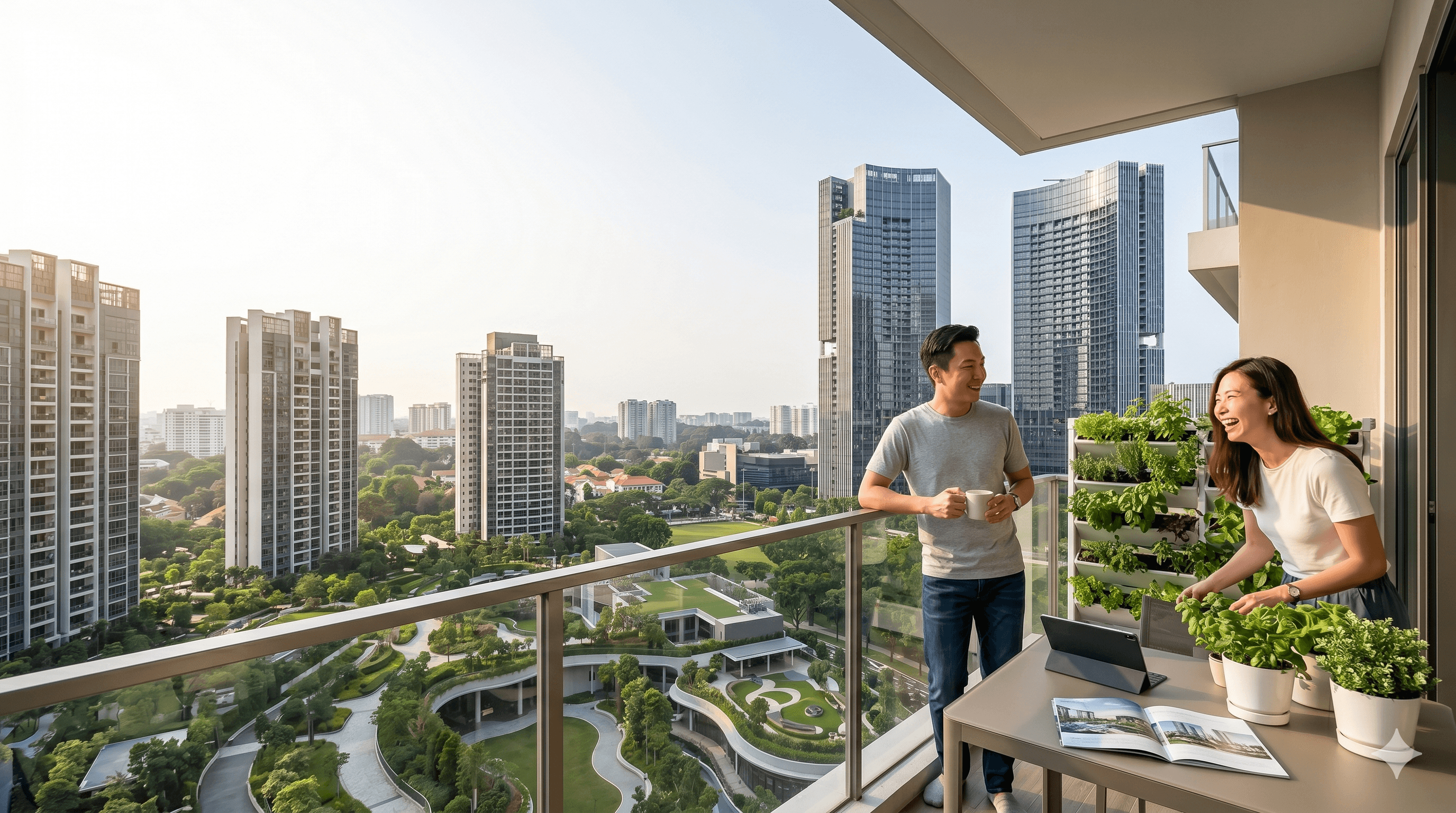
Can Foreigners Buy Landed Property in Sentosa Cove? Rules, Approval and Key Checks
A practical guide to Sentosa Cove’s special-case rules, what foreigners may be able to buy, and what to verify before you commit.
Yes, foreigners may be able to buy certain landed homes in Sentosa Cove, but it remains a regulated purchase under Singapore’s foreign-ownership rules. Treat it as a special-case approval path, then verify the exact property type, buyer structure, approval timing, and tax and financing implications before you proceed.
Yes, but only for certain Sentosa Cove landed properties and only within Singapore’s approval framework. The key point is that Sentosa Cove is a narrow exception to the usual restriction on foreign ownership of landed homes in Singapore, not a blanket right to buy landed property anywhere. Before treating eligibility as settled, verify the title, the buyer profile, the current approval route, and the likely tax and financing impact.
Short answer: can foreigners buy landed property in Sentosa Cove?
Yes, foreigners may be able to buy certain landed homes in Sentosa Cove, but only within Singapore’s approval framework, and ABSD still applies: 60% for a foreigner who is not a PR (US and some EFTA nationals pay citizen rates), or 5% on a PR's first residential property. It is an exception to the usual landed-property restriction, not a blanket right.
Yes, foreigners may be able to buy certain landed homes in Sentosa Cove, but not as an unrestricted purchase. Landed property at Sentosa Cove is still on SLA's restricted-property list, so it needs approval from the Land Dealings Approval Unit — Sentosa Cove is simply the recognised route via which a foreigner can realistically get approval to own a landed home (as of 2026; verify on SLA). Officially, this sits within Singapore’s foreign-ownership framework for residential property, as outlined on the SLA foreign ownership page.
The useful framing is: Sentosa Cove is the best-known exception to the usual restriction on foreign ownership of landed homes in Singapore, but it is still an approval-driven process, and Additional Buyer's Stamp Duty (ABSD) still applies on top at the buyer's own rate: 60% for a foreigner who is not a Singapore PR; for a PR, 5% on a first residential property, 30% on a second and 35% on a third or later (IRAS, updated 27 August 2026). US nationals, and nationals or permanent residents of Iceland, Liechtenstein, Norway or Switzerland, get the same stamp duty treatment as Singapore Citizens under free trade agreements (IRAS). Do not confuse “eligible to explore” with “approved to buy.” Before treating the answer as firm, cross-check the wider rule set in Can Foreigners Buy Landed Property in Singapore? and the broader foreign property rules in Singapore, then confirm the exact property and buyer profile.
Why is Sentosa Cove treated differently from most other landed-property areas in Singapore?
Sentosa Cove sits in a special policy category, which is why it is often described as the exception to Singapore’s usual landed-property restriction. The exception is narrow and location-specific, not a general relaxation across the country.
Sentosa Cove is treated as a special case under Singapore’s restricted-property framework, which is why it comes up so often in foreign-buyer questions. The contrast people usually draw is that mainland landed homes are restricted for foreigners while Sentosa Cove is open. In fact both need approval from the Land Dealings Approval Unit: SLA lists "landed residential property at Sentosa Cove" among the properties a foreign person must seek approval to buy, and names no separate or faster route for it (SLA, updated 20 August 2025).
That difference matters because it is easy to hear “Sentosa Cove” and assume the restriction disappears. It does not. The special treatment is location-specific and rule-specific.
A practical takeaway: when you hear “It’s in Sentosa, so foreigners can buy, right?”, the next question is “What exactly is the property title?” Not every waterfront or villa-style property in the area creates the same eligibility discussion. For a broader overview, see Can Foreigners Buy Landed Property in Singapore? Restricted Property and Approval Rules.
What property types in Sentosa Cove matter most to foreign buyers?
For Sentosa property, the decisive check is the property type, not just the Sentosa Cove address: SLA lets a foreigner buy a condo unit without approval, but a landed home at Sentosa Cove is restricted, needing approval from SLA's Land Dealings Approval Unit (LDAU), as of 2026. Confirm the title and whether the property is truly landed before treating foreign-buyer eligibility as settled.
The key issue is not just the Sentosa Cove address, but the property classification. Address tells you where the property is. Title tells you what you are actually buying.
For practical screening, separate at least three cases:
- a landed house on landed residential title
- a condo or apartment unit
- a strata-landed unit in an approved condominium development
Those are not interchangeable from a foreign-ownership perspective. Being able to purchase a condo unit does not automatically put you in the same position for a landed house, even if both are in the same district or lifestyle enclave — SLA treats a condo unit as non-restricted, but landed at Sentosa Cove as restricted (as of 2026; verify on SLA).
A common mistake is relying on the listing description alone. “Villa,” “bungalow-style,” or “waterfront home” may describe the feel of the property, but they do not replace a proper title check. If you are serious about a unit, verify the title documents and property classification before treating eligibility or next steps as settled. For a broader overview, see What Is Restricted Property in Singapore? Residential Property Rules Explained.
What approvals or checks may a foreign buyer still need?
Yes, approvals and transaction checks may still be needed. Verify buyer status, property classification, the current approval path, and the tax and financing position (including ABSD, 60% for a foreigner who is not a PR) before you move ahead.
As a foreign buyer you should still expect checks, and in most cases approval, before proceeding. Sentosa Cove should be handled as a regulated purchase, not a routine private-home transaction. Approval comes from the Land Dealings Approval Unit; SLA's stated criteria are that the applicant should have been a permanent resident of Singapore for at least five years and must make an exceptional economic contribution, with assessment taking around 30 working days; SLA gives no faster route for Sentosa Cove (as of 2026; verify on SLA).
A practical workflow is:
- Confirm your status and ownership structure. Is the purchase in an individual name, joint names, or through an entity?
- Confirm the property classification. Is it truly a landed residential property, or something that falls under a different category?
- Check the current official approval route. Start with the SLA foreign ownership page and, where helpful, the related AskGov clarification.
- Get the conveyancing lawyer to confirm the deal sequence. Do not assume from past deals whether approval must be in place before option exercise or later in the process.
- Verify tax and financing implications before you commit — ABSD of 60% for a foreigner who is not a PR (5% on your first residential property if you are a PR) applies on top of the purchase price (as of 2026; verify on IRAS).
A useful mindset: approval is one risk gate, not the only one. You can be comfortable with the property but still face issues on stamp duties, loan sizing, source-of-funds documentation, or deal timing. For a broader overview, see How to Get SLA Approval to Buy Landed Property in Singapore.
How do Sentosa Cove rules differ from general landed-property restrictions in Singapore?
Mainland landed homes are generally restricted for foreigners, while certain Sentosa Cove landed homes may be considered through a special approval route. Condo and strata-landed purchases should be assessed separately.
The cleanest way to see it is to separate location from property type. Foreigners generally face restrictions on mainland landed homes, while Sentosa Cove is the notable special-case route. Condo and strata-landed purchases are a different conversation again.
| Property scenario | Typical foreign-buyer position | What to keep in mind |
|---|---|---|
| Mainland landed home | Generally restricted | Not open to foreign buyers without checking the current restricted-property rules |
| Sentosa Cove landed home | Restricted: needs LDAU approval, and SLA names no separate route | Verify the exact title and the current SLA position before you commit |
| Private condo or apartment | Non-restricted, separate from landed rules | Do not mix condo eligibility with landed-home eligibility |
| Strata-landed unit in an approved condominium development | Non-restricted, treated differently from landed houses | Confirm development type and title instead of assuming it follows landed-house rules |
If you want a broader market explainer, PropertyGuru’s guide to foreigner property restrictions gives useful background. The takeaway is simple: do not let a Sentosa Cove address collapse several different rule sets into one answer.
Common misconception: Sentosa Cove is not a free pass for foreign landed ownership
No. Sentosa Cove is a narrow exception, not a general permission. Title and approval checks still come first.
A Sentosa Cove address does not mean every foreign buyer can buy every landed home there, and it definitely does not open up landed homes across Singapore.
The two checks that matter most are still the same: the exact property classification and the current approval path. If anyone says, “It’s Sentosa Cove, so this should be straightforward,” slow down and verify the paperwork first — the property is still on SLA's restricted list and ABSD still applies at the buyer's own rate, 60% for a foreigner who is not a PR (as of 2026; verify on SLA and IRAS). For wider context on what counts as restricted residential property, see What Is Restricted Property in Singapore?.
What should you verify before proceeding as a foreign buyer?
Use a practical pre-check: buyer profile, title, approval route, timing, financing, tax, and ownership structure. That keeps your expectations realistic and the purchase on track.
- ✓Confirm your nationality, residency profile, and whether the purchase is in an individual name, joint names, or through an entity.
- ✓Verify the exact property title and confirm whether the unit is truly a landed residential property in Sentosa Cove.
- ✓Check the current approval route under Singapore’s restricted-property rules before you sign or exercise anything.
- ✓Ask the conveyancing lawyer to confirm the timing of any required LDAU approval for this deal structure.
- ✓Check financing early with a lender, because foreign-buyer loan assessment can affect feasibility and timelines.
- ✓Confirm current stamp duty treatment with IRAS guidance or your lawyer before treating affordability as settled — ABSD is 60% for a foreigner who is not a PR and 5% on a PR's first residential property, and US nationals, and nationals or PRs of Iceland, Liechtenstein, Norway or Switzerland, pay it at citizen rates (as of 2026; verify on IRAS).
- ✓If the ownership structure is unusual, have the lawyer verify beneficial ownership, signatory authority, and any entity-level issues before proceeding.
How is the rule best summed up in plain English?
Treat Sentosa Cove as a special-case exception with checks, not a loophole. Foreigners may have a path to buy there, but the property type, approval route, tax, and financing still need to be confirmed.
A clear way to put it: foreigners usually cannot buy landed homes in Singapore, but Sentosa Cove is a special case — and even there, the property type, approval route, tax, and financing still need confirming before anyone proceeds.
That framing works because it does three jobs at once:
- it answers the question directly
- it explains why Sentosa Cove is different
- it avoids sounding like approval is automatic
From a seller's side, a useful version is: a foreign buyer may be possible for this Sentosa Cove property, but the title and approval path need verifying before the deal is treated as clean.
This is usually better than calling Sentosa Cove a “loophole.” That term invites overconfidence and creates the wrong expectation from the start — the property is still restricted and ABSD still applies at the buyer's own rate, 60% for a foreigner who is not a PR (as of 2026; verify on IRAS). For broader background, the Singapore Global Network explainer is a readable overview.
I am neither a Singapore citizen nor PR. Can I still buy a landed house in Sentosa Cove?
Yes, possibly. But the property must fit the Sentosa Cove framework and you still need the correct approval path checked before proceeding.
Yes, possibly, but only if the property falls within the special Sentosa Cove framework and the relevant LDAU approval is obtained. Note that SLA's general approval criteria reference a permanent resident of at least five years making an exceptional economic contribution, so if you hold no residency status, confirm the current route for your profile directly (as of 2026; verify on SLA).
The practical mistake is answering this based on passport status alone. Buyer status matters, but so do the exact property type, ownership structure, and current approval requirements. A foreign individual buying in personal name is one scenario; a buyer using a company or more complex holding structure is another. Before you commit, have the title checked, confirm the approval path, and ask the conveyancing lawyer to review the intended ownership setup.
Is Sentosa Cove a guaranteed exception you can just go ahead on?
No. Sentosa Cove is a special-case route, not a guaranteed approval. Treat it as a verified pathway, not a promise.
No. Sentosa Cove creates a possible route, not a guaranteed outcome.
Before treating the deal as workable, verify four things: the exact property title, the buyer profile, the approval timing, and the likely tax and financing impact (including ABSD at the buyer's own rate, 60% for a foreigner who is not a PR). That is especially important if you are trying to move quickly on an option or want comfort before making an offer.
A safe way to hold it: Sentosa Cove may allow a foreign landed purchase, but the property classification and current approval requirements need verifying first. For more process detail, see the official SLA foreign ownership page and the workflow on how SLA approval for landed property works.
Methodology and sources
Where every figure comes from — and what we deliberately did not claim.
Verified figures. Foreigner/PR property figures here come from official sources — SLA (restricted/landed), IRAS (ABSD), HDB — as of 2026; these rules change, so confirm your status and the current rule with the authority before you rely on it.
Updated September 2026. The condo and Sentosa Cove landed classification is from SLA's Foreign ownership of property page (last updated 20 August 2025), read on 19 September 2026.
Corrected 23 September 2026. Earlier versions gave only the 60% foreigner rate of ABSD, next to SLA criteria that ask for a PR of at least five years. A PR pays 5% on a first residential property, 30% on a second and 35% on a third or later (IRAS, read 23 September 2026).
What we have not claimed: eligibility or duty for any specific person/property (check the authority); or a legal ruling — a practical explainer, not advice.
Got a question this raised? Ask PropKaki.
Take any point from this analysis and apply it to your own project, budget or decision.
 PropKaki
For most buyers this year, staying well within budget beats trying to time the market.