
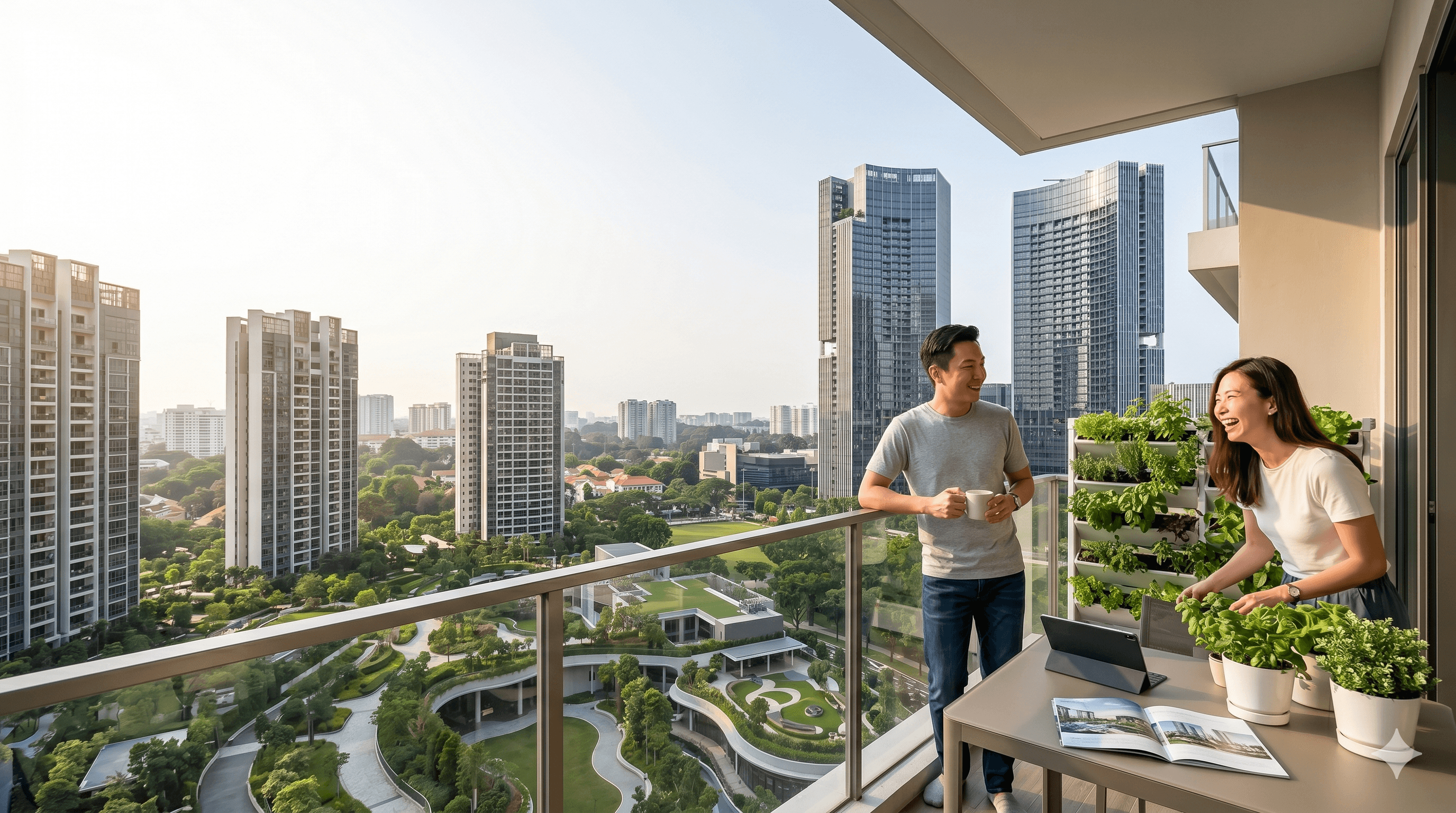
Can a PR and Foreigner Jointly Buy Property in Singapore?
What mixed residency means for ownership, stamp duty and financing
Yes, a PR and a foreigner can usually buy private property together in Singapore, but mixed residency can materially change stamp duty and financing outcomes. HDB is usually not the workable co-ownership route, and not every private property type should be assumed to be open to a foreign co-buyer. Confirm property type first, then test duty exposure, title structure, document readiness and loan feasibility before the option is exercised.

Yes — a Singapore PR and a non-PR foreigner can generally buy private residential property together in Singapore, especially non-restricted private homes such as condos and apartments. The key issues are usually not "can they buy" in the abstract, but whether the property type is open to the foreign buyer, how stamp duty is affected, and whether the lender is comfortable with the joint application.
Can a PR and a foreigner jointly buy property in Singapore?
Yes — in most cases, a PR and a non-PR foreigner can buy private residential property together in Singapore. HDB is usually not the workable co-ownership route, and some private property types need extra checks.
The practical answer is yes for many private homes, especially condos and apartments. But not all residential property is one category.
For a mixed-status pair, the first filter is property type:
- Non-restricted private residential property is usually the main route.
- HDB is generally not the standard co-ownership option for this buyer pair (as of 2026, a foreigner cannot be an HDB flat owner — verify on HDB).
- Some private property, especially landed or other restricted residential property, may trigger separate foreign ownership rules or approval issues (as of 2026, restricted property needs Land Dealings Approval Unit approval — verify on SLA).
A simple way to put it: you can usually buy together if it is the right private property type, but the title rules, stamp duty and loan structure need to be confirmed before committing. For broader context, cross-check Can Foreigners Buy Property in Singapore? and, where landed homes come up, What Is Restricted Property in Singapore?.
Which property types are usually relevant for a mixed PR-foreigner purchase?
The default conversation is usually condos or apartments. HDB is generally not the standard co-ownership route, while landed homes and ECs need separate checks before being treated as viable options.
For most PR-and-foreigner buyers, the real discussion is about private property that a foreign co-buyer can lawfully hold. It helps to separate the options early instead of assuming every residential listing works.
| Property type | Usually workable for PR + foreigner joint purchase? | Practical note |
|---|---|---|
| Private condo / apartment | Usually yes | This is the main category to assess first (as of 2026, foreigners may buy non-landed condo units without LDAU approval — verify on SLA). |
| Landed / other restricted residential property | Do not assume | A foreign co-buyer may face foreign ownership restrictions or approval requirements (restricted property needs LDAU approval). |
| HDB flat | Usually no | As of 2026, a foreigner cannot be an HDB flat owner, so this is not the standard co-ownership route for this pair (verify on HDB). |
| EC | Only after verifying current eligibility and project status | Treat ECs as a special case, not a default option. |
Typical scenario: a PR and foreign spouse looking at a condo is usually a straightforward private-property discussion. A PR who assumes they can buy a resale HDB with a foreign partner is often starting from the wrong property bucket. If the search broadens to landed homes, check SLA's foreign ownership guidance before shortlisting. If you are still asking about HDB pathways, see Can PRs Buy HDB Flats in Singapore?. For a broader overview, see What Is Restricted Property in Singapore? Residential Property Rules Explained.
How does ownership status affect who can be named as a buyer?
Being able to contribute money is not the same as being eligible to be a co-owner. In mixed-status purchases, title eligibility, borrower status and contribution split should be discussed separately.
This is where many conversations go off track. It is tempting to jump straight to affordability, but the better sequence is:
- Can both names legally go on title for this property type?
- Should both be co-borrowers, or only one?
- Does the ownership split reflect how the money is actually being contributed?
Those are not the same question.
A practical example: "We will pay 70/30, but just put both names equally." That may sound simple, but it can affect stamp duty assumptions, future sale proceeds, inheritance outcomes and how the parties view fairness later.
Another common scenario is a foreign spouse with strong income but limited local documentation. The couple may still want both names on title, but the bank's loan structuring may not be as straightforward as the ownership idea.
Settle the ownership intent before the option fee is paid. Changing names or shares later is rarely as easy as it seems. For a broader refresher on what a PR can hold directly, Can PRs Buy Private Property in Singapore? is the next useful reference.
How is stamp duty affected when one buyer is a PR and the other is a foreigner?
BSD is generally part of any residential purchase, but ABSD is usually the bigger planning issue in a mixed-status deal. The foreign co-buyer can materially change the tax outcome, so verify the current IRAS treatment before quoting affordability.
The broad mechanism is simple:
- Buyer's Stamp Duty generally applies to residential purchases.
- Additional Buyer's Stamp Duty is where mixed-status purchases can become much more expensive.
As of 2026, the residential ABSD schedule (from 27 Apr 2023) charges a Singapore PR 5% on a first residential property, 30% on a second, and 35% on a third or subsequent; a foreigner pays 60% flat; and an entity pays 65%. Because duty in a joint purchase is driven by the buyers' profiles and the acquisition structure, do not model it off the private arrangement on who pays how much. Verify the current rates on IRAS before quoting a figure.
| What to check | Why it matters | What to confirm |
|---|---|---|
| Buyer status on the purchase date | PR and foreigner status carry different ABSD rates (5%/30%/35% vs 60%) | Confirm each buyer's actual status before discussing cash outlay. |
| Whether both names are acquiring the property | Duty follows the acquisition structure, not just the internal payment arrangement | Do not model duty off the contribution split alone. |
| Spouse relationship | Some married-couple scenarios may involve remission questions | Verify the exact IRAS conditions before presenting a net cost figure. |
| Any claimed treaty-based treatment | Some buyers assume nationality alone changes ABSD | Ask for the basis and verify it before relying on it. |
Use IRAS's ABSD page for the current framework, and IRAS's married-couple remission page where spouse-related remission may be relevant. If the foreign buyer believes a treaty exception may apply, treat that as a separate verification step and cross-check FTA ABSD Exemption in Singapore before relying on it.
Model the duty before negotiating the last 1% on price, because tax can move the deal more than the discount. For a broader overview, see Can Foreigners Get a Home Loan in Singapore? Eligibility, Loan Amount and Bank Checks.
Why the higher-duty buyer matters in a joint purchase
One foreign co-buyer can change the tax profile of the whole transaction, not just their own intended share.
This is the part that is commonly missed. It is easy to focus on downpayment and monthly instalment, but the bigger surprise can be stamp duty.
The tax outcome is shaped by who is acquiring the property, not just by who transfers more money into the purchase. As of 2026, a foreigner co-buyer is exposed to the 60% foreigner ABSD rate while a PR co-buyer is at 5%/30%/35% depending on how many residential properties they hold — so run the duty check before the option is exercised, not after emotional commitment. Verify the current rates on IRAS. For a broader overview, see FTA ABSD Exemption in Singapore: Who May Qualify and What to Check.
How do banks assess financing for a PR and foreigner joint application?
Banks usually assess the couple's or co-buyers' combined ability to repay, but mixed-status files often face more document checks. The biggest friction is usually income verification, especially when one buyer earns overseas income.
Banks will usually look at the file as a combined repayment exercise: income, existing debts, employment stability, credit profile and how cleanly the documents support the application. Mixed nationality alone is not the only issue. The more practical question is whether the lender is comfortable verifying both borrowers.
| Financing check | What banks commonly review | Practical friction in mixed-status cases |
|---|---|---|
| Combined income | Whether total income can support the loan | One buyer's overseas income may be counted more cautiously or need extra proof. |
| Existing liabilities | Current loans and monthly commitments | One buyer's debts can weaken the whole application. |
| Employment stability | Length and quality of employment | Cross-border roles, commission-heavy pay or recent job moves can slow underwriting. |
| Supporting documents | Payslips, tax records, employment letters, bank statements | Foreign documents may need translation, explanation or more time for review. |
A useful question to put to the banker is: will you count the foreign buyer's income, and if yes, what exact documents do you need? That surfaces most financing issues early.
Where one income is overseas, variable or newly started, push for in-principle financing feedback before OTP rather than relying on informal assumptions. For deeper context, see Can Foreigners Get a Home Loan in Singapore? and PR Home Loan LTV in Singapore.
Should the property be held as joint tenancy or tenants-in-common?
Discuss ownership structure before booking the property. Joint tenancy and tenants-in-common lead to different outcomes on shares, inheritance and future exit planning.
This is not just paperwork. The ownership form can shape what happens if one party dies, if the relationship changes, or if one owner wants to sell or transfer their share later.
| Ownership type | Main feature | Often suits | Watch-out |
|---|---|---|---|
| Joint tenancy | Owners hold together with survivorship | Couples who want a simple equal structure | Less suitable if the parties want defined unequal shares or separate succession planning. |
| Tenants-in-common | Owners hold defined shares | Buyers contributing different amounts or wanting clearer share allocation | Requires the parties to be clear upfront about proportions and intentions. |
In PR-foreigner cases, tenants-in-common often comes up when:
- cash contributions are not equal
- one party wants a defined economic share
- estate planning across jurisdictions is a concern
- the buyers want a clearer exit path if one party later buys out the other
Choose the ownership structure before choosing the unit. For a plain-English refresher, this joint tenancy vs tenants-in-common guide is useful. Where inheritance or cross-border family planning matters, flag the issue early and confirm the legal implications with a conveyancing lawyer.
Can a PR buy private property with a foreign spouse who is not a Singapore PR?
Yes, generally for private property. But the couple should still check stamp duty treatment, whether any remission applies, and whether the bank will accept the spouse's income documents.
Yes — a PR can generally buy private property with a non-PR spouse. The part not to skip is the second layer of checks: tax treatment, supporting documents and whether both parties should be owners, borrowers or both.
Two common scenarios:
- The foreign spouse lives in Singapore on a pass and draws locally documented income. This is usually easier for loan processing.
- The foreign spouse works overseas or is paid in a foreign jurisdiction. Ownership may still be possible, but the financing file may be slower or more conservative.
If the couple is married, do not assume that marriage alone fixes the ABSD issue. As of 2026, the foreigner co-buyer is exposed to the 60% foreigner ABSD rate unless a remission applies, so check whether there may be a remission basis and verify the current IRAS conditions before giving a net affordability figure. The safest way to frame it: buying together may be possible, but the duty and loan checks need to be cleared first.
What should be verified before a mixed-status couple or co-buyer commits?
Confirm status, property type, ownership structure, stamp duty and financing readiness before treating the answer as settled.
- ✓Confirm each buyer's citizenship or PR status as of the intended purchase date.
- ✓Confirm the shortlisted property type first: condo or apartment, landed or restricted residential property, HDB or EC.
- ✓Check whether both parties are intended co-owners, co-borrowers, or both.
- ✓Clarify whether the intended ownership split matches the actual cash contribution plan.
- ✓Model likely stamp duty exposure early, especially the ABSD created by the foreign co-buyer (as of 2026, foreigner 60%; PR 5%/30%/35% — verify on IRAS).
- ✓Check whether the buyers are married and whether any remission question needs to be verified with IRAS.
- ✓Review financing readiness: income source, debts, employment stability and whether overseas income will be accepted by the lender.
- ✓Prepare core documents early, such as NRIC, passport, FIN, proof of PR status, income documents and marriage certificate where relevant.
- ✓Confirm the exit plan: who may sell first, whether one party may buy out the other, and whether the title structure supports that plan.
Methodology and sources
Where every figure comes from — and what we deliberately did not claim.
Verified figures. Foreigner/PR property figures here come from official sources — IRAS (ABSD), SLA (restricted/landed), HDB, CPF — as of 2026; these rules change, so confirm your status and the current rule with the authority before you rely on it.
What we have not claimed: eligibility or duty for any specific person/property (check the authority); or a legal ruling — a practical explainer, not advice.
Got a question this raised? Ask PropKaki.
Take any point from this analysis and apply it to your own project, budget or decision.
 PropKaki
For most buyers this year, staying well within budget beats trying to time the market.