

Using CPF OA to Pay Your Mortgage in Singapore: What Buyers Should Know
How CPF Ordinary Account savings can be used for monthly instalments, what it does to cash flow, and the retirement and sale-proceeds trade-offs that are easy to miss.
CPF OA can usually be used to service monthly housing instalments, which reduces the cash you need to pay from your bank account. That can make monthly budgeting easier, especially after a stretch purchase or upgrade. But CPF housing use is not free money: it reduces OA balances now and usually needs to be refunded with accrued interest when the property is sold. Before you rely on it, check the current CPF rules, your available and expected OA balance, and any lease- or property-specific restrictions.
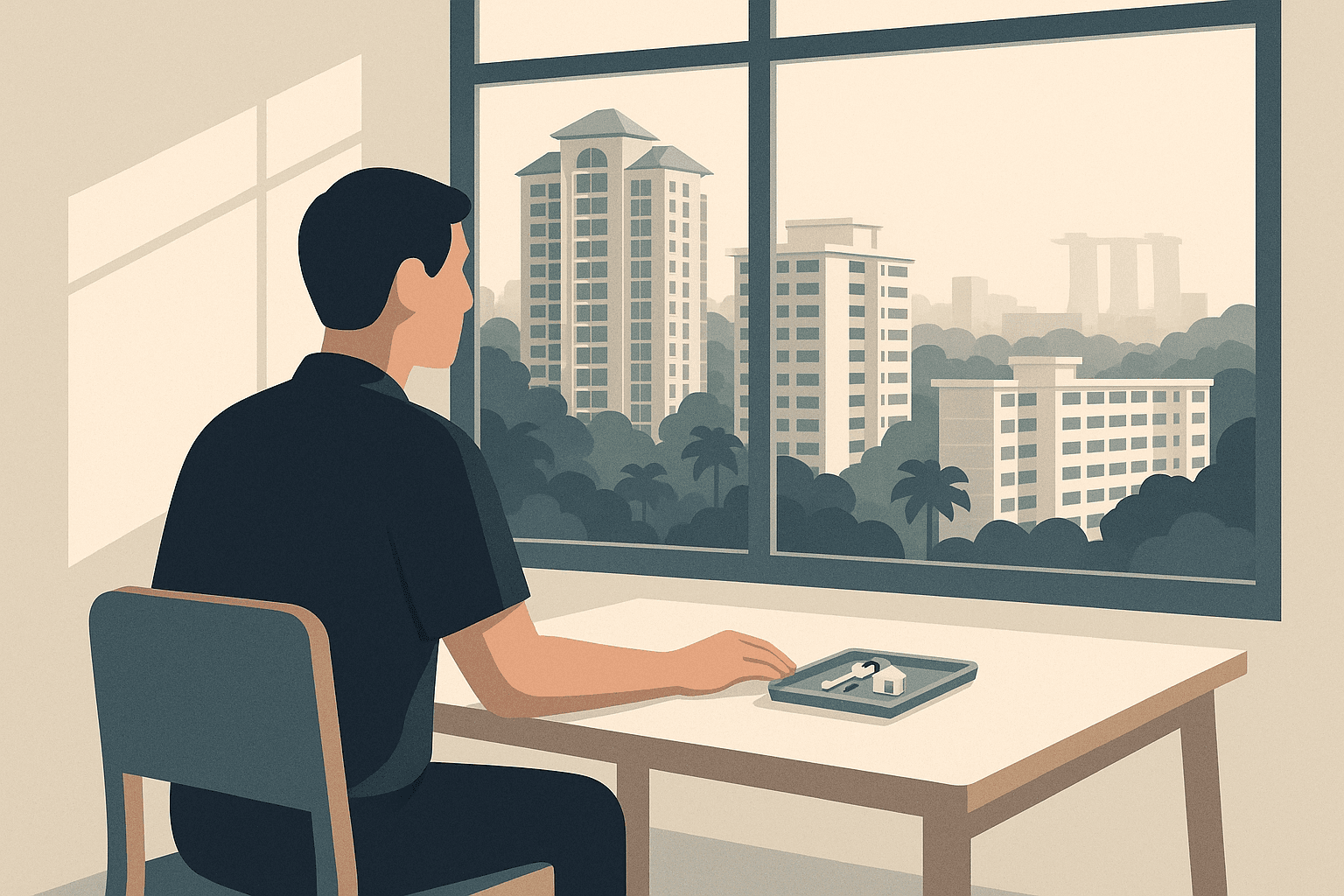
Yes — you can often use CPF OA to pay monthly housing loan instalments after purchase, for both HDB and some private-property loans, subject to CPF housing rules, property eligibility and available OA balances. For most buyers, the real question is not just 'Can I use CPF?' but 'Should I use CPF heavily, or preserve it and pay more in cash?'
What does using CPF OA to pay a mortgage mean in practice?
It means eligible monthly housing instalments are paid from CPF Ordinary Account savings instead of, or alongside, cash from your bank account. In practical terms, CPF becomes part of the repayment source after completion.
After the purchase is completed, some homeowners arrange for their housing loan instalments to be deducted from CPF OA rather than paying the full amount in cash every month. This applies in many HDB and bank-loan scenarios, subject to CPF housing rules and the property's eligibility.
People sometimes call this a "CPF loan", but CPF doesn't lend you anything: the loan comes from HDB or a bank, and your CPF savings go towards the loan repayment. And only one CPF account can be used for housing: your Ordinary Account. Your Special and Retirement Account savings can't pay for your home (CPF), though they do count towards the Basic or Full Retirement Sum CPF asks you to set aside before you can use more of your OA (CPF).
The practical difference is simple:
- Paying in cash means the instalment comes from take-home income or savings.
- Paying with CPF OA means the instalment is funded from OA balances and future CPF contributions, if available.
A typical example: you can technically afford the instalment in cash, but would rather keep more bank cash available for childcare, renovation, insurance or emergency reserves. Using CPF OA can help with that.
One detail worth knowing upfront: with an HDB housing loan you may retain up to $20,000 in your OA and use the rest towards the flat, while with a bank loan you can keep any amount in the OA (as of 2026 — verify the current position on CPF). So how much OA is left working for you also depends on the loan route.
Before relying on CPF, it helps to separate three checks:
- Can CPF be used for this property under current rules?
- How much OA is actually available now and likely later?
- Is the loan repayment setup aligned with CPF usage?
For the wider loan context, this sits alongside lender-side affordability checks such as TDSR, MSR and LTV covered in our Singapore property loan rules guide.
How does CPF OA affect monthly cash flow after the purchase?
Using CPF OA lowers the amount you need to pay in cash each month, which can ease post-purchase budgeting. The trade-off is that a retirement asset is being used to solve a current cash-flow need.
This is the main reason people use CPF OA for mortgage servicing. If CPF covers part or all of the instalment, more cash stays in the bank each month for daily expenses and financial buffers.
That matters most in common situations such as:
- A young family managing childcare, transport and insurance after moving into a larger home.
- An upgrader who can qualify for the loan but does not want monthly cash flow to feel tight after completion.
- A buyer with variable income who wants more liquidity on hand instead of committing everything to cash repayment.
The useful way to frame it is this: CPF OA is a cash-flow tool, not bonus money. It can make the monthly budget more comfortable, but it also reduces the OA balance that could otherwise remain available for retirement or future housing needs.
A simple way to hold both sides in mind: lower monthly cash pressure now often means lower CPF flexibility later. For a broader overview, see Property Downpayment in Singapore: Minimum Cash and CPF Use Explained.
What mortgage and purchase costs can CPF OA usually help pay?
CPF OA is commonly used for downpayment and monthly instalments, and may also cover some transaction-related costs if CPF rules allow it. Check the exact item before assuming CPF can definitely be used.
There are usually three buckets of housing costs to think about:
- Upfront purchase costs: CPF OA is commonly used for part of the downpayment.
- Ongoing loan servicing: CPF OA can often be used for monthly instalments after completion.
- Some transaction costs: Certain stamp-duty or legal-fee items may be claimable, depending on the purchase type and current CPF rules.
The safe way to hold this is: CPF is often usable for more than just the initial purchase, but not every property cost is automatically CPF-payable.
Where people get caught out is assuming CPF covers everything. The allowable scope can differ by property type, loan type and CPF housing conditions. An HDB flat, a resale condo and an older property may not face the same CPF usage outcome.
The downpayment split is a useful example of why cash still matters. On a bank loan at the standard 75% loan-to-value limit, the 25% downpayment breaks into at least 5% in cash plus the remaining 20% in cash or CPF OA; on an HDB housing loan the 25% can be paid from CPF OA or cash with no minimum cash percentage, though on a resale flat CPF says "the option fees cannot be paid using your CPF", and the option fee and exercise fee together can reach $5,000 (CPF) (as of 2026 — verify the current split on CPF and MAS).
Start with the official CPF guidance on using your CPF to buy a home. If you want a secondary explainer with worked examples across different loan situations, this EdgeProp guide is useful, but official eligibility still comes from CPF.
If you are comparing upfront funding sources, our property downpayment guide is the relevant next read. For a broader overview, see When to Refinance a Home Loan in Singapore.
How much CPF can I use for an HDB flat?
You can use your CPF Ordinary Account savings to pay for a new flat from HDB, including paying off its HDB loan in full, and up to the CPF housing limit (the lower of the price or valuation) on a resale flat or a bank loan, going beyond that limit only once you set aside your Basic Retirement Sum (CPF, as of September 2026). This assumes the flat's lease covers the youngest buyer to age 95; if it can't, you can use only a percentage of the limit.
CPF's usage limits for a first property, when the lease covers the youngest buyer to age 95 (CPF):
| Your flat and loan | How much Ordinary Account savings you can use |
|---|---|
| New flat from HDB, no loan | Your OA savings for the purchase |
| New flat from HDB, HDB loan | Enough to pay off the HDB loan in full |
| Resale flat, no loan | Up to the CPF housing limit |
| Resale flat, HDB loan | Up to the CPF housing limit; beyond it, only once you have set aside your Basic Retirement Sum |
| Any flat, bank loan | Up to the CPF housing limit, then up to another 20% of it once you have set aside your Basic Retirement Sum; the rest in cash |
The CPF housing limit is the lower of the purchase price and the valuation when you buy, and CPF you use for stamp duty and legal fees doesn't count towards it. On an HDB loan you can keep up to $20,000 in your OA when you buy, as a buffer for your instalments (any amount on a bank loan) (CPF). If you already own a property, you can use your OA for another only after setting aside your Basic Retirement Sum, or the Full Retirement Sum if no property you own lasts you to 95, and then only up to the CPF housing limit (CPF).
What is easy to overlook when you decide to use CPF for the mortgage?
It is easy to focus on lower cash outlay now and miss the future refund issue. CPF used for housing usually has to be refunded with accrued interest when the property is sold.
The overlooked part is not today's instalment. It is tomorrow's sale proceeds.
It is easy to hear that CPF can cover the mortgage and assume the money is simply gone for good. Usually, it is not. On sale, the CPF principal used for housing and the accrued interest generally have to be refunded to CPF before you see net cash proceeds. That is why owners who used a lot of CPF can be surprised by how much cash they actually receive after selling.
For a plain-English starting point, use CPF's home ownership overview. If you want a non-technical explainer of accrued interest, this guide is a helpful supplement. For a broader overview, see How Banks Assess Income for a Home Loan in Singapore.
What are the long-term trade-offs of using CPF OA for loan servicing?
The trade-off is easier monthly cash flow now versus lower CPF balances, less retirement liquidity and potentially less cash in hand when the property is sold.
The most useful way to explain this is not 'CPF versus cash' as a right-or-wrong choice. It is a trade-off between present affordability and future flexibility.
| Approach | What improves now | What gives up later | Typical fit |
|---|---|---|---|
| Pay more in cash | Preserves CPF OA balance | Higher monthly cash outflow | Buyers with strong cash flow who want to keep CPF intact |
| Use more CPF OA | Reduces monthly cash pressure | Lower OA balance and higher future CPF refund impact | Buyers who need breathing room after purchase |
Two long-term effects matter most:
- Retirement liquidity: money used from OA is no longer sitting there for future use.
- Sale proceeds: higher CPF usage usually means a larger refund obligation when the property is sold.
This is why holding horizon matters. A buyer who expects to upgrade again may care more about future sale proceeds and CPF preservation. A long-stay owner-occupier under tighter monthly pressure may reasonably prioritise cash flow instead.
Even bank explainers such as DBS's CPF-or-cash comparison frame this as a planning trade-off, not a free gain.
How do you decide between paying cash and using CPF OA?
Start with stability, not optimisation. If paying fully in cash leaves you tight after completion, CPF OA can be sensible; if cash flow is already comfortable, preserving OA deserves a serious look.
A practical way to decide is to ask four questions in order:
- Can you comfortably service the instalment in cash after moving in?
- Will you still have a real emergency buffer after duties, fees, renovation and move-in costs?
- Is this likely to be a long-stay home or a nearer-term upgrade?
- Are future CPF contributions likely to support the repayment pattern you are planning?
The answers usually point to one of two profiles:
- Cash-flow-sensitive households: often prefer using CPF OA because monthly breathing room matters more than preserving OA.
- Cash-comfortable households: often prefer paying more in cash to keep CPF available for retirement and reduce later refund drag.
The thing that is easy to miss is that affordability on paper is not the same as sustainable ownership. You may pass loan assessment but still feel stretched month to month.
The best option is usually the one you can sustain after completion, not the one that looks neat in a spreadsheet. For the lender side of affordability, see our Singapore property loan rules guide and home loan income assessment guide.
What should you verify before relying on CPF OA for monthly instalments?
Check CPF eligibility, OA balance, expected future CPF inflow, loan setup and any property-specific restrictions before assuming the instalment can be safely covered by CPF. Today's OA balance is not the same as long-term repayment capacity.
Before you count on CPF to cover the instalment, check these points specifically:
- Whether the property is eligible for CPF housing use under current rules.
- Whether the current OA balance is enough for the intended repayment pattern.
- Whether future CPF contributions are likely to keep supporting the instalment, especially if income is variable.
- Whether the loan is an HDB or bank loan, and whether the repayment instruction is properly set up.
- Whether the property has lease-related or other restrictions that could limit CPF usage.
- What you will do if OA funds are insufficient in a future month.
This is especially important for older homes, shorter-lease properties and situations where income may change. Those are where assumptions tend to unravel.
A fair way to hold it: CPF may support the mortgage today, but that does not guarantee it will comfortably support it for the whole holding period.
For case-level clarification, CPF's Ask portal entry is a useful cross-check. If you may later change loan packages, our when to refinance a home loan guide gives the wider context.
How does using CPF OA fit into overall homeownership budgeting?
CPF OA helps with the loan instalment, but it does not remove the need for cash buffers. You still need money for maintenance, insurance, taxes, repairs, renovation and everyday living costs.
One of the easiest planning mistakes is to equate 'CPF can pay the mortgage' with 'the home is affordable'. That is too narrow.
The instalment is only one part of ownership. You still need cash for items such as:
- maintenance or service charges
- insurance
- property tax
- repairs and replacement costs
- renovation and furnishing spillover costs
- normal household expenses after move-in
This matters even more when upgrading, because you often face overlapping commitments during the transition.
A practical way to see it: the mortgage is the headline number, but the cash buffer is what keeps the ownership experience stable. A 'zero-cash mortgage' mindset can look comfortable at first and still become stressful when real-life costs show up.
If you are still working out how much should come from cash versus CPF upfront, see our property downpayment cash and CPF guide.
Will CPF OA automatically pay the monthly mortgage once the loan starts?
Often yes, once the CPF repayment arrangement is properly set up and there is enough OA balance. But do not assume it will keep working smoothly without checking balances and setup details.
In many cases, monthly housing instalments can be deducted from CPF OA on an ongoing basis after the repayment arrangement is in place. The practical point is that 'automatic' does not mean 'guaranteed forever'.
Worth confirming:
- whether the CPF repayment instruction has already been set up
- whether CPF is meant to cover the full instalment or only part of it
- what happens if OA funds are insufficient in a particular month
- whether refinancing, repricing or ownership changes will require the setup to be updated
A clean way to put it: CPF OA can often pay the mortgage month by month, but only while eligibility, balances and loan instructions continue to line up.
Methodology and sources: how we verified these figures
Where every figure comes from — and what we deliberately did not claim.
Verified figures. Financing figures here come from MAS (TDSR/LTV rules) and CPF — as of 2026; loan rules and rates change, so confirm the current limits with MAS and your bank before you rely on them.
Updated September 2026. The CPF usage limits are from CPF Board's How much CPF savings can I use for my property purchase? (last updated 18 September 2026) and Using your CPF to buy a home, read on 19 September 2026.
Corrected 23 September 2026. Earlier versions said the 25% on an HDB loan could be paid fully from CPF with "no compulsory cash portion". CPF: "the option fees cannot be paid using your CPF" (up to $5,000 with the exercise fee on a resale flat; CPF, read 23 September 2026).
What we have not claimed: the loan amount or approval for any specific borrower (check your bank); a rate quote; or financial advice — a practical explainer only.
Got a question this raised? Ask PropKaki.
Take any point from this analysis and apply it to your own project, budget or decision.
 PropKaki
For most buyers this year, staying well within budget beats trying to time the market.